The AGD 650 is a dual-zone stop-line detector, a smart optical detector designed for use in dynamic traffic environments. It enhances the efficiency of intersections and junctions by providing robust vehicle detection data at the stop-line of multi-lane approaches. The device incorporates in-built artificial intelligence (AI) and a new neural processing platform with sophisticated algorithms for automated decision-making, ensuring ultra-reliable detection. It utilizes high-grade optics and deep learning image recognition to detect both stationary and moving targets as they approach the stop-line. The neural net has undergone extensive training to develop a library of vehicle types, ignoring objects not defined within this library.
Function Description:
The primary function of the AGD 650 is to detect moving and stationary targets at the stop-line. It features two independent, user-adjustable detection zones, allowing for flexible configuration based on specific traffic management needs. Deep learning image recognition enables the prioritization of vehicle types, and the in-built AI aids in target differentiation. The device supports various typical applications, including dual zone/active travel (cycle lane detection), dual zone/multi-lane advance stop-line (cycle refuge area), and single-lane advance stop-line (cycle refuge area).
Important Technical Specifications:
- Description: Dual Zone Stop-line Detector
- Technology: AGD Optical Vision with AI
- Detection Zone: Dual Virtual Loops
- Mounting Height: 3-6m Nominal
- Power Supply: 24/42V ac/dc (±20% tolerance)
- Power: 12W @ 24Vac (740mA) / 24Vdc (440mA) / 42Vac (530mA)
- WiFi Frequency/Power: 2412-2472 MHz / Highest EIRP power in the range (dBm): 19.7'
- LED Indication: LEDs for detect and WiFi connection
- Frames per second: 7.5
- Housing Material: Black Polycarbonate / Aluminium
- Range: 20m at full FOV / 30m at reduced FOV
- Sealing: IP65
- Operating Temp: -25°C to +60°C
- Configuration: WiFi AGD Touch-Setup
- Lux Level: Operates down to 20 Lux
- Dimensions: W217mm x D 94mm x H 175mm
- Weight: 1200g
- Complies with:
- EMC: BS EN 50293:2012, EN 301 489-17, EN 301 489-1
- Health & Safety: BS EN 62368, EN 60950-22, EN 50556, EN 62311
- Spectrum: EN 300 328
- RoHS: EN 50581
- Other: TOPAS 2505B
- European Radio Equipment Directive 2014/53/EU & UK Radio Equipment Regulations 2017 (SI2017/1206)
- Patent No.: Patent Pending
Usage Features:
The AGD 650 is designed for efficient and easy setup through its WiFi AGD Touch-setup system, which speeds up installation and reduces risk. No additional software is required; setup is performed by connecting to the device via WiFi and using a standard browser window on a smartphone, tablet, or laptop.
Physical Installation:
- Mounting Height: Optimal performance is achieved when mounted between 3-6 meters.
- Detector Alignment: The camera should be aimed at the center of the area of interest. The mounting angle may require adjustment during commissioning.
- Pole Distance: The pole's location affects the number of lanes covered. Minimum recommended distances from the stop-line are 1.2m for 1 lane, 1.8m for 2 lanes, and 2.4m for 3 lanes (3.4m lanes).
- Mounting Position: For cycle refuge applications, mount on the side of the road closest to approaching cyclists. For traffic head installations, a 6" extension bracket is recommended to see over backing boards. If the stop-line is 1.4m or less from the pole, a 90° bracket is recommended.
- Final Adjustment & Verification: Ensure the entire stop-line is visible in the detector's GUI view, including at least one full vehicle length before and after each detection zone. The horizon should be out of view to reduce sun glare.
Electrical Installation:
- Power: The detector is powered by a 24/42V ac/dc supply via a multi-pin mating connector.
- Connections: A Buccaneer Series PX0728/S 9-pole connector is provided for direct connection to the traffic control system. Pin-outs include +24V AC/DC, 0V AC/DC, Earth/Ground (must be connected), Opto 1/2 Common, and Opto 1 & 2 N/O/N/C outputs.
- Opto-coupler ratings: Max current 60mA, Max Voltage 60V, Max on-state impedance 25 Ohms.
- Power Up Sequence: Upon power-up, the red LED illuminates for approximately 30 seconds while the operating system loads, then flashes 5 times before turning off. If detection zones are set, the red LED will illuminate when a zone is in the detect state. An initial current of 15A (<5ms) can be drawn, requiring a 3A circuit breaker or in-line fuse for 24/42V ac/dc.
Connecting and Commissioning (AGD Touch-setup):
- WiFi Connection:
- Check for the red LED to flash 5 times on the rear of the unit.
- Search for the unit's SSID (e.g., 650:XXXXXX-XXXX-TBD, where XXXXXX-XXXX is the serial number and TBD is a renamable field).
- Connect using the default password (e.g., Agd650:XXXXXX-XXXX).
- The front LED will turn blue upon successful WiFi connection.
- Device Connection:
- Launch a browser (Google Chrome, Safari, Firefox, Microsoft Edge are supported) and enter the IP Address:
http://10.42.0.1:8080.
- This will open the AGD Touch-setup page.
- Step 1 - Name Site:
- Install Location: Enter a location name (e.g., POLE_1) to change the detector's SSID. Reconnection to the new SSID is required after a change.
- User Notes: An editable field for engineers' notes (max 64 characters).
- SSID Prefix: The first part of the SSID can be changed (default recommended).
- New Password/Confirm Password: Change the default password (8-63 characters). If the password is lost, the product must be returned to AGD for reset.
- Step 2 - Set Zones:
- Live Traffic View: Use "Freeze" to pause the view for setup, "Zoom" to extend zones off-screen, and "Change FOV" for full or reduced field of view.
- Change Masks: Add masks to specific regions to avoid unwanted detections from street furniture. Use sparingly, as masked areas will not detect targets.
- Detection Zones: Add Zone 1 (linked to OPTO 1 output) and Zone 2 (linked to OPTO 2 output). Green arrows should follow traffic direction and be parallel to the road. Lane differentiation is achieved by placing zones in the middle of each lane with a gap between lanes.
- Drop-down Menus: Select detection criteria for each zone: "Detect all road-users," "Detect 4 wheeled vehicles only" (ignores motorbikes, cyclists, scooters, pedestrians), or "Do not detect 4 wheeled vehicles" (only detects motorbikes, cyclists, e-scooters, pedestrians).
- Step 3 - Choose Settings:
- WiFi off after: Select how long WiFi remains active if disconnected.
- Detect LED OFF at night: Disable the red LED at night.
- Hold time (ms): Time the detection output stays ON after a valid target leaves zone 1 or 2.
- Delay before reporting demand (ms): Time the detection output is not reported after a valid target enters zone 1 or 2.
- Timeout (mins): Time the detection output is permitted to stay ON. After this, the detector reverts to a non-detect state until a vehicle moves and another vehicle enters the detection zone.
- Audible detection signal: Enable an audible signal.
- Fault mode after 72h non-detect: If no valid targets are seen/reported in any defined detection zone for 72 hours, the detector will revert to a permanent detect state.
- Detection threshold (%): The threshold value at which the detector will report a valid target. Percentage figures are seen on the home screen when looking at the live traffic view.
Maintenance Features:
- Troubleshooting: The manual provides guidance for physical installation, electrical installation, and connecting/commissioning issues.
- Technical Support: Contact AGD Technical Support via email (technical@agd-systems.com) or phone (+44-1452-557404) for persistent operational problems.
- Warranty: All AGD products come with a 12-month return-to-factory warranty. Products outside this period can be returned for evaluation, repair, update, or re-calibration, which may be chargeable.
- End of Life – Disposal Instructions (EOL): The manual includes a detailed diagram and table for the disposal of components, categorized for reuse/recycle, separate & recycle, downcycle, hazardous recovery, and non-recyclable materials. This ensures environmentally responsible disposal.
- Safety Precautions: All work must adhere to company working practices and risk assessments. Only skilled and instructed persons should perform work, especially concerning mains power, electronic/electrical equipment, working at height, and working at the roadside. The product contains no user-maintainable parts; opening the casing voids warranties. Damaged units should not be powered on.

 Need help?
 General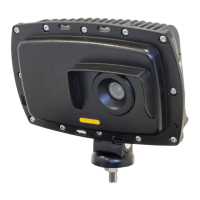

 To Next Page