original signal, which is close to (but not exactly) the same as the original signal. To
complete the process, this stairstep signal is smoothed by a low pass filter. The
result is natural-sounding audio that sounds virtually unchanged from what was
originally recorded.
10.0C Why Does ADAT Use S-VHS Cassettes?
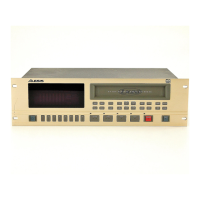
Alesis has built its reputation on providing professional levels of quality and
innovation at prices associated with consumer gear. When it was time to produce a
digital tape recorder that would be suitable for any application from home/project
studios to pro-level audio studios and video dubbing suites, our design team decided
to use existing, mass-production technology wherever possible to cut costs without
sacrificing performance; and the wide tape width of S-VHS tape allows ADAT to use
wider track width for more reliable digital recording. It's especially well suited to
ADAT's 8 track format.
S-VHS recording technology offers more than enough bandwidth to record eight
tracks of audio, low cost, and field-proven engineering. S-VHS tapes are built to
higher standards than standard VHS tapes, and can take the tape shuttling required
by professional audio applications.
There’s also a matter of convenience. S-VHS tape cassettes are inexpensive
compared to reel-to-reel tape, readily available, compact, and easy to transport and
store.
10.1 APPENDIX 2: GLOSSARY
AES/EBU Interface
A two-channel, digital audio hardware/software standard. The AES/EBU interface
allows for data communication between professionally-oriented digital devices (such
as CD players, digital signal processors, hard disk recording systems, synthesizers
with AES/EBU outputs, digital audio workstations, etc.).
Analog-to-Digital Converter
The device responsible for converting analog signals into a digital format. Once
encoded, all audio is stored or processed as a series of numbers rather than as the
audio itself.
Autolocation
The process of automatically rewinding or fast forwarding, as necessary, to find a
specific point on tape. Autolocation is usually initiated by pressing a button that tells
the machine the point to which you want it to autolocate.





 To Next Page