B) SIZE SELECTION OF THE ALPINE ELEMENT
The frame size is measured in inches as the distance from the centre
of the bottom bracket to the top of the seat tube. The length of the rest
of the tubes is proportional to the bicycle size. On all ALPINE
ELEMENT bicycles, the top tube has a bias from the head tube
towards the point of connection with the seat tube, reducing the
standover height. The second most important criterion in frame size
selection after the standover height is the length of the top tube. It
should correspond to the length of your trunk and arms, and it
determines to a large extent your ability to stretch between the saddle
and the handlebar. A salesperson of ALPINE ELEMENT bicycles will
help you select the optimum length based on your height, experience,
and cycling style. To select quickly the proper bicycle size, you can
also use the table below:
Cyclist’s height, cm 155–170 163–178 171–185 179–192 187–199
Recommended frame size 16” 17” 18” 19” 20”
Below you will find some recommendations for size selection of the
cross-country bicycle range. With some adjustments, they can also be
used by enthusiasts of other cycling styles. For example, for extreme
cycling styles, bicycles with a smaller frame size are preferable for
better manoeuvrability in downhill biking and jumps.
C) SADDLE POSITION
Proper saddle adjustment is one of the key requirements for ensuring
greatest comfort and ease of control of the bicycle. With their
experience, your dealer will adjust the saddle to a position that is
comfortable for most people. When purchasing the bicycle, ask the
salesperson to adjust the saddle to a position that is comfortable for you.
You will be able to change these settings later, if necessary. The saddle
position can be adjusted in three directions:
1. HEIGHT ADJUSTMENT
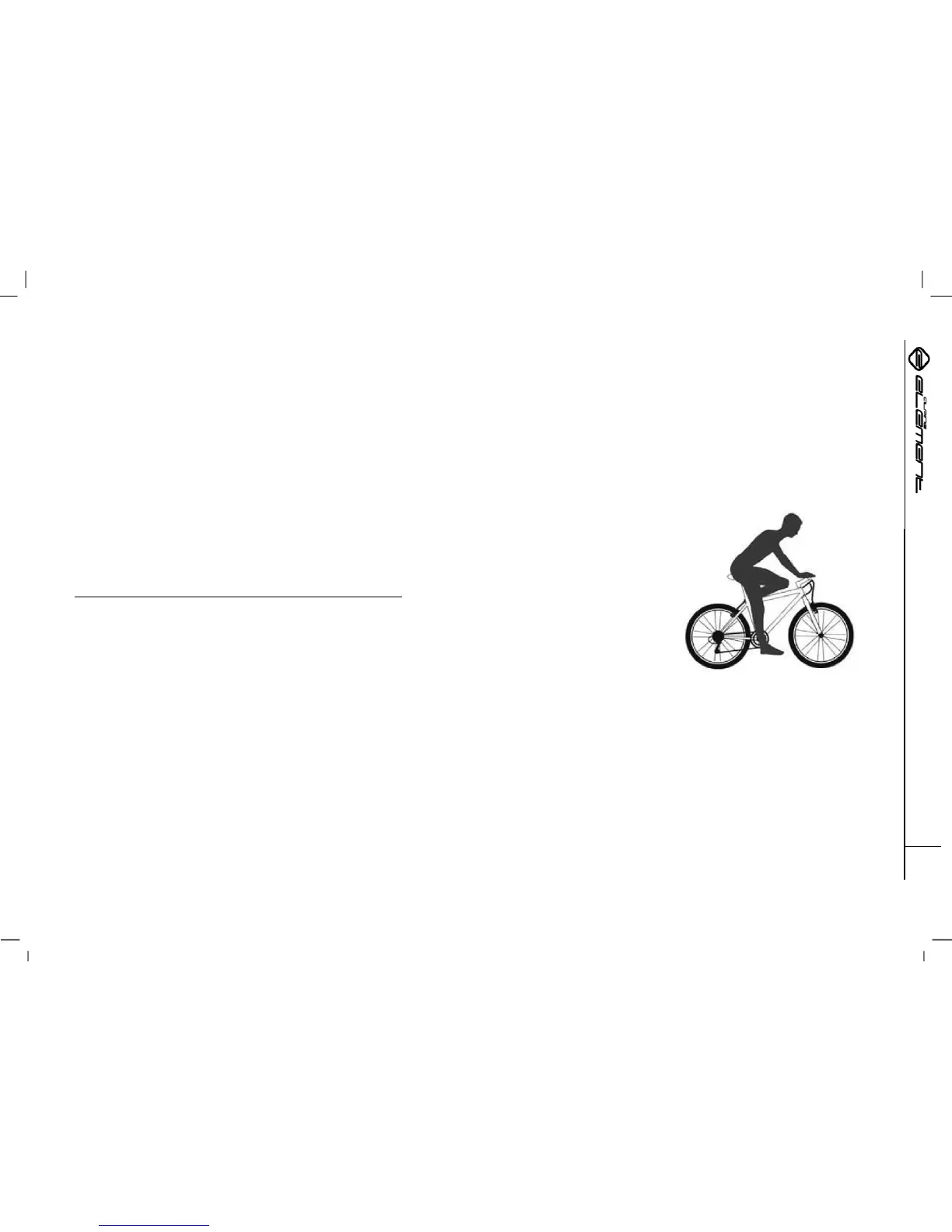
Correct saddle height is
determined by the length of your
legs. The saddle is adjusted to
the correct height if you touch the
“lower” pedal with your foot while
sitting on the saddle with the
pedals positioned parallel to the
seat tube. Procedure to check the
saddle height (fig. 4):
• Sit on the saddle.
• Place one foot on the pedal.
• Rotate the crank until the pedal is
moved to the lower position and the
cranks are positioned parallel to the
seat tube.
If your leg is not completely straight or, on the contrary, if your foot does not
touch the pedal, the saddle height should be adjusted. To adjust the saddle
height, loosen the bolt or the quick release clamp, holding the seatpost in the
frame, and slide the seatpost upward or downward. Then, make sure that the
saddle is positioned parallel to the top tube and tighten the bolt or quick release
clamp enough to fix the seatpost in the frame. Check the adjustment as
described above. The seatpost must not protrude from the frame above the
“Minimum Insertion” or “Maximum Extension” marks on the seatpost (fig. 5).



 To Next Page