Try out the brakes and see how they work. Test them at a low
speed, shifting your body weight backwards and gradually
increasing the pressure on the brake levers. Apply the rear brake
first. Remember: if you squeeze the front brake lever too quickly
or apply too much pressure, the front wheel can lock and you risk
falling over the handlebar. Locking the rear wheel can, for its part,
cause the rear of the bike to skid, which can also result in you
losing control and falling.
Get some practice clipping in and out if your bike is fitted with
toe clips or clipless pedals.
Study the way the suspension reacts to use of the brakes and
you shifting your body weight forward or backward, if your bike
is equipped with front or rear suspension.
Practice shifting gear.
Remember that you can change gears only if you are pedalling
forwards.
Never try to shift gears when you are back-pedalling, or not
pedalling at all. Avoid shifting gear when pedalling hard. This can
lead to the chain wedging between the sprockets or the chain or
the rear derailleur breaking, and cause major damage to the bike.
Observe the way the bike steers itself and how it follows your
movements; make sure that you are comfortable riding the
bike.
If you have any questions, or feel that something is not the
way it should be, contact the shop where you bought your
bike for assistance.
CHAPTER 3. SAFETY
А) BASICS
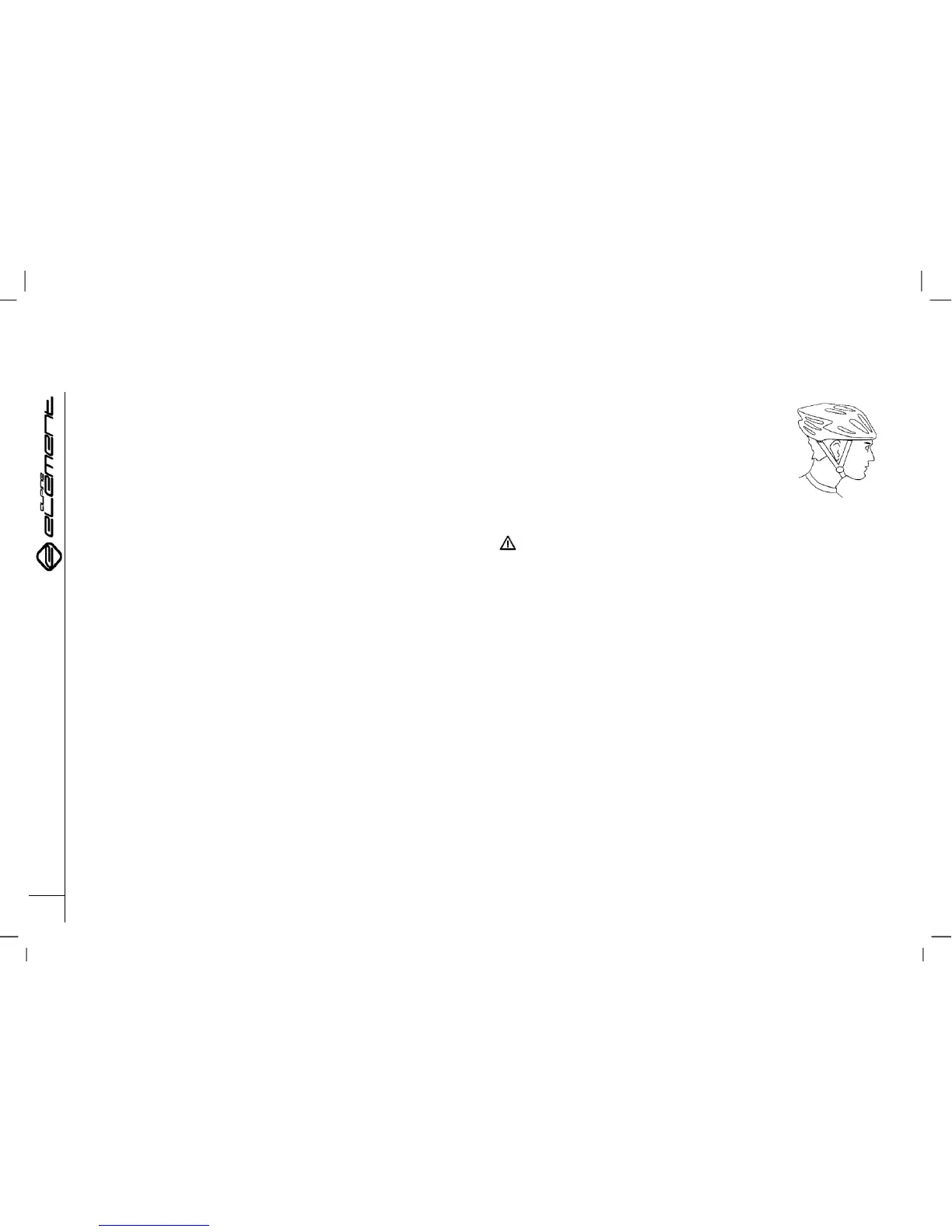
1. When riding, always wear a cycle helmet
(fig. 2) that conforms to the latest certification
standards and follow the operation and
maintenance manual for the bike. A large
number of serious injuries among riders are
head injuries which can be avoided by using a
helmet.
ATTENTION: Riding a bike without a helmet can lead to
injuries.
2. Before every ride check the mechanical condition of the bike
(section 1.C).
3. Get acquainted with main control systems of the bike: brakes
(see section 4.C), pedals (see section 4.E), and gear shifting (see
section 4.D).
4. Prevent any foreign objects or clothes becoming caught in the
rotating parts of the bike—front sprockets, crank system, chain,
pedals, and wheels.
5. Outfit:
• Footwear should be properly attached to the foot and pedal.
Never ride a bike barefooted or in sandals.
• It’s preferable for clothes to be bright and eye-catching so that
drivers of passing cars notice you; also clothes should not be very
loose to avoid catching them on trees and objects you pass.
• Special sunglasses for a cyclist are also recommended—they
not only provide protection from the sun but also from dust and
insects.



 To Next Page