©Copyright AMKUS Rescue Systems 2016-2020 18 LAI-001 November 5, 2020 Rev06
7.6 TELESCOPING RAM OPERATION
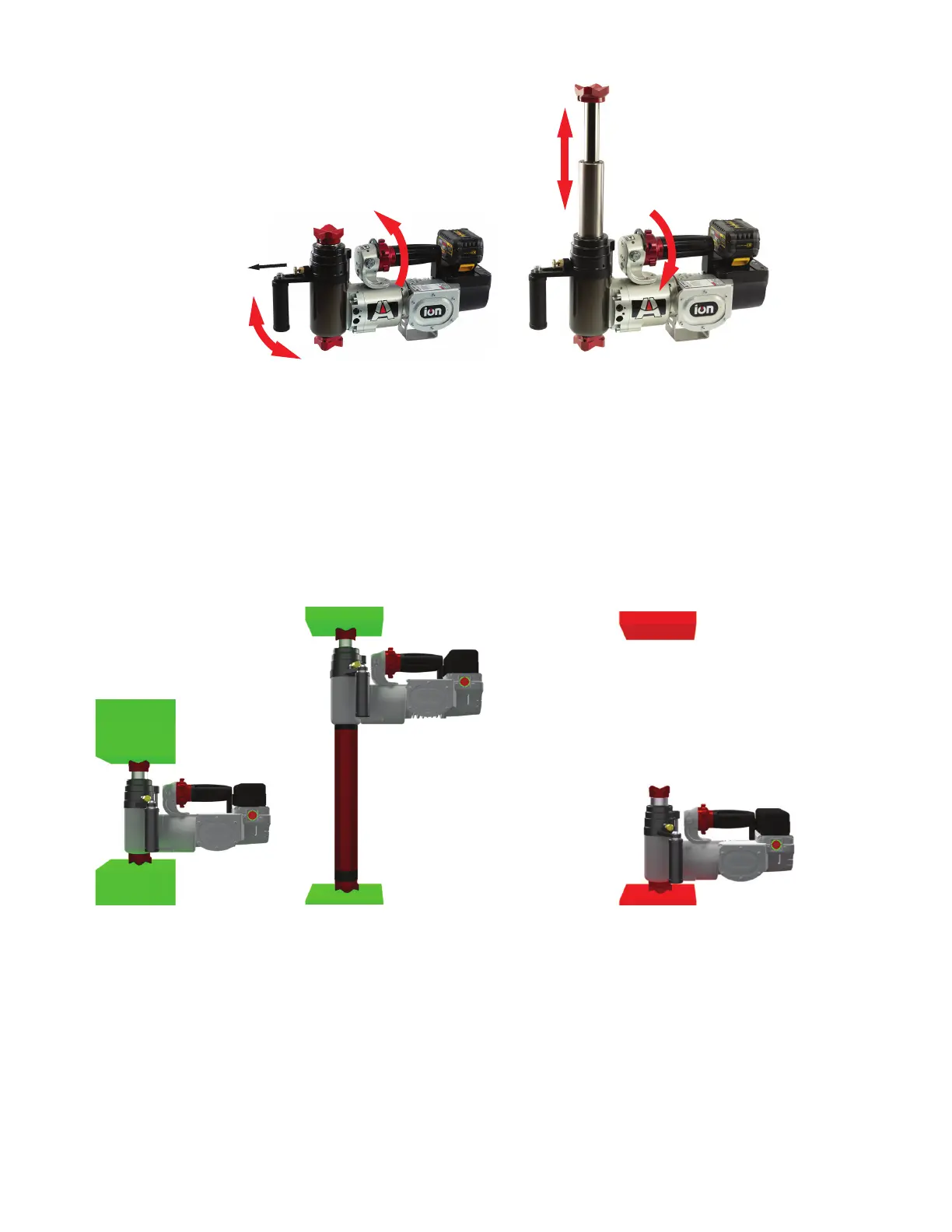
Figure 7.6A
The telescopic ram has two stages that extend out in sequence. The larger diameter first stage has a higher force than the second stage
due to its larger diameter. The head on the second stage is permanently installed, whereas the base of the ram is removable so an
extension may be added.
Identify the crush zone. These are areas under the load and around the load with risk of crushing from a falling or rolling load. Position
the ram base securely against a support surface. Excess space may be taken up using cribbing, or a ram extension. Extend the lifting
head to the object being displaced. Ensure nearby people are clear of the crush zone before lifting or retracting. Displace the object only
as far as needed. Stop to stabilize the load in increments as the load is lifted or lowered. The telescoping ram is used in pushing and
lifting objects with pistons extending. The load is held when the control valve actuator is in OFF (neutral) position. The ram is NOT to be
used for pulling tension loads with pistons retracting.
The handle position is adjustable by pulling out the spring loaded handle release and rotating the handle as needed. Re-position the
carrying handle to avoid interference with the load. The tool may be carried with the handle in any locked position.
Figure 7.6B
CORRECT STARTING POSITION INCORRECT STARTING POSITION
Too much space
Space filled with
an extension or
blocking


 To Next Page