Overview
Before Getting Started
8
1.7 Before Getting Started
About UWF (Unied Write Filter)
Before getting started on client conguration through the Atrust Client Setup console or through the Windows
Embedded Standard operating system, please note that in a session any changes to the system will not be kept by
default after the system restart. This is due to a special feature called UWF (Unied Write Filter) in your Windows
Embedded-based system.
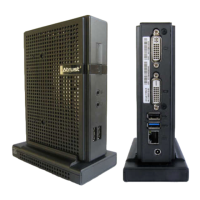
By default, your t68WD is UWF-enabled. Unied Write Filter (UWF) is a sector-based write lter intercepting all write
attempts to a protected volume and redirecting those write attempts to a virtual overlay. With UWF, all system
changes will only aect the session where the changes are made. After restart, all changes will be discarded.
You can change the default via the Atrust Client Setup console. It’s strongly recommended that you read the related
section in this user’s manual rst before making any changes to your system.
WARNING
• Please read the following section FIRST before making any changes to your system:
“4.2.10 Conguring UWF (Unied Write Filter)” on page 51.
NOTE
• As a thin client device, your t68WD is mainly for access to remote or virtual desktops
on servers. With the limited and protected (UWF-enabled) hard disk space, it’s not
recommended to save data on your t68WD. Instead, you can use storage spaces
over remote / virtual desktops, removable storage devices, or networks.
• In case that you need to copy a le to the protected volume, ensure that its size is
smaller than the free memory (overlay) space. Otherwise, your system may have
unexpected results or become unresponsive.
About Default User Accounts
There are two default user accounts for your Windows Embedded-based system: one is the standard, the other
administrative. The default credentials are shown as follows:
Type Account Name Password
Administrator Administrator Atrustadmin
Standard user User Atrustuser
NOTE
• The passwords are case sensitive.
About the Behavior of System Startup
Every time when the system is started up, it will automatically log in to the Windows Embedded operating system
using the default standard user account as indicated in the preceding table about default user accounts.



 To Next Page