2
INTRODUCTION:
NOTICE: Users of wireless microphones in the USA, on frequencies listed
under FCC part 74.801 must comply with eligibility & licensing requirements
under FCC Part 74.832. Please review terms at:
www.access.gpo.gov/nara/cfr/waisidx_00/47cfr74_00.html
Receipt or use of this product acknowledges acceptance of the FCC
regulations. For further questions, you may contact Audix.
Wireless microphones have risen in popularity in the last several years. With
the improved technology available today, your Audix wireless system is able
to offer excellent sound quality and reliable performance for a wide range of
applications ranging from Houses of Worship to professional concert stages.
While it is true that wireless systems allow for greater freedom of movement,
they have also introduced a new set of performance challenges. This section
is intended to give you some guidelines to ensure optimal performance with
your Audix Wireless System.
Types of transmitters:
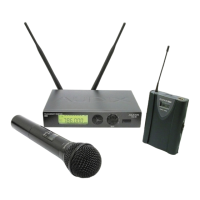
1. The handheld: The handheld is just what it sounds like. It looks similar to
your wired handheld mic you use on stage, and acts the same, except no
wires!
2. The Bodypack: The Bodypack is a transmitter you wear clipped to your
clothing. There are a variety of different mic options to plug into the
Bodypack. These include; a lavaliere (also known as a lapel mic), a
headset mic, and a clip-on mic for saxophone or brass instruments. An
adapting cable is available for use with guitar or bass. Audix has all of
these options available.
RF:
All wireless mics work on Radio Frequencies (RF). Whether in the VHF or
UHF band, all transmission of wireless information is via RF. The Audix
RAD-360 is in the UHF band with 193 user selectable frequencies per
frequency group.


 To Next Page