EN7
C - INSTALLATION
HAZARD ANALYSIS
REGULATION
Installation of a motorised gate or a motor drive on
an existing gate within the framework of “Residential”
type use must be compliant with directive 89/106/
EEC concerning building products.
The reference standard used to check this compliance
is EN 13241-1 which refers to a framework of several
standards including EN 12445 and EN 12453
which specify the motorised gate safety methods
and components to reduce or completely eliminate
hazards to people.
The installer must train the end user on the correct
operation of the motorised gate, and the trained user
must train the other people likely to use the motorised
gate, using this guide.
It is specified in standard EN 12453 that the minimum
protection of the gate’s primary edge depends on the
type of use and the type of control used to set the
gate in motion.
The gate motor drive is a press control system, i.e.
simply pressing one of the control parts (remote
control, key selector, etc.) sets the gate in motion.
This gate motor drive is equipped with a force
limiter which complies with appendix A of EN 12453
standard, within the framework of use with a gate
that is compliant with the specifications given in this
chapter. The specifications of EN12453 standard
therefore enable the 3 following use cases, as well as
the minimum levels of protection:
• Press activation with visible gate
Minimum level of protection: Force limiter only.
• Press activation with non-visible
gate
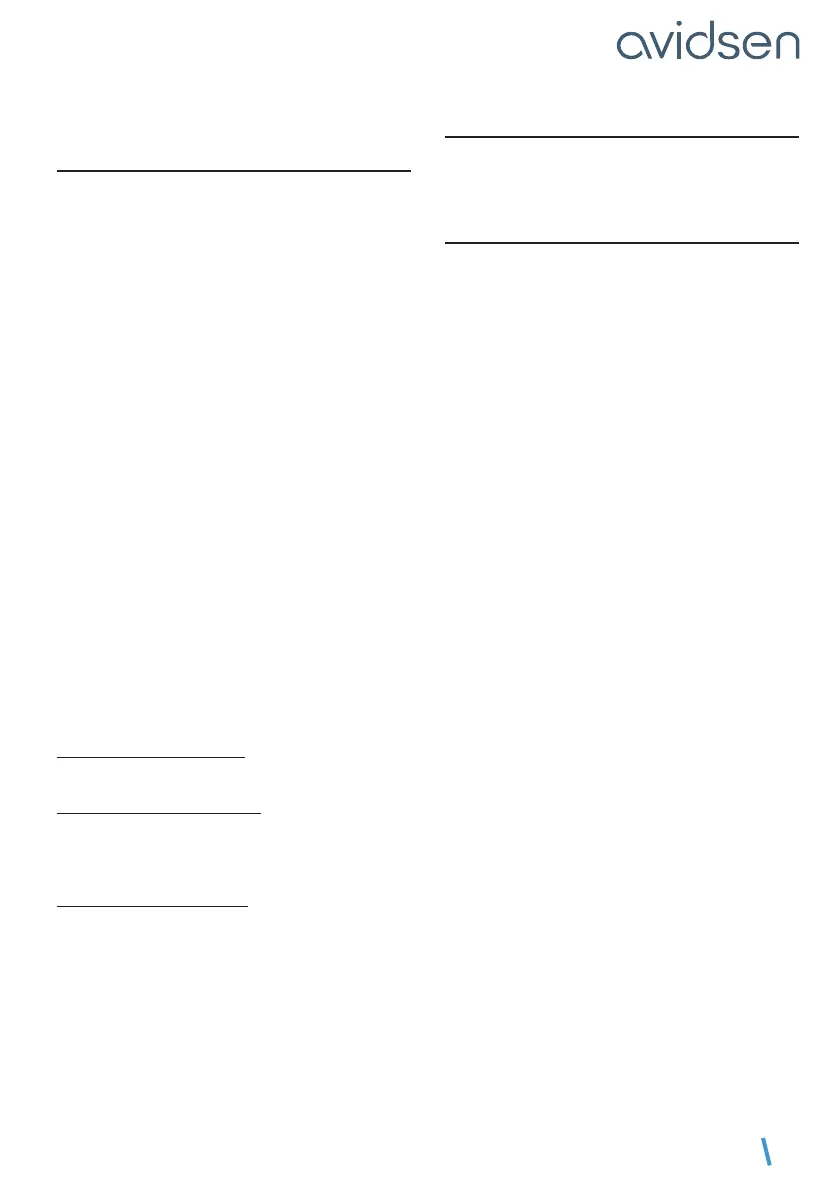
Minimum level of protection: Force limiter and 2
pairs of photocells to protect the gate’s opening and
closing.
• Automatic control (automatic
closure)
Minimum level of protection: Force limiter and 1 pair
of photocells to protect the gate’s automatic closing.
The flashing light is an essential safety component.
The photocell type safety devices and their correct
operation must be checked every six months.
SPECIFICATIONS OF THE GATE TO MOTORISE
This motor drive can automate sliding gates up to
8m
long and 2.20m high and weighing 500kg.
SAFETY CHECKS ON THE GATE
• The guide rail must be perfectly straight,
horizontal and fastened correctly to the ground.
• The gate rail and wheels must be of compatible
shape and dimensions to ensure that the gate’s
movement is smooth and to remove any risk of
the gate becoming derailed.
• The gate must be stopped open and closed by
stops fastened solidly to the ground so that its
movement is limited and above all to remove any
risk of the gate becoming derailed.
• The zone in which the geared motor will be
fastened must not be at risk of flooding. If it is,
raise the geared motor.
• The motorised gate is strictly for residential use
for vehicle passage.
• The gate must not be installed in an explosive
or corrosive atmosphere (presence of gas,
flammable smoke, vapour or dust).
• The gate must not have locking systems (latch,
lock, bolt, etc.).
• Without the motor drive, the gate must be in
good mechanical conditions, correctly balanced
and open and close without resistance. We
recommended lubricating the guide rollers and
the supporting wheels.
• Check that the fastening points of the different
components are in locations that are sheltered
from shock and that the surfaces are solid
enough.
• Check that the gate does not have any part
protruding from its structure.
• If the gate is openwork type, you must place a
protective grille or net so that no component can
pass through the gate’s bars when it is moving,
or place a safety edge on the shear zone.
• The installation must be equipped with at least
two upper runners which must be perfectly
aligned to ensure the stability of the gate and
avoid any risk of the gate tipping over.
• The gate installed without the motor drive must
be compliant with the requirements given in EN
13241-1 standard.
• The motor drive cannot be used with a driven
part that has a door.
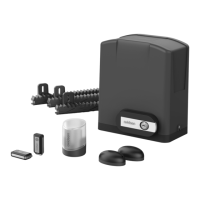
CONNECTED MOTOR DRIVE KIT


 To Next Page