9440300990 12-15
DECS-250 Grid Code
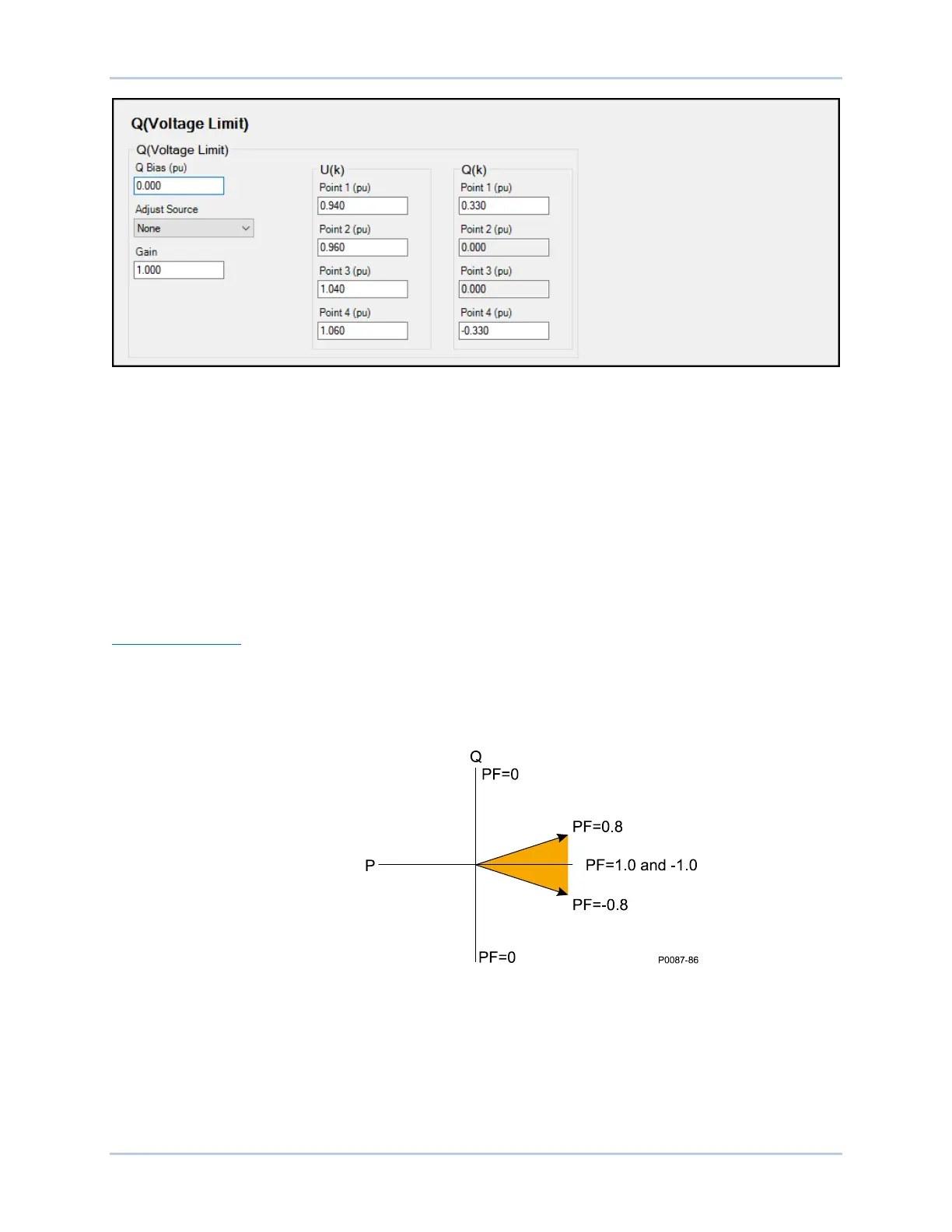
Figure 12-16. Reactive Power Control, Q(Voltage Limit) Screen
Reactive Power Control with Fixed Power Factor – Q(PF)
BESTCOMSPlus Navigation Path: Settings Explorer, Grid Code Settings, Reactive Power Control,
Q(PF)
HMI Navigation Path: Settings, Operating Settings, Grid Code Settings, Reactive Power Control, Q(PF)
Settings
In Q(PF) mode, the reactive power output must be controlled to a level that maintains a constant ratio of
reactive power to apparent power to be fed to the grid. In other words, power factor at the grid connection
point must be constant. The grid operator specifies the power factor setpoint. If no setpoint is specified,
the default power factor shall be 1.0. This setting has a step width of 0.005. The required regulation
accuracy is 2% for plants with less than 2 MW output and 4% for plants with greater than 4 MW output.
Q(PF) Adjustment.
In the DECS-250, power factor is defined such that it is positive when reactive power is exported and
negative when reactive power is imported. When PF = 1.0, or -1.0, the power is pure real power so
Reactive Power = 0. A positive adjustment increases reactive power export and/or reduces reactive
power input. A negative adjustment reduces reactive power export and/or increases reactive power
export. See Figure 12-17.
Figure 12-17. Preferable PF Region for Operating Machines
When the power factor is positive, reactive power is being exported. Applying an adjustment results in the
following:
1. Application of a positive adjustment results in an increase of exported reactive power. Thus, the
power factor value will decrease or move away from PF = 1.0.



 To Next Page