75.0084.05 20110720 Page 17 of 17
ADDENDUM -
SCHEMATICS
(Continued)
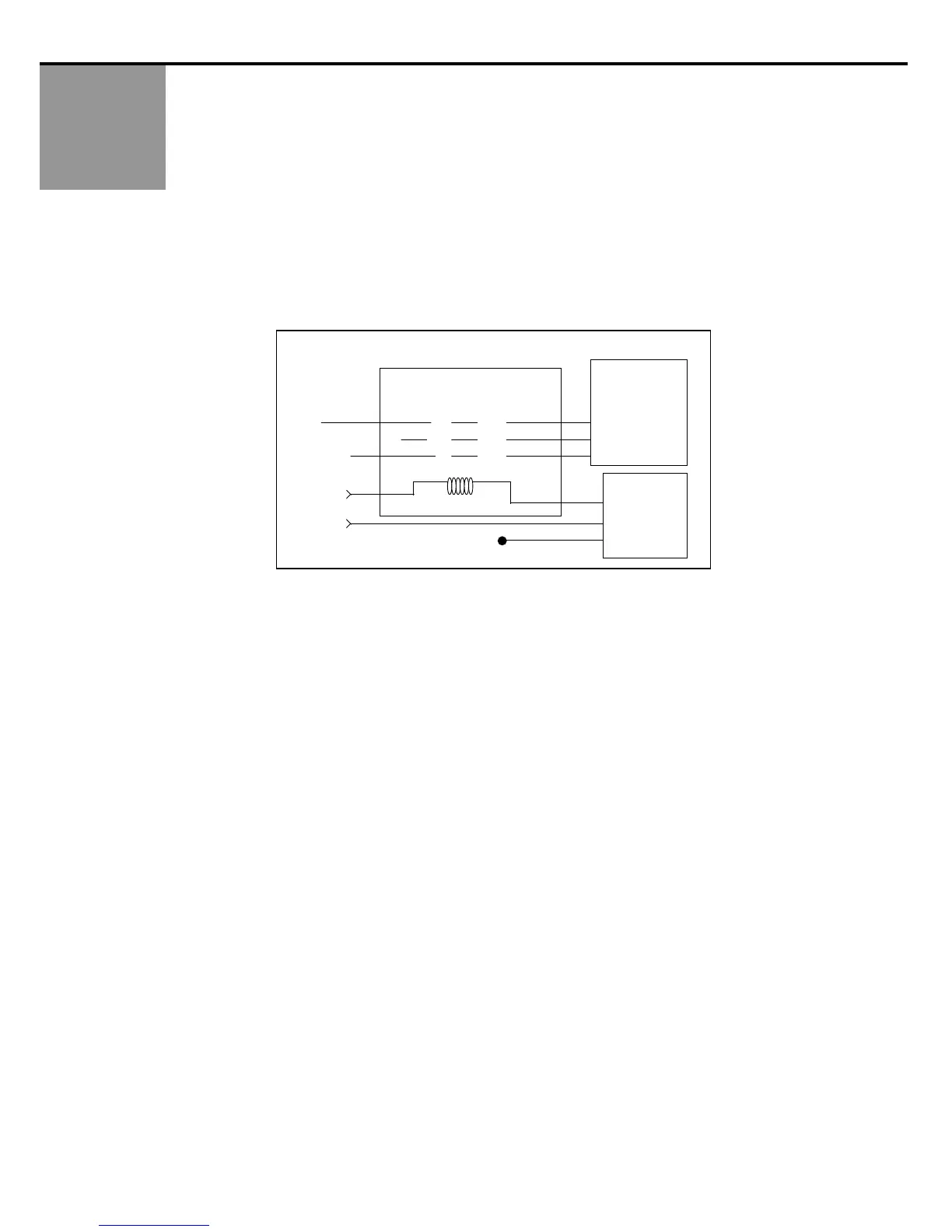
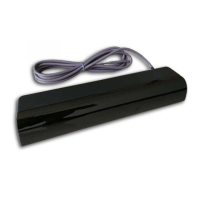
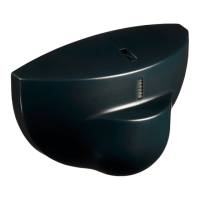
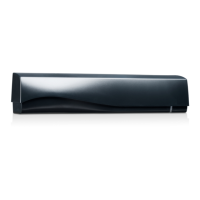
If a wall or a guardrail is detected by the SuperScan in the opening cycle, the SuperScan will need to be inhibited before
the detection is allowed to stall the door. For some operators, the back check switch can be used to shut the SuperScan
off before the detection occurs. It there is a voltage present across the leads of the back check switch; a relay must be
used (as shown below) to supply a dry contact to the SuperScan. When this is performed, the switch is used to toggle
voltage on and off at the coil of the relay. The relay, in turn, has 2 sets of isolated outputs: One to trigger the backcheck
function at the door control, and the other to inhibit the circuit for the stall function. When the door reaches the backcheck
position and triggers the limit switch, the SuperScan, although in detection, is inhibited, thus allowing the door to continue
to open normally through backcheck.
The relay should be energized (voltage applied) when the door is in any position other than backcheck. In this fashion, the
configuration lends itself to fail-safe operation. That is, if the relay fails (power loss at relay) the door will operate as if in
backcheck.
A 24-volt isolation relay is available from BEA, Inc. with the part number: 10REL24V. Below is a diagram on the wiring of
the relay with a typical N.O. stall circuit. If your stall circuit is N.C. wire a jumper from number 1 to 4 to allow for inhibit at
the backcheck angle.
1
4
7
2
5
8
3
6
9
NC
NO
COM
A(-) B (+)
24 V AC
24 V AC
NC
NO
COM
NC
NO
COM
Microswitch
COM
NC
Back Check
Connections on
Control Box
NO
NC
COM
NO
24 VAC Relay (Idec RR3B-U)
cap off
Safety
SuperScan
NO
Door Control
Safety
ISO-24 (24V AC Isolation Relay) / BEA PN: 10REL24V



 To Previous Page