June 2004 9507EM/5
2-20
2 to 9 Tonne Dumper Instruction Manual
Maintenance
Brakes
Arrangements
Models 2 - 4 tonne have NEWAGE axles with oil immersed
totally enclosed multi-plate brakes (4 plate front and 2 plate rear).
Some models have braking on front axle only, see Technical Data
section, others have brakes on both front and rear axles operating
on independent hydraulic circuits giving dual circuit safety. 5, 6
and 7 tonne models have Newage axles and dual brake circuits
with 2 plates front and rear. The 9 tonne model uses the PD70 ITL
axles with dual brake circuits and 3 plates.
The brake system is charged with mineral oil, NOT BRAKE
FLUID, via a fluid reservoir which is integral with the brake
master cylinder. In the case of a single braked axle the master
cylinder is of the single type whereas on the 2 braked axle
system a tandem master cylinder is used to provide 2 completely
independent circuits.
Normally adjustment of the brakes is unnecessary due to the
automatic compensation which is built into the brake design,
but bleeding of the system may be necessary on occasions if
pipework is damaged causing system leakage.
Under NO circumstances allow conventional BRAKE FLUID
to be added to the system and NEVER purge the system and
refill with brake fluid, otherwise damage will occur to all
the rubber sealing components in the brake system
The brakes on the range of machines provide means of effective
braking with minimum maintenance, but it is vital during
maintenance on the machine that the general condition of the
system. i.e. pipework, pedal operation, fluid level and general
oil tightness is checked and deficiencies corrected immediately
Failure to do so Could Result in an Accident
Brake Bleeding
Ensure only mineral hydraulic oil is used to bleed braking system
Procedure
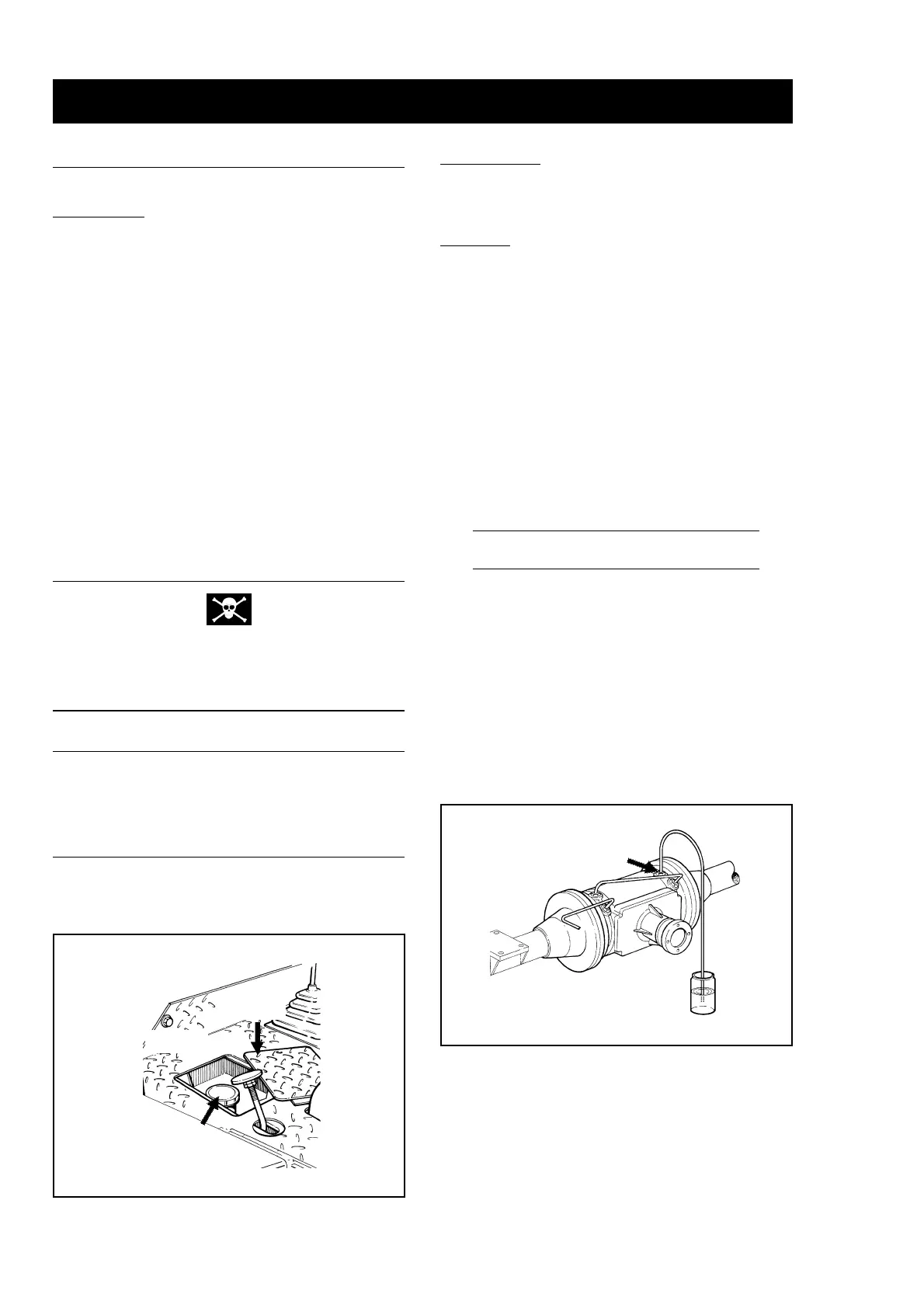
z Remove master cylinder floor plate cover, 2 to 4 tonne, and
the reservoir cap. The reservoir is located under the seat support
on the 5, 6, 7 and 9 tonne. Ensure the reservoir is full.
z Remove dust cap from bleeder plug of the slave cylinders.
z Attach a length of 8mm (5/16") internal diameter, clear P.V.C.
tubing to bleed valve. Place the other end of the tube into a
jar containing hydraulic oil ensuring that the end of the tube
is below the level of the oil.
z In the case of tandem master cylinders, always bleed the rear
axle brakes first.
z Slacken off bleed valve on the axle then proceed to pressurise
the system by pressing down the brake pedal repeatedly - as
far as it will go - until all air is expelled from the system.
Top Up the Fluid Reservoir as Bleeding Proceeds
z With brake pedal pressed down, tighten bleed valve, then release
the pedal. Remove tubing. Do not forget to replace dust cap.
z If the other axle has been serviced, repeat above sequence.
z Test system by applying maximum load to brake pedal for two
or three minutes to ensure that there are no leaks in the system.
z Check fluid level in reservoir.
z Road test the dumper. Re-check brake system for leaks or
damage.
Master
Cylinder
Floor
Plate
Removable
Cover
Bleed Plug
PVC
Tube



 To Next Page