31
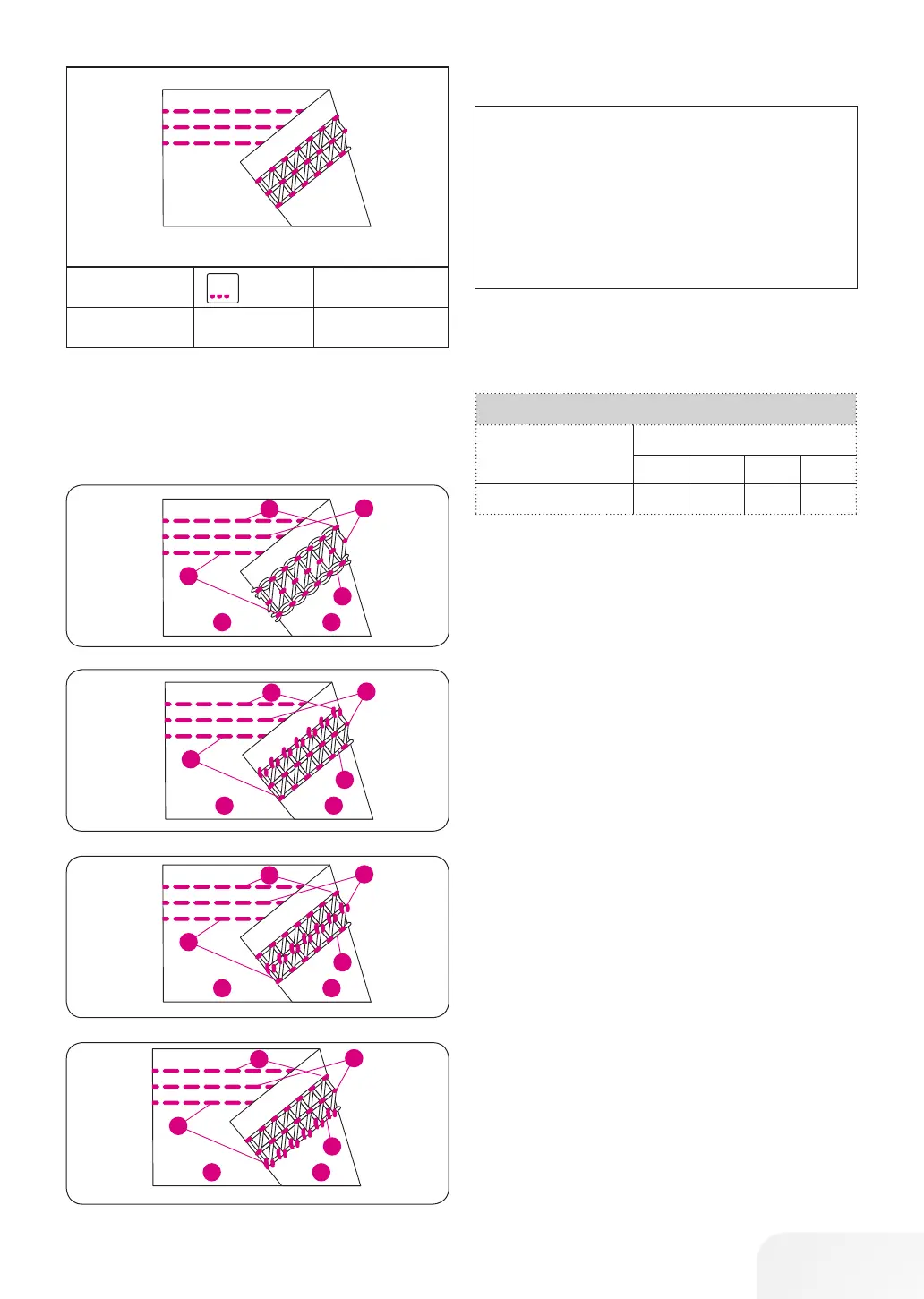
4–Thread Coverstitch
• Correct balance
– Set each tension dial to recommended setting
and test sew on a sample of your fabric.
• How to balance the thread tension
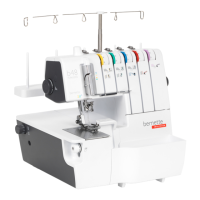
When the coverstitch looper thread is too loose;
– Turn the coverstitch looper thread tension dial
(violet) toward a higher number.
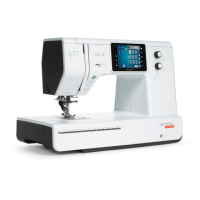
When the Left Coverstitch Needle thread tension is
too loose;
– Turn the Left Coverstitch Needle thread tension
dial (yellow) toward a higher number.
– Or, turn coverstitch looper thread tension dial
(violet) toward a lower number.
When the Center Coverstitch Needle thread tension is
too loose;
– Turn the Center Coverstitch Needle thread
tension dial (green) toward a higher number.
– Or, turn coverstitch looper thread tension dial
(violet) toward a lower number.
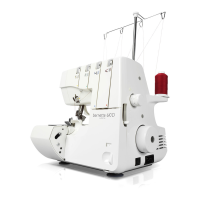
When the Right Coverstitch needle thread tension is
too loose;
– Turn the Right Coverstitch needle thread tension
dial (blue) toward a higher number.
– Or, turn the coverstitch looper thread tension
dial (violet) toward a lower number.
When the top surface of fabric bulges between needle
threads and the seams on the underside of the fabric
becomes tight;
– Turn the coverstitch looper thread tension dial
looper thread (violet) toward a lower number.
PLEASE NOTE:
– These are suggested tension settings only.
– Tension settings are effected by;
1. Type and thickness of fabric
2. Needle size
3. Size, type and fiber content of thread
– Stitch length for coverstitch should be set at
over "•" (2.5 mm).
4-Thread Coverstitch
Fabric
Thread tension dial
Yellow Green Blue Violet
Polyester
4.0 4.0 4.0 4.0
NP
Refer page 12
SL
3–4
Refer page 25
Thread Color Code refer page 15.


 To Next Page