Reference - Stabilizers
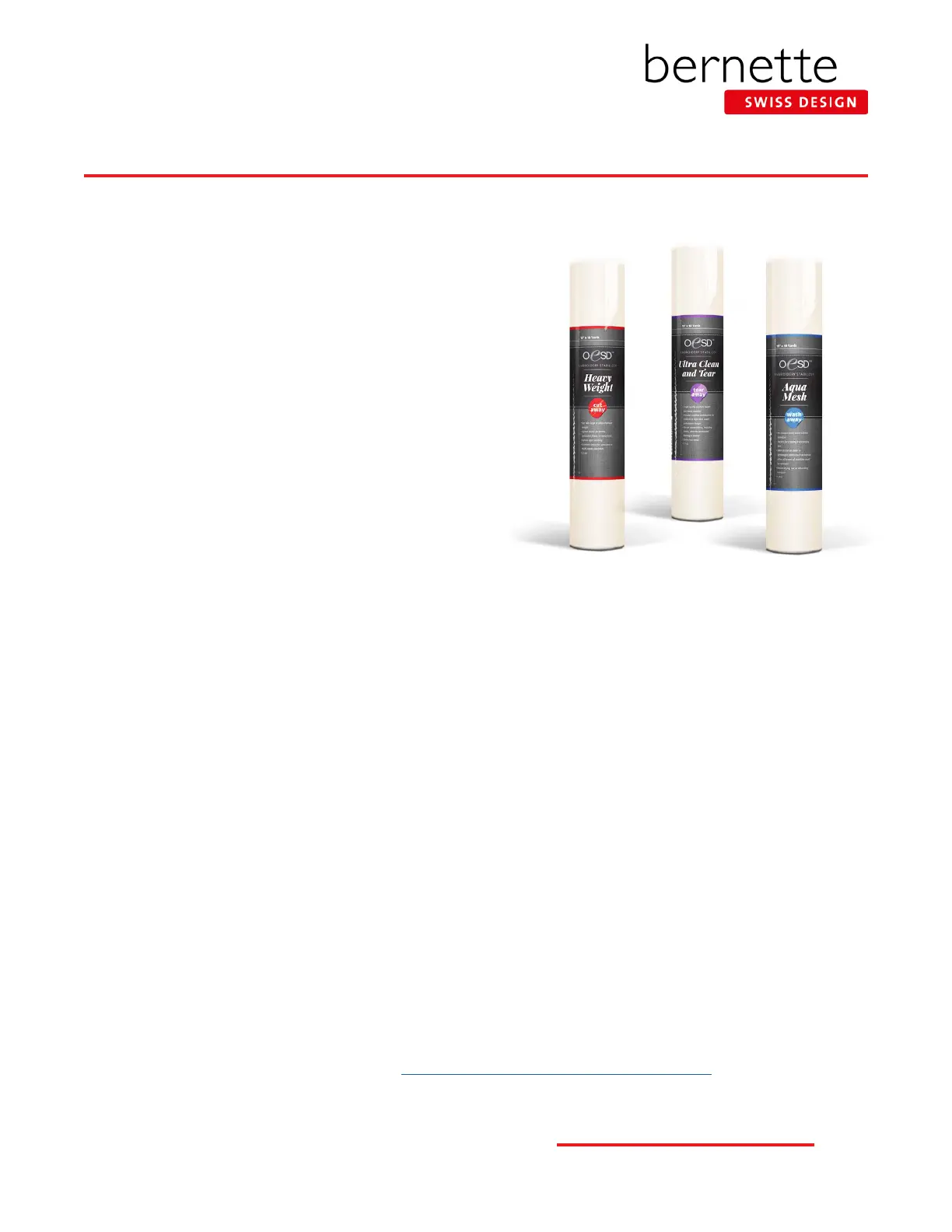
Stabilizers are classied as to how they are removed from the
fabric after stitching.
• Cut Away
• Tear Away
• Wash Away
Cut Away Stabilizers
• Most commonly used stabilizer in commercial embroidery
• Support a large number of dense stitches
• Excess stabilizer is trimmed away after stitching, leaving
about ¼” of stabilizer around the edges of the design
• Stabilizer remaining behind the stitches continues to sup-
port stitches throughout life of garment/project
• Available in several widths to t different hoop sizes
• Available in white, black, and beige
• Available in several weights
• Available in fusible, non-fusible, and pressure-sensitive
adhesive (sticky backed) versions
Tear Away Stabilizer
• Most commonly used type of stabilizer
• Excess stabilizer is carefully torn away after stitching is
complete
• Available in light, medium and heavy weight
• Available in white and black
• Available in fusible, non-fusible, and pressure-sensitive
adhesive (sticky backed) versions, as well as water-activated
adhesive versions
• Available in several widths to t different hoop sizes
Water-Soluble Stabilizer
• Used for backing and topping, in single or multiple layers
• Easily removed with water
• When used as a topping, keeps stitches from being lost in
heavily napped fabrics such as velvet and corduroy
• Available in different weights, and also as an adhesive
version
Stabilizers are an essential ingredient for successful embroidery. Stabilizers support the fabric as the design is embroidered
to prevent puckering and tunneling of the stitches.
Stabilizer Tips:
Use a cut away stabilizer when working with
knits or stretchy fabrics.
Use a tear away when you want most of the
excess stabilizer on the back to be removed.
Use a water-soluble stabilizer when you want
no traces of stabilizer to remain on the back
of the project.
Use a water soluble stabilizer when creating
stand-alone lace.
Keep a minimum of one roll or package of
each of the three types so you’ll be ready for
almost any stitching situation.
For more information on stabilizers, refer to the Just Embroider It - e Book: All About Stabilizers on bernina.com.
29
bernette
EMBROIDERY MACHINE WORK
BOOK




 To Next Page