Please be aware of the risk of entrapment when riding and interac-
ting with Gi Fly. You can potentially get ngers, hands, hair, or loose
clothing caught in parts of the bicycle, especially when the wheel
and/or belt drive are in motion.
Failure to wear a helmet when riding may result in serious injury
or death.
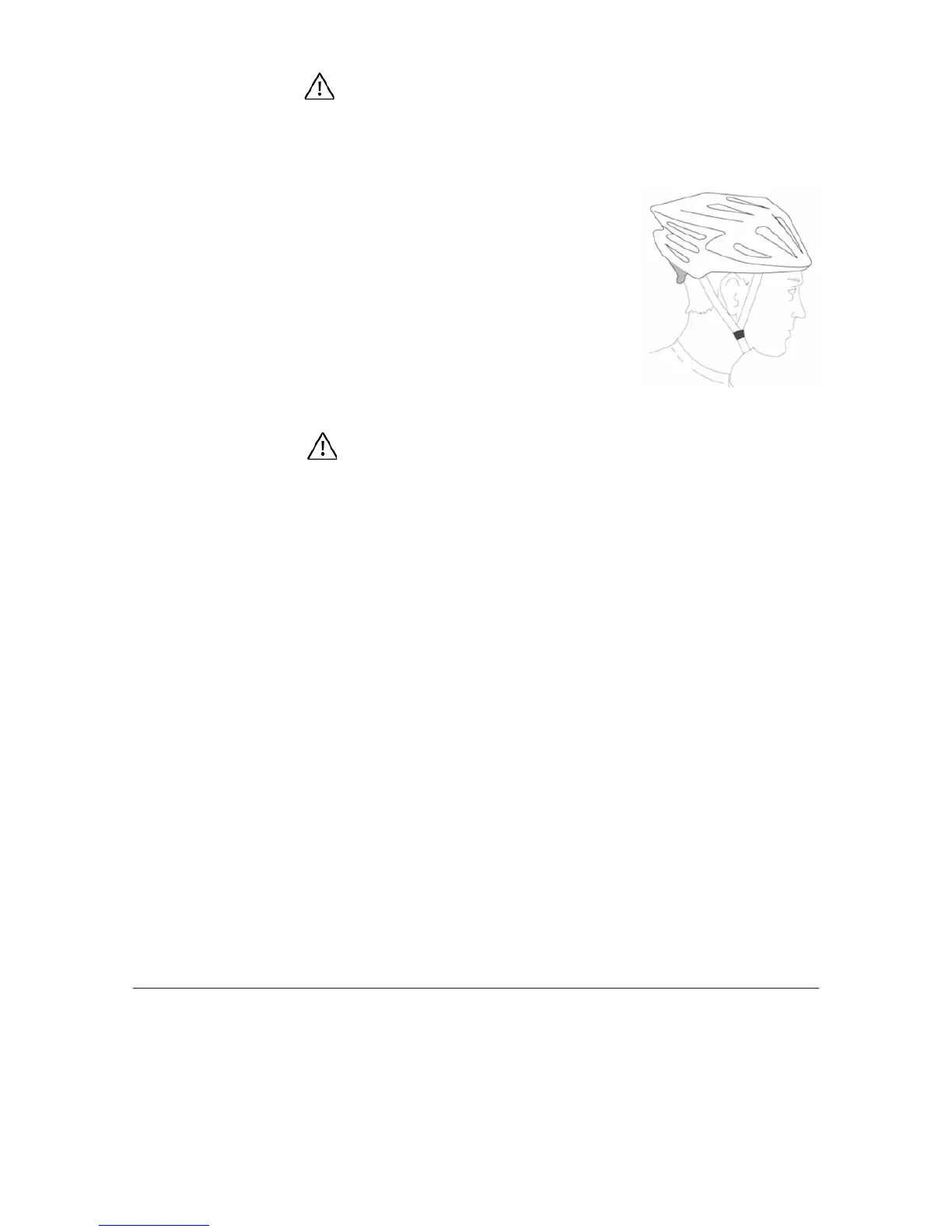
Always wear a cycling helmet which meets the lat-
est certication standards and is appropriate for
the type of riding you do. Always follow the helmet
manufacturer’s instructions for t, use, and care of
your helmet. Most serious bicycle injuries involve
head injuries which might have been avoided if the
rider had worn an appropriate helmet.
•
Img. 5
Always do the Mechanical Safety Check (Section 7.A) before you get on a bike.
Be thoroughly familiar with the controls of your bicycle: brakes (Section 6.C); handlebar
height (Section 6.B).
Always wear:
•
•
•
Shoes that will stay on your feet and will grip the pedals.
Make sure that shoe laces cannot get into moving parts, and
never ride barefoot or in sandals.
Bright, visible clothing that is not so loose that it can be
tangled in the bicycle or snagged by objects at the side of the
road or trail.
Protective eyewear, to protect against airborne dirt, dust and
bugs –t inted when the sun is bright, clear when it’s not.
Don’t jump with your bike. Jumping can put huge and unpredictable stress on the
bicycle and its components. Riders who insist on jumping their bikes risk serious
damage to their bicycles, as well as to themselves.
Ride at a speed appropriate for the conditions. Higher speed means higher risk.
•
•
—
—
—
Warning
Warning
B — Riding safety
Obey all Rules of the Road and all local trac laws.
You are sharing the road or the path with others – motorists, pedestrians, and other
cyclists. Respect their rights.
•
•
24



 To Next Page