30
Operation
Mooring
Approach the mooring heading into the wind or
current. Shift to neutral when you have just
enough headway to reach the buoy. Position a
crew member on the bow to retrieve the mooring
line with a boat hook and secure the line. Keep
the engine running until the line is secured.
Leaving A Mooring
Start the engine and let it up for several minutes
before releasing the mooring line. The boat will
already be headed into the wind, so move it for-
ward enough to loosen the line and untie it. Back
the boat away from the mooring until you can see
the buoy. Move the boat slowly away from the
mooring.
Anchoring
Make sure the
bitter end of the
anchor line is at-
tached to boat be-
fore dropping the
anchor. Bring the
bow into the wind
or current and put the engine in neutral. When
the vessel comes to a stop, lower the anchor over
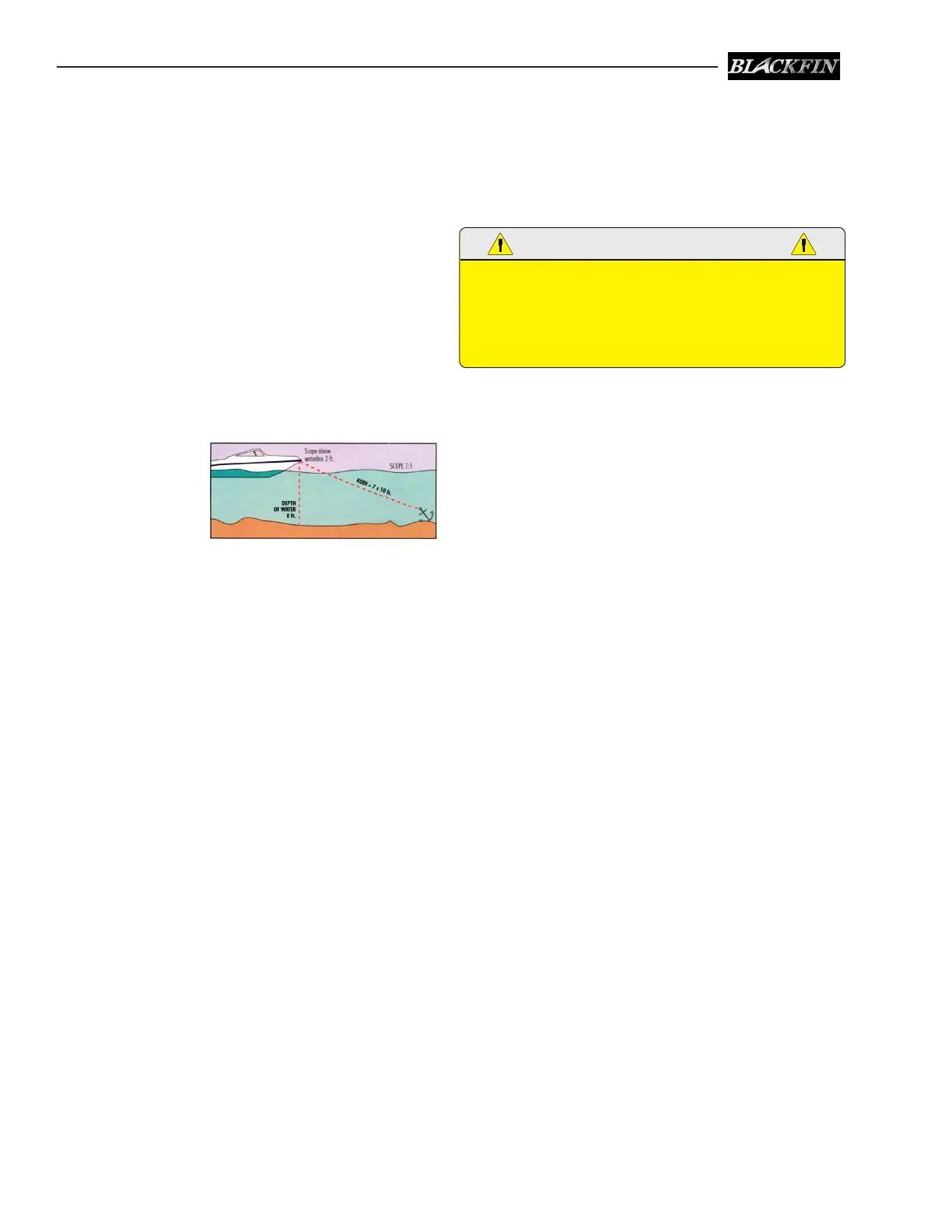
the bow. Pay out anchor line so that it is at least
5 to 7 times the depth of the water and secure
the line to a cleat. Use caution to avoid getting
your feet or hands tangled in the line. Additional
scope of 10 times the depth may be required for
storm conditions. Check landmarks on shore or
your GPS position to make sure the anchor is not
dragging. If it is dragging, you will have to start
all over. It is prudent to use two anchors at the
bow if your are anchoring overnight or in rough
weather.
Do not set a bow and stern anchor when moor-
ing, only anchor from the bow. The stern anchor
will not allow the boat to swing with the current
and wind. If your are anchored in a mooring with
other boats, your boat will not swing with the
other boats in the mooring, creating a potential
for contact with another boat when the tide or
wind changes. Additionally, having the stern to
the wind or tide creates a potentially hazardous
situation for the boat and crew.
Releasing the Anchor
Release the anchor by driving the boat slowly to
the point where the anchor line becomes verti-
cal. It should release when you pass that point.
If the anchor doesn’t release right away, stop the
boat directly above the anchor and tie the line to
the cleat as tight as possible. The up and down
movement of the boat will usually loosen the an-
chor within a minute. Make sure you secure the
anchor and properly stow the line before operat-
ing the boat.
NEVER ANCHOR THE BOAT BY THE STERN. THE STERN
OF THE BOAT IS VULNERABLE TO SWAMPING FROM WAVE
ACTION. ADDITIONALLY, WIND AND CURRENT WILL PUT
MORE STRESS ON THE ANCHOR WHEN IT IS ATTACHED TO
THE STERN. ONLY ANCHOR THE BOAT BY THE BOW
2.6 Controls, Steering or
Propulsion System Failure
If the propulsion, control or steering system fails
while you are operating the boat, bring the throttle
to idle and shift to neutral. Decide whether you
need to put out the anchor to prevent the boat
from drifting or to hold the bow into the seas. In-
vestigate and correct the problem if you can. Turn
the engine o before opening the engine cowling
to make repairs. If you are unable to correct the
problem, call for help.
2.7 Collision
If your boat is involved in a collision with another
boat, dock, piling or a sandbar, your rst priority is
to check your passengers for injuries and admin-
ister rst aid if necessary. Once your passengers
situations are stabilized, thoroughly inspect the
boat for damage. Check below decks for leaks and
the control systems for proper operation. Plug all
leaks or make the necessary repairs to the control
systems before proceeding slowly and carefully to
port. Request assistance if necessary. Haul the
boat and make a thorough inspection of the hull
and running gear for damage.
2.8 Grounding, Towing &
Rendering Assistance
The law requires the owner or operator of a vessel
to render assistance to any individual or vessel in
distress, as long as his vessel is not endangered
in the process.
If the boat should become disabled, or if another
craft that is disabled requires assistance, great


 To Next Page