To Next Page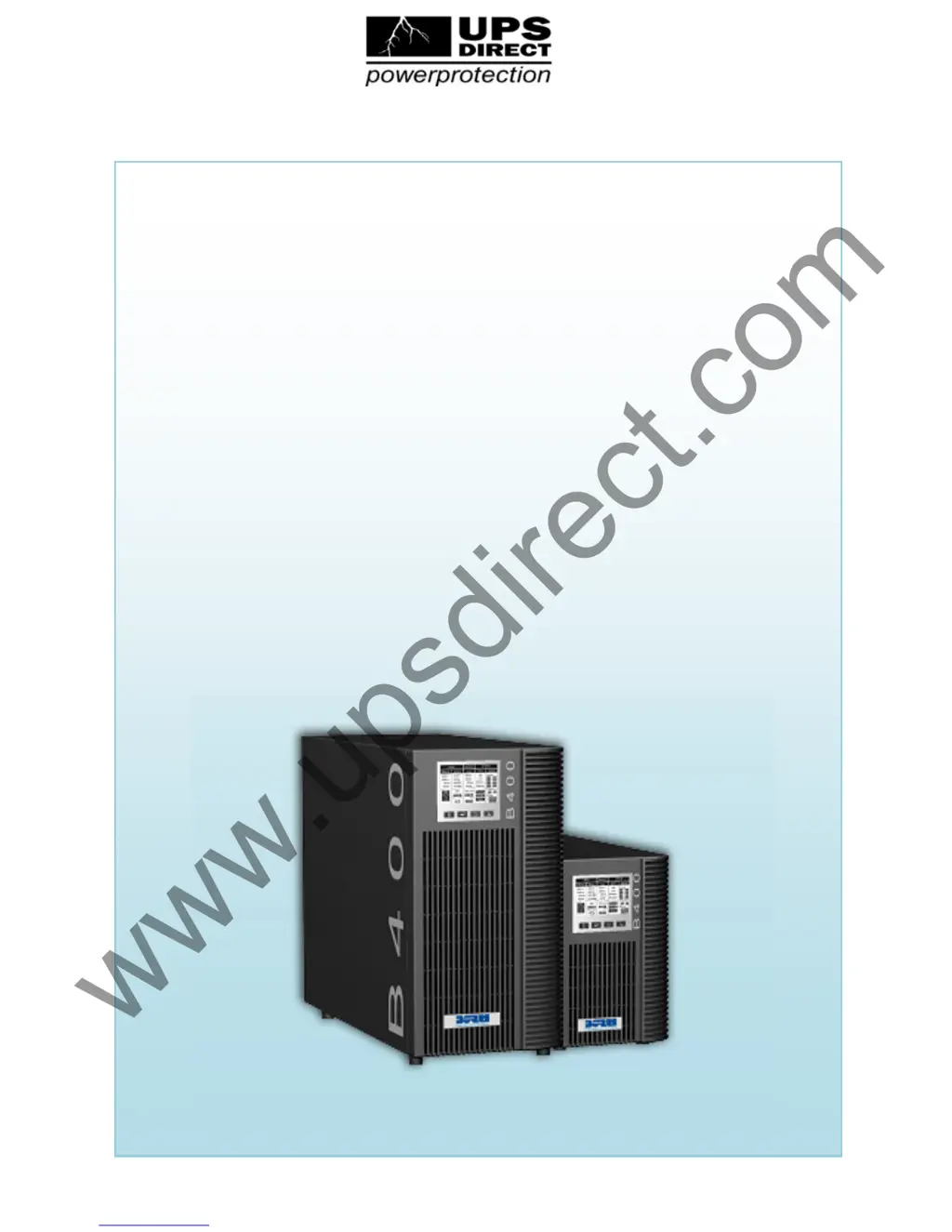
D
Daniel BlakeSep 9, 2025
What to do if the fan fails in my Borri B400-030-B (C) UPS?
- RRobert FrankSep 9, 2025
If there is a fan fail in your Borri UPS, it indicates that the fan is abnormal. Check if the fan is running.

What to do if the fan fails in my Borri B400-030-B (C) UPS?
If there is a fan fail in your Borri UPS, it indicates that the fan is abnormal. Check if the fan is running.
What does 'Battery open' mean on my Borri B400-030-B (C) UPS and how to fix it?
If your Borri UPS indicates a battery open issue, it means the battery pack is not connected correctly. Perform a battery test to confirm. Check that the battery bank is properly connected to the UPS and that the battery breaker is turned on.
How to disable EPO active on Borri B400-030-B (C) UPS?
If the EPO (Emergency Power Off) is active on your Borri UPS, it means the EPO function is enabled. To resolve this, turn off the EPO switch.
What to do if my Borri UPS has no indication even when connected to mains power?
If your Borri UPS has no indication or warning tone even when connected to the mains power supply, it indicates there is no input voltage. Check the building wiring socket outlet and the input cable to ensure they are functioning correctly.
What does 'Site fail' mean on my Borri UPS?
If your Borri UPS reports a site fail, it means the phase and neutral conductors at the input of the UPS system are reversed. Check the UPS installation to correct this issue.
Safety instructions for installing the UPS, including environmental and electrical considerations.
Guidelines for operating the UPS, including mains cable handling and isolation.
Instructions for maintenance, servicing, and fault handling by qualified personnel only.
Recommendations for transporting and storing the UPS safely.
Lists safety and EMC standards (IEC/EN) applicable to the UPS.
Overview of the UPS front panel, including display and buttons.
Instructions for inspecting the UPS packaging and contents for damage.
Guidance on connecting the UPS to the AC power source, including socket requirements.
Details on connecting loads to the UPS output sockets, including types and quantities.
Explanation of the Emergency Power Off (EPO) connection and its function.
Procedure for charging the UPS batteries, recommending a 2-hour initial charge.
Steps for turning on the UPS with and without mains power connected (Cold Start).
How to perform a self-test on the UPS to check battery status.
Procedures for safely turning off the UPS in Inverter and Battery modes.
How to silence the audible alarm during battery or bypass mode operation.
Instructions for connecting external batteries for extended runtime models.
Details the UPS operation in Online mode, including LCD display and overload management.
Explains UPS operation in Battery mode, including audible alarms and input voltage conditions.
Describes the UPS operation in Bypass mode, including load supply and beeping alerts.
Details the UPS behavior in "No output mode", including the '0' code indicator.
Explains the EPO function, its LCD display, and how it affects UPS output.
Describes the ECO mode operation, power source, and transfer time to battery mode.
Details the Converter mode operation, fixed frequency, and derating requirements.
Explains abnormal modes, fault codes, and potential warnings like "short!".
Notes on UPS operation and battery replacement contact.
Recommendations for charging batteries during storage, especially in high temperatures.
Instructions for battery replacement by qualified personnel after service life expiration.
Detailed electrical specifications including input, output, and battery data.
Specifications for ambient temperature, humidity, altitude, and storage temperature.
Table showing typical backup times at 100% and 50% load for different models.
Provides physical dimensions and net weight for various UPS models.
Information about the USB port and its compliance with USB 1.1 protocol.
Pin assignment and description for the optional RS232 DB-9 connector.
Pin assignment and description for the optional AS400 communication protocol DB-9 connector.
 General
| Power Rating | 30 kVA |
|---|---|
| Frequency | 50/60 Hz |
| Communication Interface | RS232, USB, SNMP (optional) |
| Operating Temperature | 0°C to 40°C |
| Output Power | 27 kW |
| Input Voltage | 400 V |
| Output Voltage | 400 V |
| Phase | 3-phase |
| Battery Type | VRLA |
| Topology | Online double conversion |
| Humidity | 0% to 95% (non-condensing) |