l
Determine if the existing utility service and electrical panel capacity is sufficient. Identify costs for
any necessary upgrades and/or a new dedicated electrical panel. ChargePoint recommends using a
certified electrician to evaluate available capacity and identify any upgrades that may be required.
l
If a dedicated EV electrical panel is required, choose a panel located close to the existing electrical
supply.
l
Measure cellular signal levels to ensure adequate cellular coverage at the station locations. To ensure
adequate signal strength in underground or enclosed parking structures, cellular repeaters may be
required.
l
ChargePoint recommends avoiding locations under trees where sap, pollen, or leaves would fall on
the charging station and increase the station owner’s site maintenance workload.
Guidelines for Different Parking Arrangements
l
Choose adjacent parking spaces in an area with adequate lighting.
l
Consider how easily drivers can find the stations they need to access.
l
Check local requirements for accessibility and pathway width, sometimes called “path of travel”, to
ensure that station placement does not restrict sidewalk use.
l
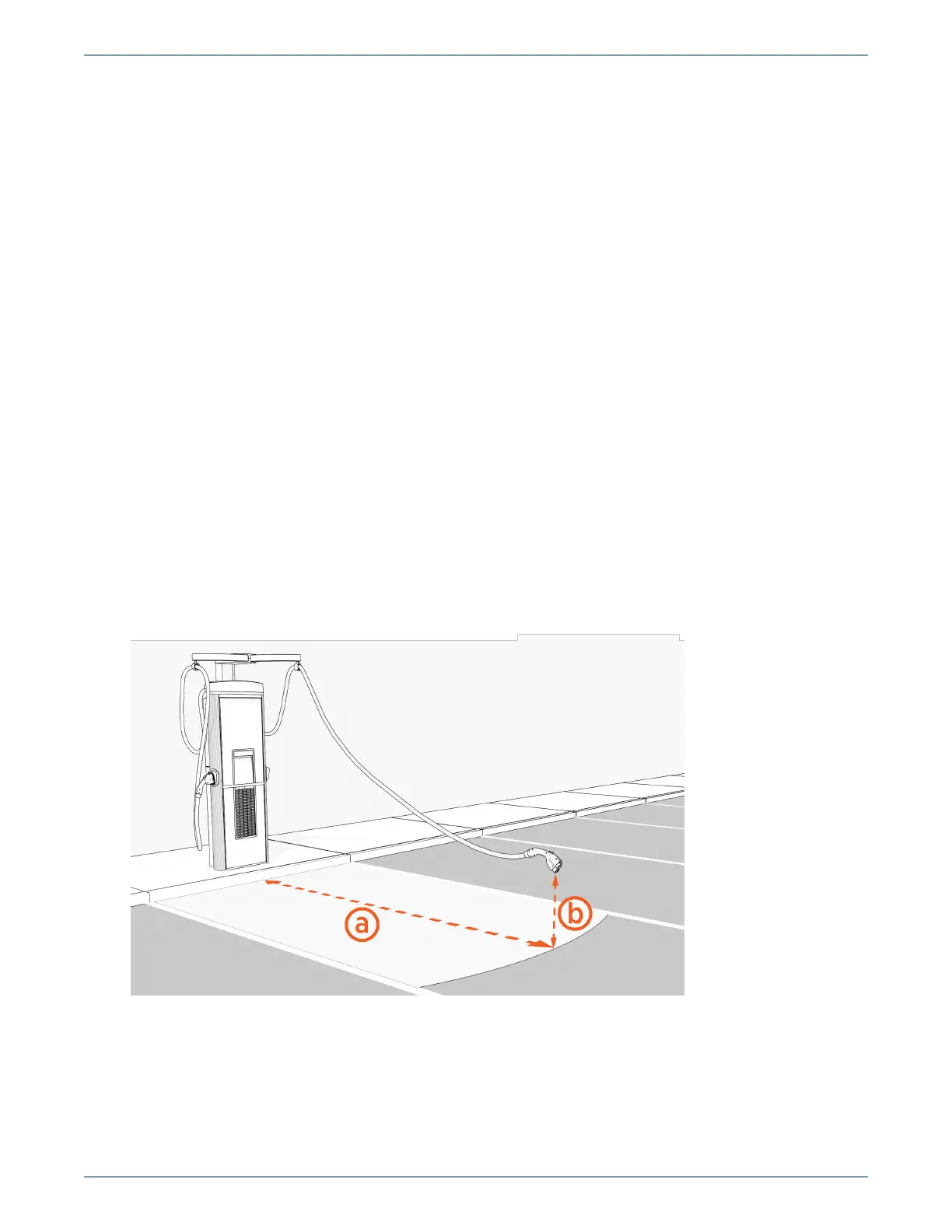
The maximum reach from the station to charge port on a typical vehicle is approximately 3.76 m
(12ft 4 in) (a) at a height of 0.6 m (2 ft) (b) above the ground.
l
Building a pad into the head of a parking space (instead of on the sidewalk) is permited if local code
allows it compared to the minimum parking space length and the pad meets all pad requirements
listed in this document.
l
The Express 280 can have different charging cable types (CCS1 and CHAdeMO) to offer flexibility, or
it can have two of the same cable type. The cables cannot both charge at the same time.
4
Charging Station Placement





 To Next Page