Transformer Configuration
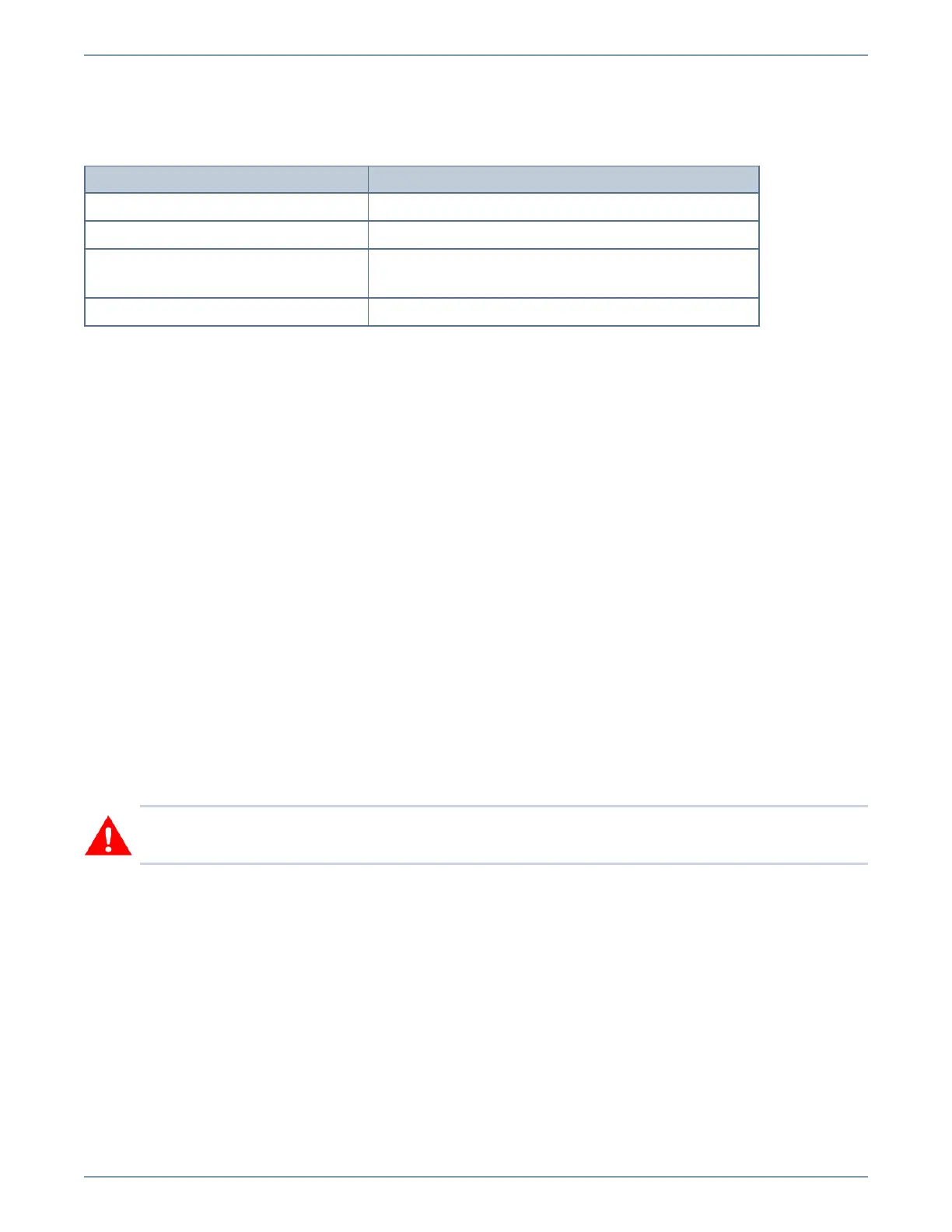
Refer to the following tables to configure electrical service.
Input Rating 480 VAC, 3-phase, 96 A, 60 Hz
Electrical Service Configuration 277/480 4 wire WYE*
Product Connection 3-phase 480 plus ground
(neutral not required)
Harmonic Current Rating Factor of 4 or higher is recommended
*Delta (floating or grounded) is not supported.
Note: A 3-phase autotransformer with a grounded center point can be used for installation as long as the
impedance of the autotransformer is less than 15% of the charging station impedance at rated power.
Input to output voltage step down factor will be relatively small to allow for lower input impedance, for
example, 600V AC to 480V AC, 480V AC to 400V AC etc but not from medium voltages to 3-phase rated
voltage.
Note the following examples:
l
For Express 280 with 80 kW output power, ChargePoint recommends a 100 kVA transformer.
l
For a paired Express 280 with overall 160 kW output power, ChargePoint recommends a 200kVA
transformer.
Contact ChargePoint before installing transformers with higher capacity.
AC Disconnect Switch
A local AC disconnect switch, separate from the shunt trip wiring, is recommended to be installed between
each charging station and the electrical panel. This is especially important if the main electrical panel or
utility room is distant, out of line of sight, or has restricted access. Refer to disconnect switch requirements
per NEC Article 625, “Electric Vehicle Charging and Supply Equipment Systems”.
WARNING: If service is performed on either Paired charging station, both stations must be
powered off at their AC disconnect switches and locked out/tagged out for safety.
Do not install a DC disconnect between Paired charging stations.
Residual Current Device (RCD) Use
The use of an RCD is not recommended. Using RCDs can create nuisance tripping, especially during
transient conditions such as power restoration, line surge, line dips, or phase loss.
To reduce the risk of shock, the charging station provides:
l
Galvanic (reinforced) isolation between the AC input and DC output. Current does not flow to earth
ground, even in cases such as charge cable damage.
19







 To Next Page