21798-01-EN Rev. 04 Page 34
6.2.3 Inspection of Sensor Face
During routine drum “chipping” the SMARThatch sensor should be removed
to avoid damage. At this time, the sensor face should be inspected for any
signs of damage, wear or concrete build up. Any damage or excessive wear
should be reported to CiDRA Concrete Customer Support (Section 1.4).
Concrete build-up can be carefully cleaned off the sensor casting surface;
however, hammers, chisels, etc. should not be used on the elastomeric
surfaces on the sensor face.
6.3 Fuse Replacement (Truck Fuse Panel or Display Option 2)
In the event that an electrical fault causes a fuse to open, the operator should
notify trained service personnel to assess the cause of the fault. Fuse
replacement is not intended to be performed by the operator and should be
performed only by trained service personnel
The service personnel may, when it is safe to do so, replace the fuse using the
proper replacement fuse.
6.4 Battery
6.4.1
Disposal
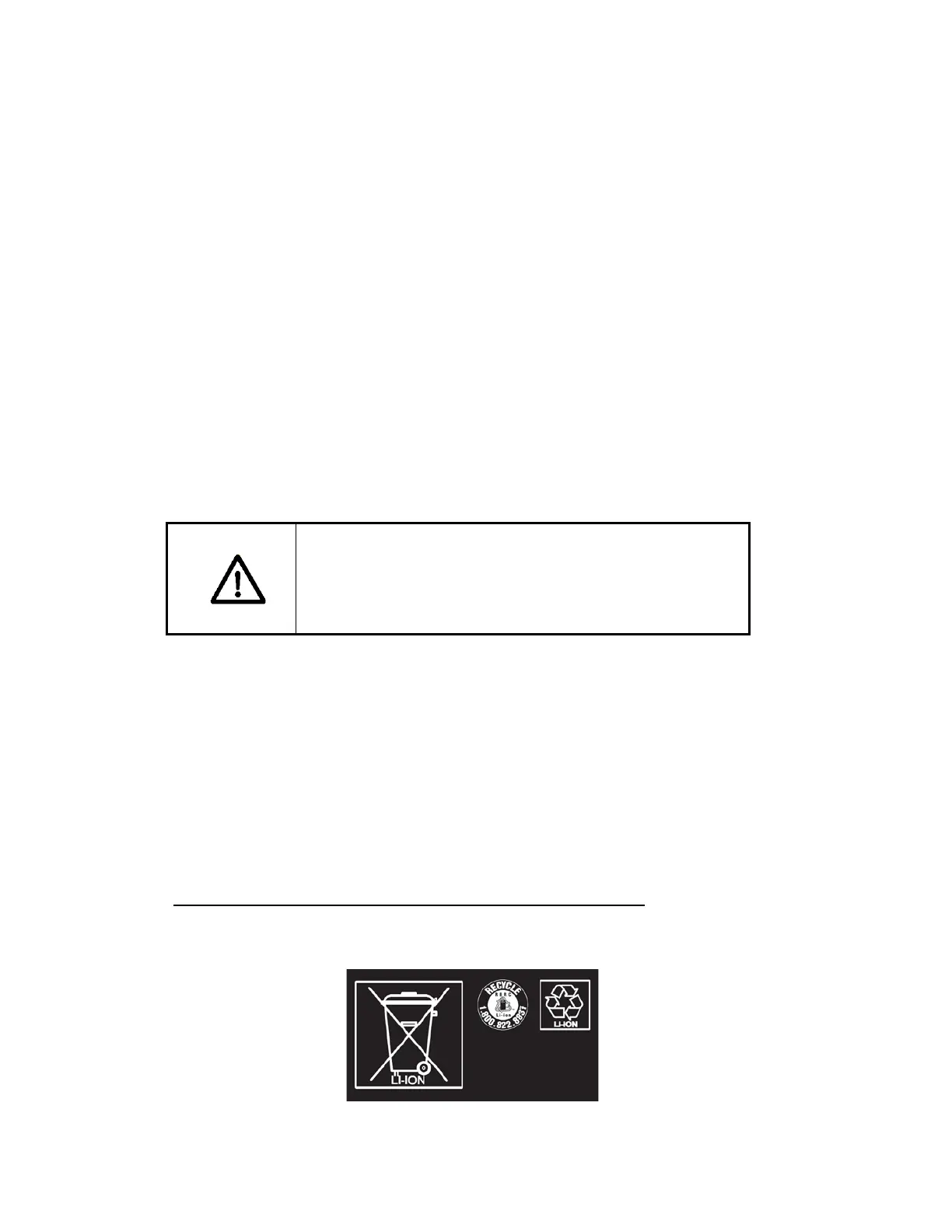
The “smart” lithium-ion (Li-Ion) battery that powers the SMARThatch sensor is
designed to provide several years of service under typical operating
conditions. Over time they will eventually begin to lose capacity and when no
longer holding a sufficient charge they should be replaced. Contact CiDRA
Concrete Customer Support (Section 1.4) or the battery manufacturer to
purchase new batteries.
Do not return used batteries to CiDRA Concrete Systems. They should be
disposed of locally in accordance with local and state regulations.
CAUTION
Fuse replacement is not intended to be performed by
the operator and should be performed by trained
service personnel



 To Next Page