83
Section 6. Maintaining Your Lift Truck
Lithium-Ion Battery
Battery Charging
Always designate a specic area for the purpose of charging lithium-ion batteries. When
charging, make sure the battery charger is turned OFF before connecting the battery charging
cables. Lithium-ion batteries allow for fast charging, if the battery does not charge completely
in a normal period or if the battery management system (BMS) indicates a fault, then remove
the battery from service.
Charging the Battery:
1. Park the lift truck.
2. Turn the lift truck OFF.
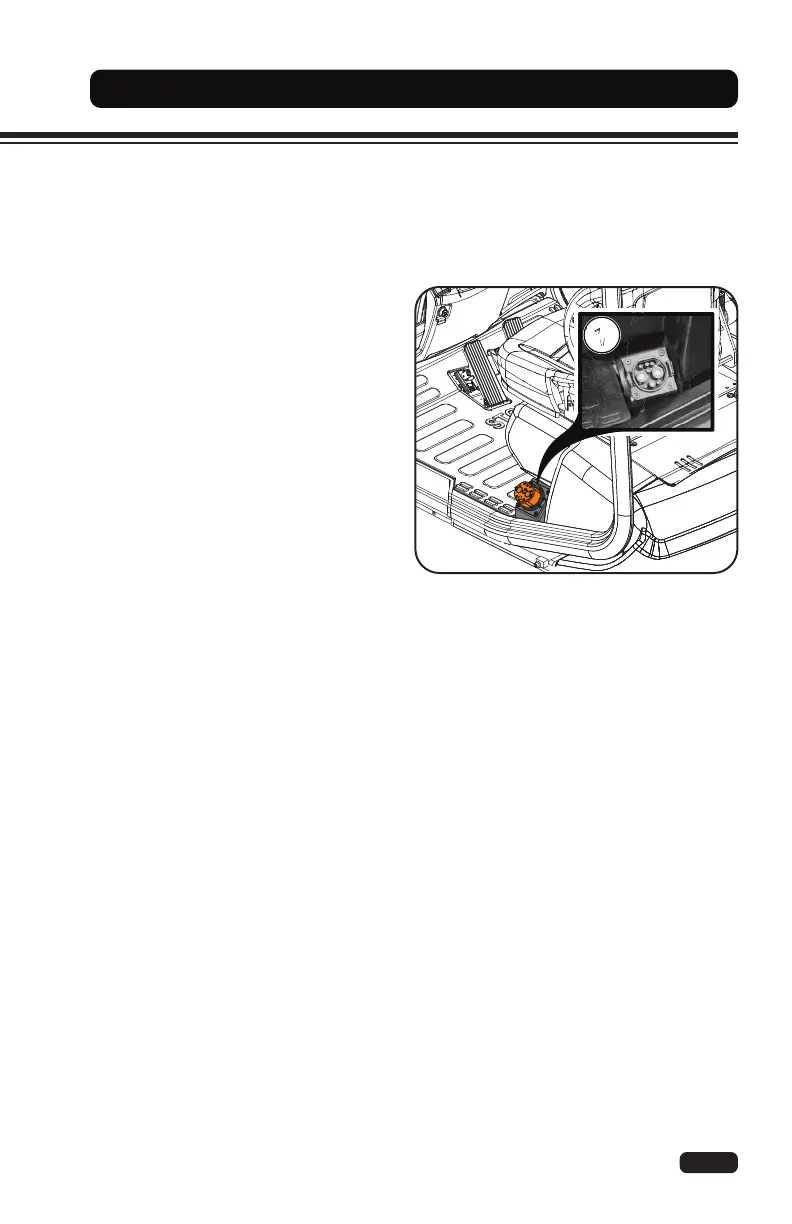
3. Open the charging receptacle cover.
4. Connect the charger cable to the
charging receptacle (1).
5. Follow the recommended procedure
provided by the BMS or the charging
station manufacturer.
Battery Care
Cleaning
CLARK recommends to only use compressed air at less than 207 kPa (30 psi) or a slightly
damp towel to clean the battery. The battery, or its charging station, may be equipped with
fans, heat sinks, or other cooling devices that require periodic cleaning. Always know and
follow the battery manufacturer's recommendations for cleaning and service.
Service
Lithium-ion batteries typically require no maintenance. If needed, any service or maintenance
should be performed by a certied technician. CLARK recommends that the battery be
inspected annually by a certied technician familiar with industrial lithium-ion batteries. Record
all battery service, maintenance, and inspections to maximize the service life of your battery
and lift truck.
Optimize Battery Life
Always use and follow the battery management system (BMS). The BMS is the electronic
system that monitors battery data and use that data to its operating environment to inuence
the battery's safety, performance, and service life. It also functions as a safety cut-o device
in case of overcharging, overcurrent, or overheating. Lithium-ion battery life is greatly reduced
if used outside a temperature range of 0ºC to 40ºC (32ºF to 104ºF) or in an environment with
greater than 85% humidity. CLARK recommends to opportunity charge lithium-ion batteries.
This is when the battery is recharged for short intervals during a shift period. It reduces or
eliminates the need for long charging periods, changing batteries during a shift, and extending
shift periods.


 To Next Page