Operation
Page 20
3.12 Handling alarms
The CSA-300 transceiver performs self checking functions continuously. If a self check fails an alarm will occur.
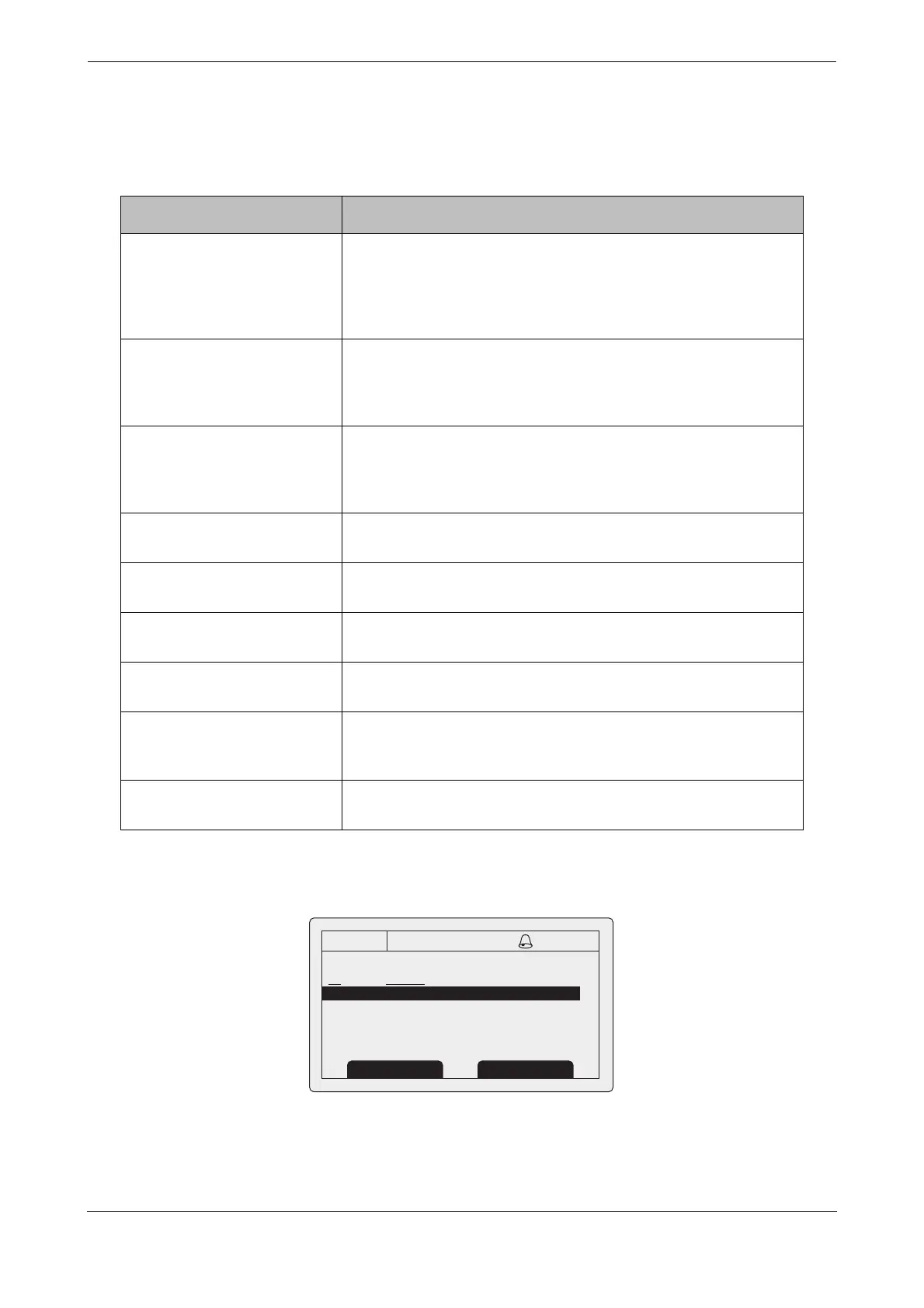
Possible alarm conditions are listed in
Table 2.
Table 2 Alarm conditions
A new alarm will be indicated by display of the alarm notification screen (see Figure 16). The alarm icon in the
status bar will flash whilst an alarm is active and not acknowledged by the user.
Figure 16 Alarm notification screen
Alarm condition Description
Transmitter malfunction This alarm can occur if there is a fault with the transmitter or if
the antenna VSWR exceeds allowable limits. The alarm will be
cleared if the transmitter recovers normal operation or the VSWR
measurement returns to an allowable value. If this alarm condi
-
tion persists contact your dealer or installer.
Antenna VSWR exceeds limit This alarm condition can occur if the VSWR (Voltage Standing
Wave Ratio) of the AIS antenna exceeds pre-defined limits. This
alarm is cleared if the VSWR returns to an allowable value. If this
alarm condition persists contact your dealer or installer.
Receiver channel x malfunc-
tion
This alarm occurs should the receiver hardware malfunction. The
receiver is identified by the value of x. If the receiver returns to
normal operation this alarm will be cleared. If this alarm condition
persists contact your dealer or installer.
External EPFS lost This alarm occurs if the position from the external Electronic
Position Fixing System (i.e. GNSS) is invalid or lost.
No sensor position in use This alarm occurs if the transceiver has no valid position informa-
tion from any connected sensor.
No valid COG information This alarm occurs if the transceiver has no valid Course Over
Ground information from any connected sensor.
No valid SOG information This alarm occurs if the transceiver has no valid Speed Over
Ground information from any connected sensor.
Heading lost or invalid This alarm occurs if the transceiver has no valid heading infor-
mation from any connected sensor, or if the heading is unde-
fined.
No valid ROT information This alarm occurs if the transceiver has no Rate Of Turn informa-
tion from connected sensors or via internal calculation.
13:20:47
ALARM NOTIFICATION:
ID ALARM
35: No valid ROT information
32: Heading lost/invalid
25: External EPFS lost
OK
GPS
INT
Goto List Ack


 To Next Page