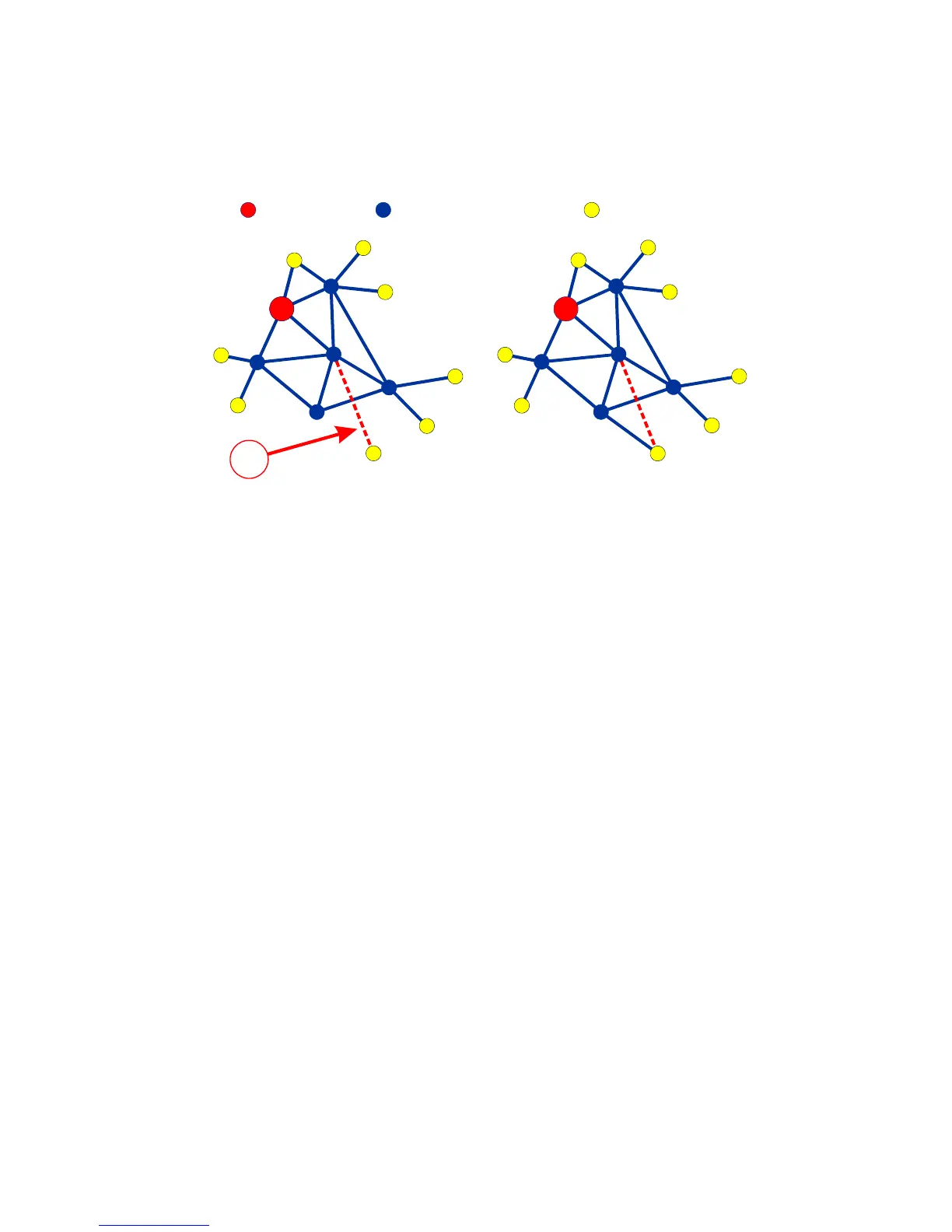
The route taken by the message can vary depending on network load and link reliability. The
ability to dynamically reconfigure the network is termed self-healing. In the figure below the
self-healing ability is shown.
Figure 7 - A Typical Mesh Network
Mesh Transmitter
Gateway
Transmitter
!
Data transfer interrupted
transmitter continues to
store data.
Transmitter reroutes to
self-heal network and
transfers stored data.
A
B
A
B
Meshing Transmitters and Backbone Transmitters
Whenever a RF512 or RF513 transmitter is powered by a RF520 mains adaptor it will become
a Meshing unit and will form part of the radio mesh network. However if external power is
removed it will revert back to a normal transmitter.
RF512 and RF513 have the option to become “Network Backbone” units or routers which will
intelligently forward messages on behalf of other transmitters. This option is enabled using a
setup option in the Gateway. See Adding Transmitters on page 23. Backbone transmitters will
form part of the mesh network continuously even when not powered by a RF520. Due to the
very large drain on the internal battery, backbone transmitters must be powered using a
RF520 mains adaptor. The internal battery is considered only as a backup battery for
backbone transmitters.
Automatic Data Retrieval (ADR)
The fact that transmissions between transmitters and the RF500 Gateway are acknowledged
ensures that the transmitters know exactly which data records have been successfully
transferred to the Gateway and those which must be re-transmitted. Therefore if the Gateway
is temporarily unable to receive or transmit messages for whatever reason, data will not be
lost during this period. When the Gateway is again able to receive and transmit properly the
transmitters will re-transmit those records which were unable to be transmitted during the
period of outage.
This retransmission of data happens automatically without user intervention and results in
seamless graphical and tabular data with no gaps.



 To Next Page