Glossary
21 CFR – The FDA (Food and Drug Administration) in the USA, issued regulations Title 21
CFR (Code of Federal Regulations) Part 11 that provide criteria for acceptance by FDA or an
approved regulatory body, for the acceptance of electronic records, electronic signatures, and
handwritten signatures executed to electronic records as equivalent to paper records and
handwritten signatures executed on paper. These regulations, which apply to all FDA program
areas, are intended to permit the widest possible use of electronic technology, compatible with
the FDA’s responsibility to promote and protect public health. Part 11 applies to any record
governed by an existing FDA predicate rule that is created, modified, maintained, archived,
retrieved, or transmitted using computers and/or saved on durable storage media. In other
words any record from a data logger for instance that is at some stage stored on a PC or
where a PC is used to retrieve the data, 21 CFR Part 11 can be applied. The RF500 system is
designed to aid compliance with 21 CFR Part 11.
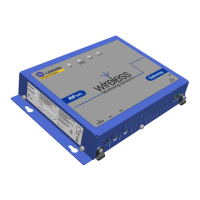
Antenna – The Gateway and associated transmitters are provided with an antenna. The
antenna is designed for both transmit and receive and is configurable for either horizontal or
vertical mounting.
Ethernet/Network/LAN – Terms used to describe the connection of the Gateway to various
users with access to the system. Personal Computers are connected together using a
network, via Ethernet ports combining to make a Local Area Network of many users. By
browsing through web pages, these users gain access to the Gateway for all setup and data
viewing.
Event Logging – All transmitters have the capacity to measure from one or more sensor
inputs at a number of pre-defined logging intervals. However should an alarm event occur
between log intervals then the transmitters will wake up to record this event. As soon as the
alarm is triggered, the transmitter will wake up and transmit the alarm back to the Gateway via
the mesh network. This technique allows for long intervals between taking static readings
knowing that if an alarm does occur it will be captured. This results in a robust system that
only takes a reading when there is an event to record.
FCC – Federal Communications Commission.
Firmware – Terms used for the software that runs in each transmitter to make it work.
Firmware upgrades can be installed using the wireless network.
Frequency – The frequency in use by RF500 is 2.405GHz.
IE – Internet Explorer. Users of the system log in to RF500 by using Internet Explorer or other
web browsing software either on a LAN, Modem or direct to the Gateway.
Leaf Transmitter – A leaf transmitter is designated during setup and will generally only be
battery powered. It will go into a low power mode when not transmitting or taking sensor
readings, only becoming active when it’s required to transmit data.
Licence free – Term used to describe the frequency the system operates in terms of licence
to broadcast. RF500 uses a licence free band of 2.4GHz where the end user is not required to
purchase any kind of licence in order to use the product. Also refer to the FCC approvals.
Meshing – The technology used in the RF500 system provides a unique operating
environment for the transmitters. Transmitters are setup to be either part of the Backbone or to
be Leaf Transmitter. Those designated as part of the Backbone remain in RF contact with
each other. By doing this the system is able to dynamically adapt to changing conditions
automatically ensuring the integrity of the system at all times. The meshing technology allows
the system to determine the best route for any data packets to be transmitted from the
transmitters back to the gateway or vice-versa.


 To Next Page