ENTER key See
RETURN
key.
[:_~
Erase A synonym for
the
MS-DOS
del
command. See also Del.
[~
Error messages Messages that appear
on
the
screen
after
MS-DOS
detects
a
problem
while trying
to
process
a
command
or
program. See
the
MS-DOS
User's Reference for
the
appropriate
response
to
each
error
message.
File A collection
of
related information. A file
on
a disk
can
be
compared
to
a file folder in a desk drawer. For example, a file
folder named
friends might contain
the
names and addresses
of
your
friends. A file
on
a disk
could
contain
the
same information,
and
could
also
be
named
friends. Programs are also
stored
in files.
Filename A filename
can
be
from
one
to
eight characters in
length and can have an extension
of
up
to
three
characters
separated from the filename by a
period
(.).
An
example
of
a com-
plete
filename is progress. rpt. Certain filenames are reserved by
MS-DOS and should
not
be
used
when
naming
your
files. These
filenames are:
aux,
clockS, com, con, kybdS, lpt,
1st,
nul,
pm,
and
semS.
Filename extension A filename extension contains from
one
to
three
characters. Most application programs supply
their
own
extensions for files they create. For example, all GW-BASIC files
use a filename extension
of
. bas. See also Filename.
Fixed disk See Hard disk_
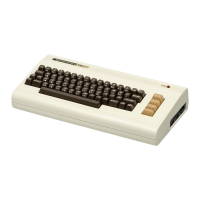
Floppy disk Used for storing programs
and
files.
Format
An
MS-DOS
command
that
structures
blank disks
so
that
MS-DOS
can
store
data
on
them. You
must
format every blank disk
before it can
be
used
with
MS-DOS.
Fonnat
also checks
the
disk for
defective spots.
GW-BASIC A general-purpose
computer
language. Often, BASIC
(or
GW-BASIC)
is
the
first
computer
language that
people
learn.
Hard disk Sometimes called a
fIXed
disk,
one
that is built into
the
computer. A hard disk
can
store
much
more
information than
a floppy disk, and
the
computer
can
retrieve information from
it
faster_
Memory Another name for computer storage.
Monitor The
computer
screen.
MS-DOS master disk MS·
DOS
is distributed
on
one
or
more
floppy
disks (called
master
disks)
along
with
the
user's manuals. Before
you
start using MS-DOS
on
a routine basis, you should always make
a backup
copy
of
the
master disk
or
disks.
Terms
41
F



 To Next Page