If
you will
be
working primarily
with
files
on
drive
B,
it is easier
to
change the default drive
to
B,
so that you
won't
have
to
type
the
letter
b,
followed by a colon,
with
ellery command and
filename.
Command
Just
as you will run programs
to
create
and update files containing
your
data, you will also
need
to
run
some
special programs, called
MS-DOS commands, that let you manipulate entire files.
When
you give MS-DOS certain commands, you are asking
the
com-
puter
to
perform tasks. For example,
when
you use
the
diskcopy
command
to
copy
your
MS-DOS master disk, you are running a pro-
gram named
diskcopy
on
the MS-DOS disk.
Other
MS·DOS commands:
• Compare, copy, display, delete, and
rename
files
• Copy, format, and label disks
• Run
your
programs, as well as
those
supplied
with
MS-DOS
such
as
edlin
•
List
directories
• Enter the
date
and time
• Set
printer
and
screen
options
Chapter
4,
"Using Commands," contains
more
information
on
MS-DOS commands.
In
addition, the MS-DOS User's Reference con-
tains detailed descriptions for each
MS·DOS command.
Keys You Use with MS-DOS
Now that you've learned about MS-DOS commands, files, drives,
etc.,
next
you'll learn about the keys you will
be
using.
In addition
to
the
keys you'd find
on
a typewriter,
your
computer
keyboard has
some
keys that have special meanings
to
MS-DOS.
First,
note
that
there
are
two
important differences
between
a
typewriter keyboard
and
a
computer
keyboard:
[JJGJ
A
computer
understands
the
difference
between
a
one
and a lowercase L. Be
sure
you
don't
type a lowercase L
when
you
mean a
one.
Learning About MS-DOS
51
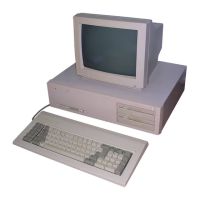
The MS-DOS keyboard


 To Next Page