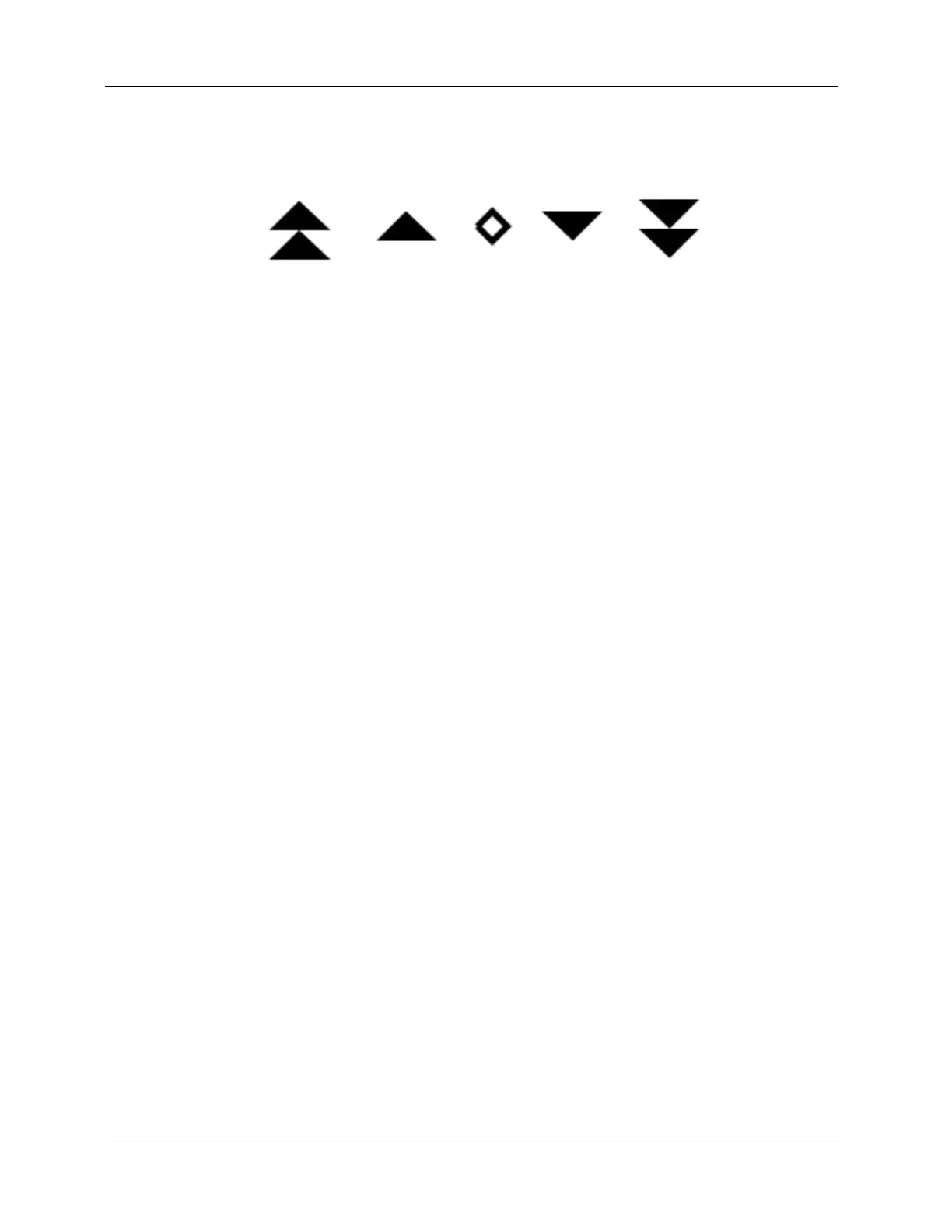
triangles mean that you have to increase your speed more than 6 km/h (3 km/h each) to fly
at the speed to fly. One triangle suggests a speed increase of 3-to-6 km/h. A diamond means
that your speed is correct. Downward-pointing triangles analogously suggest slowing down.
Wind speed: this item shows the wind speed. Its value is automatically calculated when you
turn more than 270 degrees.
Optimal Speed indicator: it is a very intuitive graphic bar that shows the pilot, in real time,
the optimal speed to fly (referred to air) in relation to the particular phase of flight. While
waiting the start the instrument will calculate the optimal speed as the one more close
possible to the best glide ratio. While in cross or in competition the optimal speed will take in
consideration the MacCready factor. While in glide to goal, and in particular in Conical ESS,
the speed indicator will calculate the optimal speed to reach the cone in the less time
possible. Optimal speed is achieved, in any different phase, when the indicator is shown as
diamond in the green central part of the bar. If the speed indicator is allocated in the lower
red part and showed by a double arrow, it means the pilot has to increase the speed and, at
the contrary, when the indicator is allocated in the upper red segment it meand the pilot has
to reduce his speed.
Wind arrow: the wind speed is automatically calculated when you turn more than 270
degrees. It is represented graphically by the standard meteorological symbol: an arrow
indicating the wind direction, with various tails indicating its intensity. A short tail corresponds
to 5 knots, a long one to 10 knots. The direction is shown with respect to your motion: an
upward pointing arrow means that you are flying downwind.
Wind arrow (North): the wind arrow with the “N” label shows the wind direction with respect
to the North. It is particularly useful when using the map with "North up" orientation.
Final-glide data
Arrival altitude above Goal: C-Pilot PRO calculates continuously the arrival height above
goal at speed to fly, taking into account the wind speed and the wing polar. This field helps
you choosing when to start your final glide to goal. The calculation includes the optimised
path through the remaining turnpoints.
Arrival altitude at Goal: this is the arrival altitude above mean sea level at goal. It is
calculated as the previous item. The maximum value shown is 9999 m.
Required altitude to Goal: indicates the minimum altitude above mean sea level that you
need to reach goal flying at speed to fly.
Distance to Goal: this is the length of the optimised route from where you are to goal.
Glide ratio required to Goal: shows the glide ratio that you need to arrive at goal gliding
along the optimised route.


 To Next Page