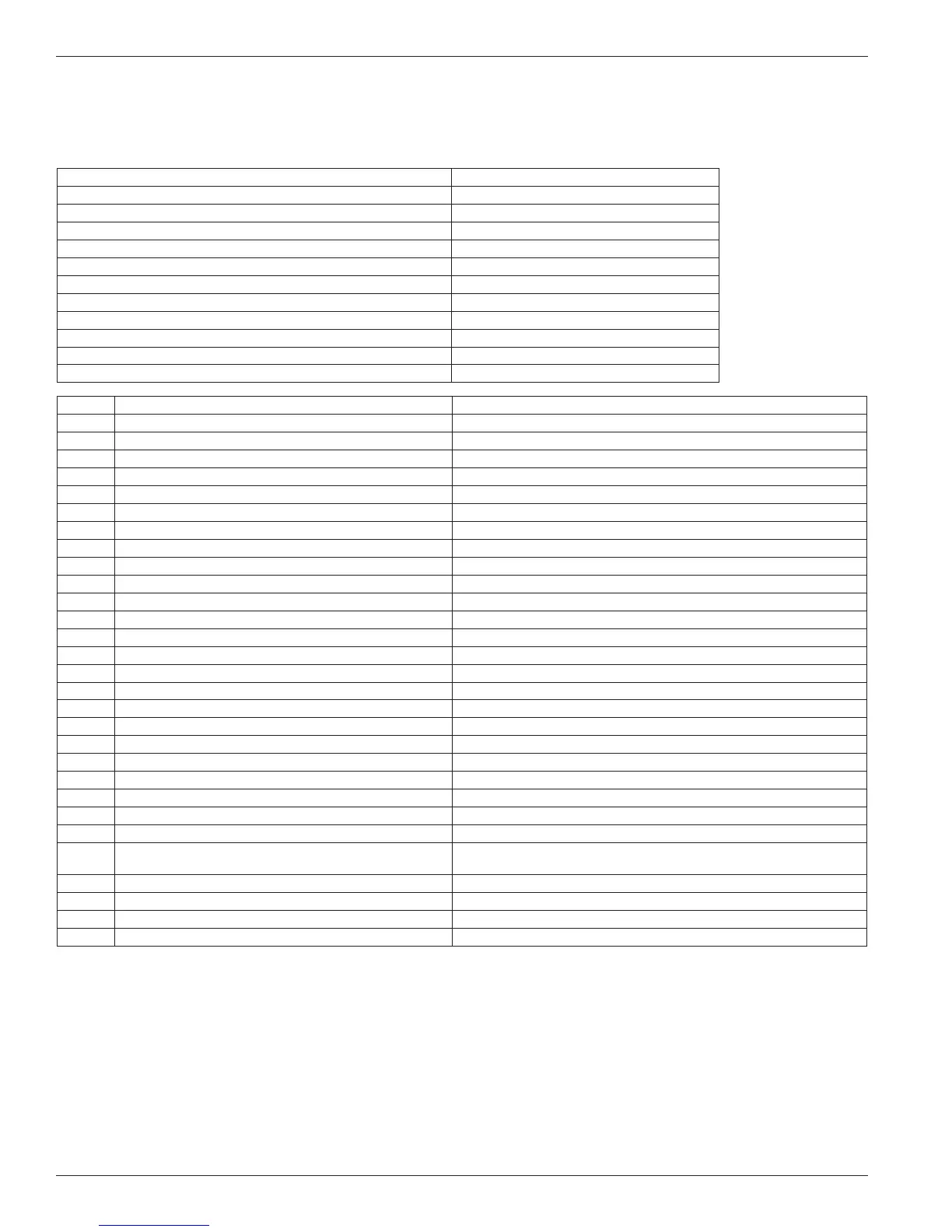
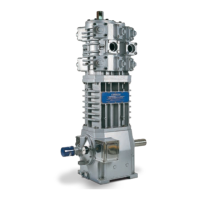
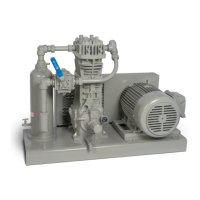
Two-Stage Compressor Troubleshooting
Two-stage compressors can have problems that never
occur with single-stage machines. Interstage pressure
is an important indicator of the condition of a two-
stage compressor.
If interstage pressure is too high:
1. Second stage valves may be broken or leaking.
2. Second stage piston rings may be worn.
If interstage pressure is too low:
1. First stage valves may be broken or leaking.
2. First stage piston rings may be worn.
In most cases, problems with your Corken gas compressor
can be solved quite simply. This chart lists some of the
more frequent problems that occur with reciprocating
compressors along with a list of possible causes. If you
are having a problem which is not listed, or if you cannot
find the source of the problem, consult the factory.
Appendix D—Troubleshooting
Problem Possible Cause
Low capacity 1, 2, 3, 4, 8, 15, 17
Overheating 1, 2, 3, 5, 6, 11, 16
Knocks, rattles and noise 1, 7, 9, 10, 11, 15
Oil in cylinder 8, 12, 15
Abnormal piston-ring wear 1, 3, 5, 6, 11, 15, 16
Product leaking through crankcase breather 8, 15
Product leakage 4, 8, 15, 17
Oil leakage around compressor base 17, 18, 19, 20
No oil pressure 19, 20
Excessive vibration 1, 7, 9, 10, 11, 13, 14, 28
Motor overheating or starter tripping out 21, 22, 23, 24, 25, 26, 27, 28
Ref. Possible Causes What To Do
1. Valves broken, stuck or leaking Inspect and clean or repair
2. Piston ring worn Inspect and replace as necessary
3. Inlet strainer clogged Clean or replace screen as necessary
4. Leaks in piping Inspect and repair
5. Inlet or ambient temperature too high Consult factory
6. Compression ratio too high Check application and consult factory
7. Loose flywheel or belt Tighten
8. Worn piston-rod packing Replace
9. Worn wrist-pin or wrist-pin bushing Replace
10. Worn connecting-rod bearing Replace
11. Unbalanced load Inspect valve or consult factory
12. Oil in distance piece Tighten packing nut — drain weekly
13. Inadequate compressor base Strengthen, replace or grout
14. Improper foundation or mounting Tighten mounting or rebuild foundation
15. Loose valve, piston or packing Tighten or replace as necessary
16. Dirty cooling fins Clean weekly
17. 4-way control valve not lubricated Inspect and lubricate
18. Leaking gas blowing oil from crankcase Tighten packing
19. Bad oil seal Replace
20. No oil in crankcase Add oil
21. Oil-pump malfunction See oil pressure adjustment
22. Low voltage Check line voltage with motor nameplate. Consult power company
23. Motor wired wrong Check wiring diagram
24. Wire size too small for length of run Replace with correct size
25. Wrong power characteristics Voltage, phase and frequency must coincide with motor nameplate.
Consult with power company.
26. Wrong size of heaters in starter Check and replace according to manufacturer’s instructions
27. Compressor overloading Reduce speed
28. Motor shorted out See driver installation
29. Bad motor bearing Lubricate according to manufacturer’s instructions
Another cause for high interstage pressure is a low
compression ratio. Two-stage machines should not be
used in applications where the compression ratio is
below 5. To use two-stage compressors in this kind of
situation results in rapid ring wear, machine imbalance
and excessive horsepower. If you think you have a
problem in this area, consult factory.
D. Troubleshooting
32


 To Next Page