EasyManua.ls Logo

curt TruTrack 17601 - User Manual

curt TruTrack 17601
5 pages
Print Icon
To Next Page IconTo Next Page
Loading...
CURTMFG.COM
PRODUCT SUPPORT: 877.287.8634
17601-INS-RB
09/23/2021
ECN8903
PAGE 1
Product Registration and Warranty
CURT stands behind our products with industry-leading warranties.
To get copies of the product warranties, register your purchase
or provide feedback, visit: warranty.curtgroup.com/surveys
Max Capacity Without Spring Bars
Gross trailer weight (GTW) 10,000 lbs.
Tongue weight (TW) 800 lbs.
When spring bars are not used, the weight
rating is dependent upon the trailer ball
manufacturer's weight ratings. Do not exceed
the maximum weight rating of the trailer ball.
Max Capacity With Spring Bars
Gross trailer weight 8,000 - 10,000 lbs.
Tongue weight 800 - 1,000 lbs.
The tongue weight rating of the spring bars
represents the capacity of a pair of bars, not
an individual bar. Always use a pair of spring
bars and be sure they are rated the same.
INSTALLATION MANUAL
17601
Tools Required
Ratchet Socket set
Torque wrench Tape measure
Level of Difficulty
Moderate
Installation difficulty levels are based on time
and effort involved and may vary depending on
the installer level of expertise, condition of the
vehicle and proper tools and equipment.
NOTICE
Visit www.curtmfg.com for a full-color copy of this
instruction manual, as well as helpful videos, guides and much more!
Before you begin installation, read all instructions thoroughly.
Proper tools will improve the quality of installation and reduce the time required.
Some states require a clear view of license plates.
Remove trailer ball when not in use if it restricts view.
This product complies with regulation V-5, C.S.A. Standard D-264 and safety
requirements for connecting devices and towing systems of the State of New York.
Periodic inspection of your product should be performed
to ensure all hardware and / or components remain secure.
To help prevent damage to the product or vehicle, refer to the specified
torque specifications when securing hardware during the installation process.
WARNING
Never exceed the vehicle manufacturer's recommended towing capacity.
The loaded ball height should never be greater than the uncoupled ball height. Front wheel overload
and loss of rear wheel traction can result and can lead to unstable handling. It can reduce
braking ability and create a tendency to jackknife when turning and braking at the same time.
If the loaded trailer ball height is greater than the uncoupled height, reduce take-up
on the spring bar, remeasure and adjust until the proper height is obtained.
Maintenance
Keep the socket-mounted ends of the spring bars and the lock pins
in the head assembly free from dirt and well lubricated. Excessive wear
in this area may indicate an overload or inadequate lubrication.
Keep the head assembly exterior clean. Do not allow dirt
or stones to lodge between the spring bars and the head.
Keep hitch parts painted to prevent rust and maintain good appearance. Do not paint over labels.
Keep lift brackets clean and lubricated to ensure ease of operation.
Parts List
Item Qty Description
1 1 Hitch head
2 2 Spring bar
3 2 Spring bar support bracket
4 1 Adjustable shank
5 1 Snap-up handle
6 1 Hitch pin & clip
7 1 Hitch ball, 2-5/16"
8 1 Lock washer, 1-1/4"
9 1 Hex nut, 1-1/4"-12
10 2 Hex bolt, 3/4"-10 X 5"
11 4 Serrated conical washer 3/4"
12 2 Nylock nut, 3/4"-10
13 2 Hex bolt, 5/8"-11 X 1-3/4"
14 2 Square head bolt,
5/8"-11 X 1-3/4"

Question and Answer IconNeed help?

Do you have a question about the curt TruTrack 17601 and is the answer not in the manual?

Summary

Assembly and Installation Steps

Step 6: Lubricate and Install Spring Bars

Applying grease and inserting spring bars into the hitch head sockets.

Step 7: Attaching Trailer to Ball

Coupling the trailer to the hitch ball and adjusting for tongue weight.

Step 8: Installing Spring Bar Support Brackets

Marking and positioning the spring bar support brackets on the trailer A-frame.

Step 12: Raise Spring Bars

Hooking the lift bar into the L-bracket to raise the spring bar.

Step 13: Secure Spring Bars

Prying the spring bar onto the L-bracket and securing it.

Step 14: Check Vehicle Height

Adjusting head angle and vehicle height for even loading.

Step 15: Tighten Head Fasteners

Final tightening of all head assembly bolts and set screws to specified torque.

Summary

Assembly and Installation Steps

Step 6: Lubricate and Install Spring Bars

Applying grease and inserting spring bars into the hitch head sockets.

Step 7: Attaching Trailer to Ball

Coupling the trailer to the hitch ball and adjusting for tongue weight.

Step 8: Installing Spring Bar Support Brackets

Marking and positioning the spring bar support brackets on the trailer A-frame.

Step 12: Raise Spring Bars

Hooking the lift bar into the L-bracket to raise the spring bar.

Step 13: Secure Spring Bars

Prying the spring bar onto the L-bracket and securing it.

Step 14: Check Vehicle Height

Adjusting head angle and vehicle height for even loading.

Step 15: Tighten Head Fasteners

Final tightening of all head assembly bolts and set screws to specified torque.

Overview

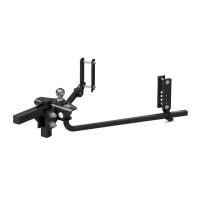
This document details the installation and use of a CURT weight distribution hitch, model 17601. This device is designed to distribute the tongue weight of a trailer more evenly across the tow vehicle's axles, improving stability and handling.

Function Description:

The CURT 17601 is a weight distribution hitch system that connects a trailer to a tow vehicle. It utilizes spring bars to apply leverage, transferring a portion of the trailer's tongue weight from the tow vehicle's rear axle to its front axle, and to the trailer's axles. This helps to level the tow vehicle and trailer, reduce rear-end sag, and improve steering and braking control. The system includes an adjustable shank for height customization, a hitch head for connecting to the trailer ball and spring bars, and spring bar support brackets that attach to the trailer A-frame.

Important Technical Specifications:

  • Max Capacity Without Spring Bars:
    • Gross Trailer Weight (GTW): 10,000 lbs.
    • Tongue Weight (TW): 800 lbs.
    • Note: When spring bars are not used, the weight rating is dependent upon the trailer ball manufacturer's weight ratings. Do not exceed the maximum weight rating of the trailer ball.
  • Max Capacity With Spring Bars:
    • Gross Trailer Weight (GTW): 8,000 - 10,000 lbs.
    • Tongue Weight (TW): 800 - 1,000 lbs.
    • Note: The tongue weight rating of the spring bars represents the capacity of a pair of bars, not an individual bar. Always use a pair of spring bars and be sure they are rated the same.
  • Installation Difficulty: Moderate. This level indicates that the installation involves a moderate amount of time and effort, which may vary based on the installer's expertise, vehicle condition, and available tools.
  • Compliance: This product complies with regulation V-5, C.S.A. Standard D-264, and safety requirements for connecting devices and towing systems of the State of New York.
  • Hardware Torque Specifications:
    • Trailer ball nut: 450 ft-lbs.
    • Nylock nuts (on L-bracket): 25 lb-ft.
    • 3/4" bolts and lock nuts (head fasteners): 200 ft-lbs.
    • Set screws (head angle adjustment): 50 ft-lbs.

Usage Features:

  • Adjustable Shank: The adjustable shank (#4) allows for customization of the hitch head height to match the trailer coupler height. It can be used in either an upright or inverted position to achieve proper ball height, especially for high ground clearance vehicles.
  • Spring Bar Engagement: Spring bars (#2) are designed to click into place within the hitch head sockets when pushed in, indicating they are locked. A heavy grease application on the round end of the spring bars is recommended for smooth engagement and release.
  • Spring Bar Support Brackets: The system includes spring bar support brackets (#3) that attach to the trailer A-frame. These brackets, along with a lift bar and snap-up handle (#5), are used to leverage the spring bars into position, applying tension to distribute weight.
  • Head Angle Adjustment: The hitch head's angle can be adjusted using set screws (#13, #14) to fine-tune weight distribution and achieve a level vehicle and trailer. The goal is to have the spring bars nearly horizontal when the correct height is achieved.
  • Safety Features: The system includes a hitch pin & clip (#6) to secure the shank to the receiver, and a retainer clip and cotter pin to secure the spring bars to the L-brackets.
  • Pre-Towing Checklist: Before towing, users are advised to check all connections, including the hitch pin & clip, head to shank fasteners, trailer ball nut, coupler latch, spring bar support brackets, safety chains, lights and turn signals, and the braking system (including breakaway switch).

Maintenance Features:

  • Lubrication:
    • The socket-mounted ends of the spring bars and the lock pins in the head assembly should be kept free from dirt and well lubricated. Excessive wear in this area may indicate an overload or inadequate lubrication.
    • Lift brackets should be kept clean and lubricated to ensure ease of operation.
  • Cleaning: The head assembly exterior should be kept clean, preventing dirt or stones from lodging between the spring bars and the head.
  • Corrosion Prevention: Hitch parts should be painted to prevent rust and maintain a good appearance. It is important not to paint over labels.
  • Periodic Inspection: Regular inspection of the product is recommended to ensure all hardware and/or components remain secure.
  • Spring Bar Release: To release spring bars, lift slightly on the bar and gently pull out the retaining pin in the hitch head. The spring bar will then drop free. When lowering the spring bars, the trailer jack should be used to lift the front of the trailer and rear of the tow vehicle to remove tension before carefully removing the cotter pin and retainer clip. The lift bar can then be used as a lever to pry the spring bar off the L-bracket.

Safety Warnings:

  • Never exceed the vehicle manufacturer's recommended towing capacity.
  • The loaded ball height should never be greater than the uncoupled ball height. Overloading the front wheel and loss of rear wheel traction can lead to unstable handling, reduced braking ability, and a tendency to jackknife.
  • If the loaded trailer ball height is greater than the uncoupled height, reduce take-up on the spring bar, remeasure, and adjust until the proper height is obtained.
  • Keep clear of the pivot path of all moving parts when there is tension on the spring bar. Maintain control of the lift handle at all times when raising or lowering the spring bar. Ensure the locking clip and cotter pin are in place once the spring bar is in position.
  • Failure to tighten hardware to specified torque values may result in fastener loss or failure.

curt TruTrack 17601 Specifications

General IconGeneral
Brandcurt
ModelTruTrack 17601
CategoryAutomobile Accessories
LanguageEnglish

Related product manuals