Instructions for Transport
Towing the vehicle using an incorrect
procedure can cause serious accidents.
Before disengaging the negative brake
manually, block the machine to prevent its
movement.
Follow the instructions given below to tow
the machine correctly.
IA faulty machine can only be towed for short
distances and at speeds not exceeding
10km/h. If necessary, to transport the vehicle
over longer distances and at greater speeds,
use a suitable vehicle for transport.
Before towing the vehicle, retract and lower
the telescopic boom completely and remove
the load.
Do not use chains for towing the machine. Use
steel cables with rings at the ends, or a special
rigid tow bar. Make sure the cable is in good
condition. Make sure the cable has a nominal
carrying capacity 1.5 times the weight of the
vehicle to be towed.
Connect one end of the cable to the two front
eyelets on the towing vehicle. Connect the
other end of the cable to the two front eyelets
of the vehicle to be towed.
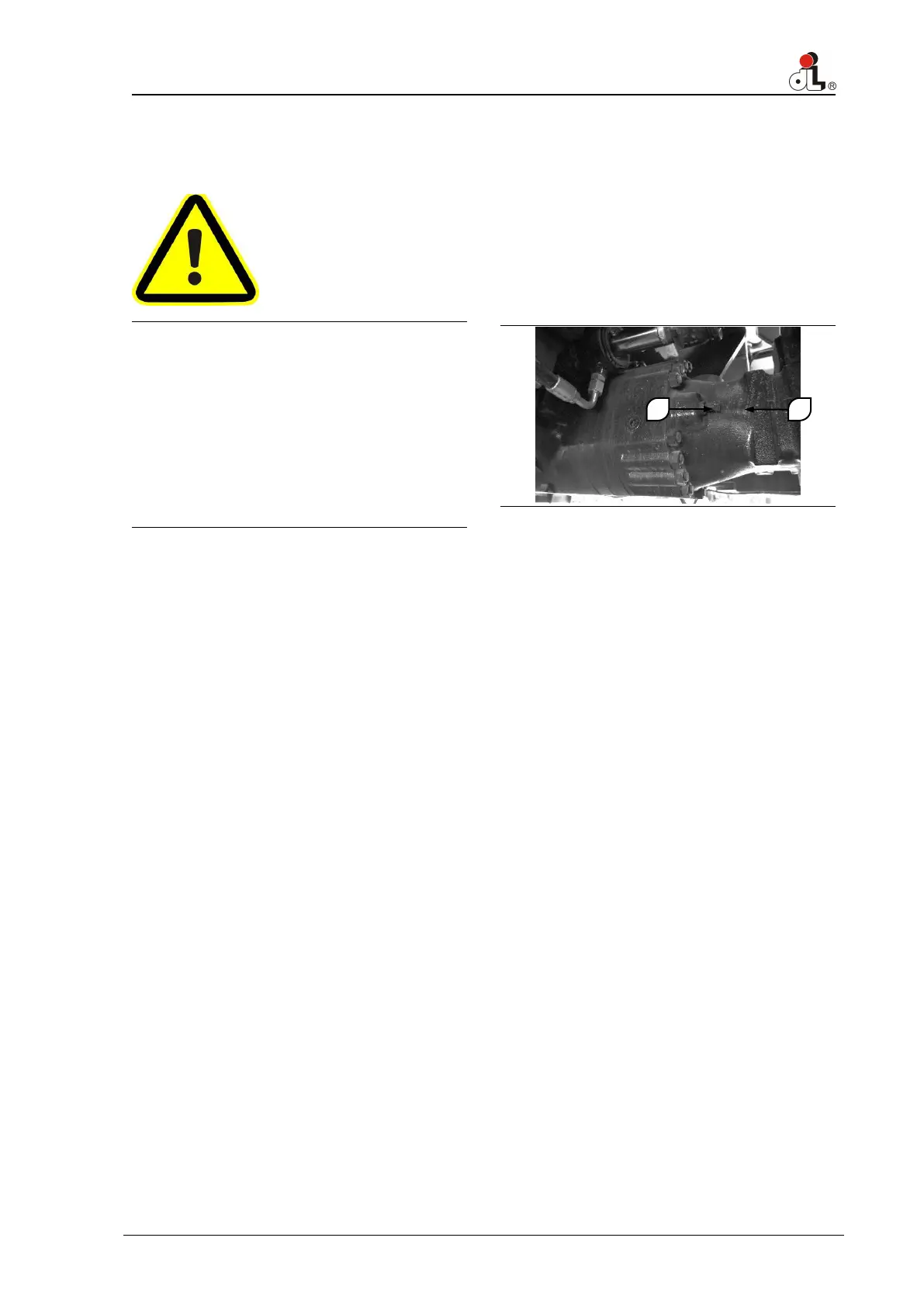
Go under the vehicle near the front axle.
Unscrew lock nut 1 of power screw 2. Tighten
the power screw to fit flush to disengage the
negative command brake. Repeat the
operation for other three screws on the same
axle.
Have an operator climb on the machine to be
towed to control the moving and steering. An
observer must stand in a safe position to
check the outcome of the operations. The
observer must not stand on the vehicle to be
towed.
Tighten the tow cable slowly. Avoid sudden
movements to avoid overload on the cable.
Keep the angle between the machine and the
towing cable minimum; it must not exceed 30°
in any case whatsoever.
Because of the impossibility of listing all the
precautions and towing procedures for all the
situations, it is advisable to consult your
Dealer for assistance.


 To Next Page