
 To Next Page


S
Sydney DelacruzSep 9, 2025
What to do if Dunkirk DCC-150 Boiler has gas valve command fault?
- TTheresa RobinsonSep 9, 2025
If your Dunkirk Boiler has a gas valve command fault, verify all cables and replace the PCB.

What to do if Dunkirk DCC-150 Boiler has gas valve command fault?
If your Dunkirk Boiler has a gas valve command fault, verify all cables and replace the PCB.
What to do if safety thermostat tripped in Dunkirk DCC-150?
If the safety thermostat has tripped on your Dunkirk Boiler due to over temperature, which may be caused by a blocked pump or air in the heating circuit, check the safety thermostat and its cable. Also, verify the correct circulation of water and the pump.
How to fix combustion test alarm during calibration of Dunkirk DCC-150 Boiler?
If your Dunkirk Boiler's combustion test triggers an alarm during commissioning or calibration, examine the flame sensor. Check for any obstructions in the flue pipe and look for recirculation issues. Verify the gas pressure, gas orifice, and gas quality. You may need to perform automatic and manual calibration functions.
What to do if hydraulic pressure is too high in Dunkirk DCC-150?
If the hydraulic pressure in your Dunkirk Boiler is too high, relieve the pressure using the relief valve or by draining the system. Ensure that the water feed is operating correctly.
How to fix low hydraulic pressure in Dunkirk Boiler?
If the hydraulic pressure in your Dunkirk Boiler is too low, refill the heating system by opening the cold water tap.
What to do if NTC flue sensor tripped in Dunkirk Boiler?
If the NTC flue sensor in your Dunkirk Boiler has tripped due to over temperature, check the thermostat and ensure correct water circulation and pump operation. Also, check the status of the primary exchanger.
How to check Flue NTC heat exchanger sensor fault in Dunkirk DCC-150?
If you're encountering a Flue NTC heat exchanger sensor fault in your Dunkirk Boiler, check the sensor and its cable.
How to check Outdoor sensor fault in Dunkirk DCC-150?
If you're encountering an Outdoor sensor fault in your Dunkirk Boiler, check the sensor and its cable.
How to program PCB in Dunkirk DCC-150 Boiler?
If the PCB of your Dunkirk Boiler is not programmed, follow the instructions provided with the control board replacement kit. If you need further assistance, call technical service.
What causes communication problem between Dunkirk DCC-150 board and control unit?
If you're experiencing a communication problem between the boiler board and control unit of your Dunkirk Boiler, it's likely due to a short circuit on the wiring. Check the cable between the control unit and the boiler.
Provides fundamental safety information, hazard symbols, and general installation requirements.
Covers installation requirements, designated uses, and operational features of the boiler.
Provides physical dimensions for various boiler models and their components.
Details system pressure, temperature, and expansion tank requirements.
Illustrates front and top views of boiler models for reference and identification.
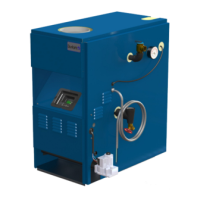
Details and illustrates the components of the Dunkirk DCB 100 model.
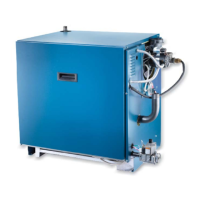
Details and illustrates the components of the Dunkirk DCB 125 model.
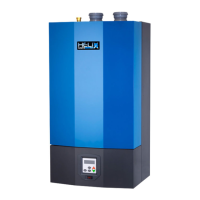
Details and illustrates the components of the Dunkirk DCC 115 model.
Discusses ambient temperature, approved installations, and protection of components.
Details service and combustible clearances required around the boiler unit.
Step-by-step guide for securely mounting the boiler to a wall using the provided bracket.
Outlines general installation compliance with codes and the use of approved venting materials.
Lists recommended and approved venting materials, including warnings about prohibited types.
Provides detailed instructions, maximum lengths, and diagrams for installing coaxial venting systems.
Describes different types of twin pipe venting systems and their installation considerations.
Outlines primary/secondary piping, compliance with authorities, and support for piping.
Details installation requirements for safety relief valves and air vents, including material and discharge piping.
Provides guidelines for installing an optional Low Water Cut Off (LWCO) device for boiler protection.
Details compliance with codes, pipe sizing, support, and protection of gas ignition system components.
Details the procedure for pressure testing and leak checking gas connections before operation.
Outlines requirements for electrical bonding, wiring standards, power supply, and isolation.
Details how to connect the main power supply to terminal block M1, including fuse information.
Covers the connection of accessories like outdoor temperature sensors and setting the "Kt" climate curve.
Outlines the steps for starting up the system, including filling the boiler and purging air.
Details the step-by-step procedure for commissioning the boiler for the first time, including gas type check.
Explains how to perform the automatic calibration function for optimal boiler performance.
Describes the manual calibration process for adjusting CO2 values at different power levels.
Details the procedure for testing gas supply lines for leaks and purging air from the system.
Describes the sequence of operation for the central heating mode.
Explains the process for initiating and operating the domestic hot water mode.
Lists checks and tasks to perform at the start of each heating season for safe and efficient operation.
Details annual checks for peak efficiency, including gas/combustion circuits, electrodes, and pressure.
Steps for safely draining the boiler by turning off power and gas, and closing the service cock.
Steps to balance the system, check pressure, flush pipes, and repressurize after installation.
Details the CH input, CH heating capacity, net AHRI rating, and AFUE for each boiler model.
Provides ratings adjusted for different altitudes, affecting input and output capacities.
Lists error codes, their descriptions, and the corresponding operations for troubleshooting.
Provides a table for installers to report and track anomaly values, system status, and phase status.
Provides the detailed wiring diagram for the Model 100 Heat Only boiler.
Provides the detailed wiring diagram for the Model 115 Combi boiler.
Provides the detailed wiring diagram for the Model 150 Combi boiler.
Provides the detailed wiring diagram for the Model 205 Combi boiler.
Illustrates labor-saving piping manifolds and near boiler piping connections for specific models.
Illustrates piping manifolds and connections for 115, 150, and 205 combi boiler models.
Covers piping installation, materials, joining methods, and manufacturer recommendations.
Details considerations for using a buffer tank with heating systems to prevent short cycling.
Explains how to connect and configure indirect water heaters with heating-only boilers.
Provides general information on electrical wiring, codes, and the use of ARGO Controls.
Defines the symbols used in piping diagrams for various components and connections.
Illustrates the piping connections for models with zone circulators and a DHW tank.
Illustrates the piping connections for models with zone valves and a DHW tank.
Illustrates piping connections for the 165 model with zone circulators.
Illustrates piping connections for the 165 model with zone valves.
Illustrates piping connections for models with zone circulators.
Illustrates piping connections for models with zone valves.
Illustrates piping for an external buffer tank used with the boiler's internal circulator.
Shows piping for an external buffer tank using a primary pump and manifold.
Explains the use, connection, and data for the 1k Ohm Outdoor Air Sensor Kit.
Details the connection and use of the 10k Ohm sensor for indirect DHW tanks.
Explains guidelines for installing an optional Low Water Cut Off (LWCO) device.
Illustrates the piping layout showing the correct location for installing a Low Water Cut Off device.
Shows detailed diagrams illustrating the correct and incorrect installation positions for LWCO sensing elements.
Provides a flowchart for diagnosing and resolving issues related to the central heating operation.
Offers a flowchart for diagnosing and resolving problems specific to the domestic hot water function.
Provides detailed fault-finding solutions for specific error codes and system issues.
Continues the detailed fault-finding solutions for various error codes and system issues.
Details the procedure for activating the commissioning function, including de-aeration and gas type check.
 General