Need help?
Do you have a question about the E Instruments 4400 and is the answer not in the manual?
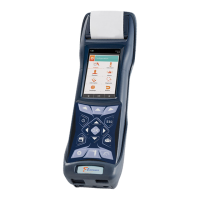
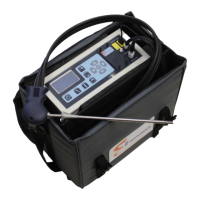
Provides a general overview of the 4400 handheld combustion analyzer's design and features.
Details the general features and design aspects of the 4400 portable flue gas analyzer.
Outlines the different main configurations available for the 4400 instrument.
Lists the detailed technical specifications of the 4400 combustion gas analyzer.
Provides an overview of the various components of the flue gas analyzer.
Details the measurement ranges and accuracy specifications for each parameter.
Describes preliminary operations before using the flue gas analyzer.
Lists important warnings and precautions to observe when using the instrument.
Explains the analyzer's power supply, including battery and external power pack usage.
Explains the working principle of the flue gas sampling and analysis process.
Describes the electrochemical measurement cells and their response times.
Provides a visual overview of the instrument's keypad and its functions.
Details the Info Menu, which provides information regarding instrument status.
Explains how to configure the instrument's reference parameters and settings.
Describes the Memory Menu for displaying and printing analysis data.
Details the Print Menu for accessing print configurations and starting printing.
Explains how to display and modify analysis results and parameters.
Provides instructions for accessing and performing stack draft measurements.
Describes how to access various readings like Smoke, Ambient CO/NO, and Pressure.
Illustrates the flow chart for configuring the analysis parameters.
Provides instructions for performing a complete flue gas analysis.
Explains how to measure differential pressure using an optional hose kit.
Details the arrangement of sensors within the instrument's compartment.
Lists sensor types and their corresponding positions within the instrument.
Describes the average life and recalibration requirements for gas sensors.
Explains the process of upgrading the instrument to support up to 4 sensors.
Outlines basic requisites for routine maintenance to ensure instrument longevity.
Recommends annual servicing for a complete overhaul and internal cleaning.
Provides instructions on how to thoroughly clean the sample probe after use.
Explains how to maintain the water trap and filter unit for optimal performance.
Instructions for replacing the particulate filter when it appears blackened.
Step-by-step guide for replacing the instrument's gas sensors.
Describes the procedure for on-site recalibration of the instrument's gas sensors.
Provides instructions on how to replace the instrument's battery pack.
Instructions on how to change the paper roll in the printer.
A guide listing common symptoms, their probable causes, and recommended remedies.
Lists the available spare parts for the instrument, with part codes.
Lists various optional accessories available for the instrument.
Provides contact information for the E Instruments Service Center.
 General
| O2 Range | 0-25% |
|---|---|
| Response Time | < 30 seconds |
| SO2 Range | 0-5, 000 ppm |
| CxHy Range | 0-10, 000 ppm |
| Measurement Range | Depends on sensor |
| Accuracy | ±2% of reading |
| Power Supply | Rechargeable battery |
| Temperature Range | -4 to 1472°F (-20 to 800°C) |
| Operating Temperature | 32 to 122°F (0 to 50°C) |


 To Next Page