7
User GuideRG-1000e Remote Gateway
2 System structure
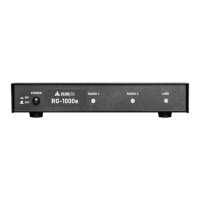
The system of remote management of the control station consists of the following components:
· RG-1000e GATEWAY,
· radio connected to the RG-1000e GATEWAY, and
· SmartPTT software based on Client–Server technology.
The RG-1000e GATEWAYs are connected to the SmartPTT server-based application, which manages the RG-
1000e GATEWAY, and interact with this application. For IP network connection, RG-1000e GATEWAY has the
10BASE-T/100BASE-TX Ethernet interface with auto detection of the cable type. For the interaction between the
system components, the RG-1000e GATEWAY and radioserver get a static IP address and the TCP and
UDP/RTP port numbers, which are used for the radio control commands and audio transmission from the dispatch
console. The RG-1000e GATEWAY can be used in the following cases:
· As a remote dispatcher's workplace outstation in digital networks without repeaters (Direct Mode
communication).
· In the conventional or trunking MOTOTRBO networks, where the direct IP connection to the repeaters is
unavailable.
· When the connection to the repeaters in MOTOTRBO networks is based on the hybrid scheme, where the data
interchange is performed via the NAI interface of the repeaters and the voice data transmission—via the pool of the
control stations.
This system offers the following advantages:
· It allows you to organize the dispatching system in the networks, where the direct connection of the dispatching
system to the MOTOTRBO repeaters via the IP network is unavailable.
· It allows you not to place radioserver close to the control stations within the radio network coverage area.
· It allows you to avoid interference and induced noise between neighboring control stations.
When planning the system, it is required to take into account the packet delivery delay in the IP network, which
causes the corresponding radio response delay to the control commands and voice data transmission.


 To Next Page