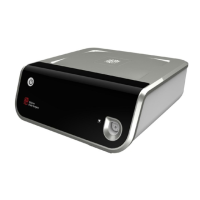
5 Generator G11
Generator G11 Operator’s Manual
• To avoid the risk of electric shock, this equipment must only be connected to a supply main with protective earth�
• To isolate the Generator G11 from supply mains power, disconnect the power cord either from the back panel of the generator or from the
wall� Ensure that access to these points are kept clear�
• This device is neither MR safe nor MR compatible�
• This device seals vessels up to a maximum diameter of 7 mm depending on the instrument used� Refer to the instrument Instructions For
Use (IFU) for further information�
• As with all energy sources (Electrosurgery, Lasers, or Ultrasound) there are concerns about the carcinogenic and infectious potential
of the by-products such as tissue smoke plume and aerosols� Appropriate measures such as protective eyewear, filtration masks, and
effective smoke evacuation equipment should be used in both open and laparoscopic procedures�
• In case of system failure, ensure availability of the appropriate backup equipment relevant to the specific procedure�
• After removing the instrument, examine the tissue for hemostasis� If hemostasis is not present, appropriate techniques should be used to
achieve hemostasis�
• Read instructions prior to use and follow the hospital’s clinical practice guidelines for ultrasonic surgery, electrosurgery, gynecology and
laparoscopic procedures�
• Replace fuses only with the appropriate type and rating� See System Specifications�
• Activation of a radiofrequency device when not in contact with target tissue or in a position to deliver energy may cause capacitive
coupling�
• The patient should not come in contact with metal parts which are earthed (grounded) or which have appreciable capacitance to earth (for
example operating table supports, etc�)�
• Cables to the surgical electrodes should be positioned so that contact with patient or other leads is avoided�
General Cautions
• The touch screen display of the generator is very sensitive� Do not use sharp metal objects on the touch screen�
• Removing bottom screws or opening of this device invalidates the warranty and could create hazardous conditions�
• Do not sterilize the Generator G11� Sterilization will damage the unit�
• Do not restrict the openings on the bottom and the back panel of the Generator G11, as they provide the required airflow for cooling�
• If electromagnetic interference with other equipment is suspected, reorient the device or remove possible sources of interference (for
example, cellular phones, radios, etc�) from the room�
• Monitoring electrodes should be placed as far as possible from the disposable device tips when high frequency surgical equipment and
physiological monitoring equipment are used simultaneously� Monitoring systems incorporating high frequency current-limiting devices
are recommended for use�
• Needle monitoring electrodes are not recommended�
• CRT11 is recommended if the Generator G11 is moved out of the operating room� Maintain control of the generator and cart when
moving over thresholds�
Customer Service
Warranty
This warranty and the rights and obligations hereunder shall be construed under and governed by the laws of the State of Ohio, U�S�A�
Ethicon Endo-Surgery warrants this product to be free from defects in material and workmanship under normal use and preventive
maintenance for the respective warranty period shown below� Ethicon Endo-Surgery’s obligation under this warranty is limited to the repair
or replacement, at its option, of any product, or part thereof, which has been returned to Ethicon Endo-Surgery or its distributor within the
applicable time period shown below and which examination disclosed, to Ethicon Endo-Surgery’s satisfaction, to be defective� This warranty
does not apply to any product, or part thereof, that has been: (1) adversely affected due to use with devices manufactured or distributed by
parties not authorized by Ethicon Endo-Surgery (2) repaired or altered outside Ethicon Endo-Surgery’s factory in a way so as to, in Ethicon
Endo-Surgery’s judgment, affect its stability or reliability, (3) subjected to improper use, negligence or accident, or (4) used other than in
accordance with the design and use parameters, instructions and guidelines for the product or with functional, operational or environmental
standards for similar products generally accepted in the industry�


 To Next Page