Securing Your Child Restraint in Aircraft
The Federal Aviation Administration (FAA) recommends
that you secure your child for air travel in an appropri-
ate child restraint based on your child’s weight and size.
Turbulence can happen with little or no warning. When
turbulence occurs, the safest place for your child is
in a properly installed child restraint, not in an
adult’s lap or on the aircraft seat with its seat
belt. Keeping your child in a child restraint during the
flight will help ensure your family arrives safely at your
destination.
The FAA recommends that a child weighing:*
• more than 18 kg (40 lbs) use an aircraft seat belt;
• less than 9 kg (20 lbs) use a rear-facing child restraint;
and
• from 9 to 18 kg (20 to 40 lbs) use a forward-facing
child restraint.
* Please note that these FAA recommendations
may vary from those applicable to the use of
your child restraint in a motor vehicle.
Installing Child Restraint Rear-facing
in Aircraft
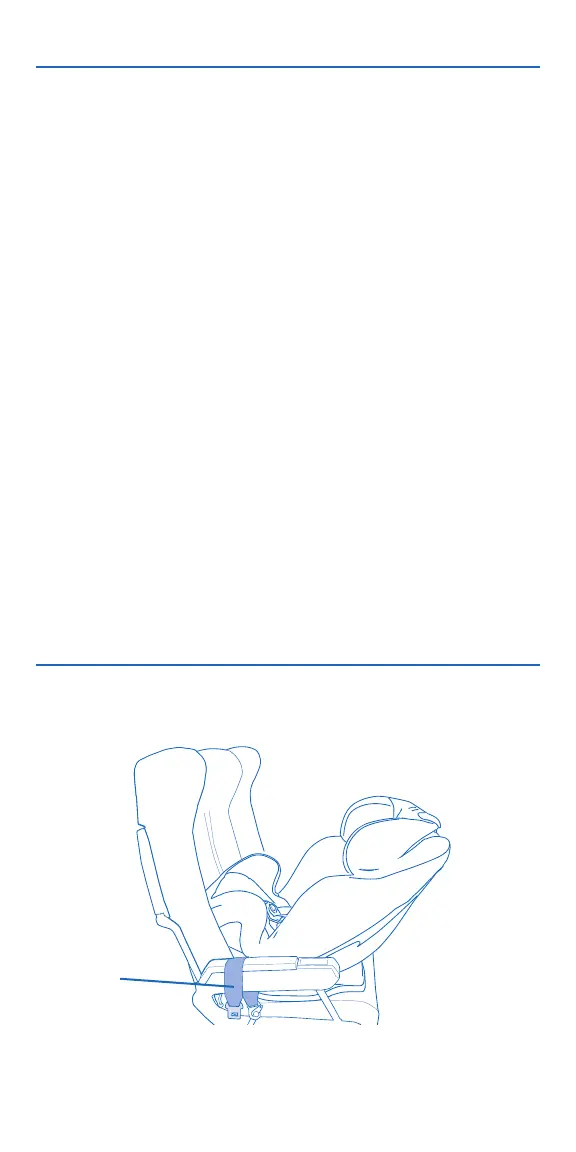
1. Place the child restraint in position.
Adjust the child restraint to its most reclined posi-
tion (Recline Position #1, p. 62), then place it on the
aircraft seat rear-facing, as shown.
68
IMPORTANT: Before installing the child restraint, make
sure the aircraft seat is in a fully upright position.
IMPORTANT
You must use the internal harness when installing the
child restraint in aircraft.
Aircraft
Seat Belt






 To Next Page