141
ROUTINE MAINTENANCE
13.1 Exterior Hull & Deck
Hull Cleaning-Below The Water Line
When the boat is removed from the water, clean the
outer bottom surface immediately. Algae, grass,
dirt and other marine growth is easier to remove
while the hull is still wet. Use a pressure cleaner
or a hard bristle brush to clean the surface.
Bottom Painting
If the boat is to be left in saltwater for extended
periods, the hull must be protected from marine
growth by antifouling paint. Because of variations
in water temperature, marine growth and pollu-
tion in dierent regions, a qualied boat yard in
your area should be consulted when deciding what
bottom paint system to apply to your hull. This
is extremely important as pollution and marine
growth can damage berglass hulls.
Use only standard antifouling paints and berglass
wax removers and primers recommended by the
antifouling paint manufacturer when preparing the
hull for bottom paint. Light sanding, just enough
to scu the gel coat or a skip sand primer system
can be used to prepare the hull for bottom paint.
The use of a coating other than standard antifoul-
ing paint or epoxy barrier coatings are not recom-
mended and will void the hull blister warranty.
Do not allow the hull antifouling paint to contact the
outboard motors. Most antifouling paints designed
for hull bottoms contain copper and can cause
severe galvanic corrosion damage to the motors.
Always leave at least a 1” barrier between the hull
bottom paint and outboard motors.
SANDBLASTING THE HULL BOTTOM WILL DAMAGE THE
FIBERGLASS. USE A FIBERGLASS WAX REMOVER AND SAND
TO SCUFF THE GELCOAT SURFACE. THE INSTRUCTIONS
AND RECOMMENDATIONS OF THE BARRIER COATING
AND ANTIFOULING PAINT MANUFACTURERS SHOULD BE
FOLLOWED EXACTLY.
BARRIER COATINGS AND BOTTOM PAINT SHOULD BE
APPLIED ONLY BY QUALIFIED MARINE PROFESSIONALS
IN A BOAT YARD OR DEALERSHIP THAT SPECIALIZES IN
THEIR APPLICATION. USE ONLY STANDARD, HIGH QUALITY
ANTIFOULING PAINTS AND BARRIER COATINGS FROM NAME
BRAND MANUFACTURES SUCH AS INTERLUX AND PETTIT.
DO NOT ALLOW THE HULL ANTIFOULING PAINT TO CONTACT
THE OUTBOARD MOTORS. MOST ANTIFOULING PAINTS
DESIGNED FOR HULL BOTTOMS CONTAIN COPPER AND
CAN CAUSE SEVERE GALVANIC CORROSION DAMAGE
TO THE OUTBOARD DRIVE UNIT. USE ONLY ANTIFOULING
PAINT DESIGNED FOR OUTBOARD MOTORS IF APPLYING
ANTIFOULING PAINT TO THE ENGINES. ALWAYS LEAVE A
ONE INCH BARRIER BETWEEN THE HULL BOTTOM PAINT
AND OUTBOARD MOTOR.
Most bottom paints require some maintenance.
Proper maintenance is especially important when
the boat is in saltwater and not used for extended
periods or after dry storage. If the hull bottom has
been painted with antifouling paint, contact your
dealer or local boat yard for the recommended
maintenance procedures.
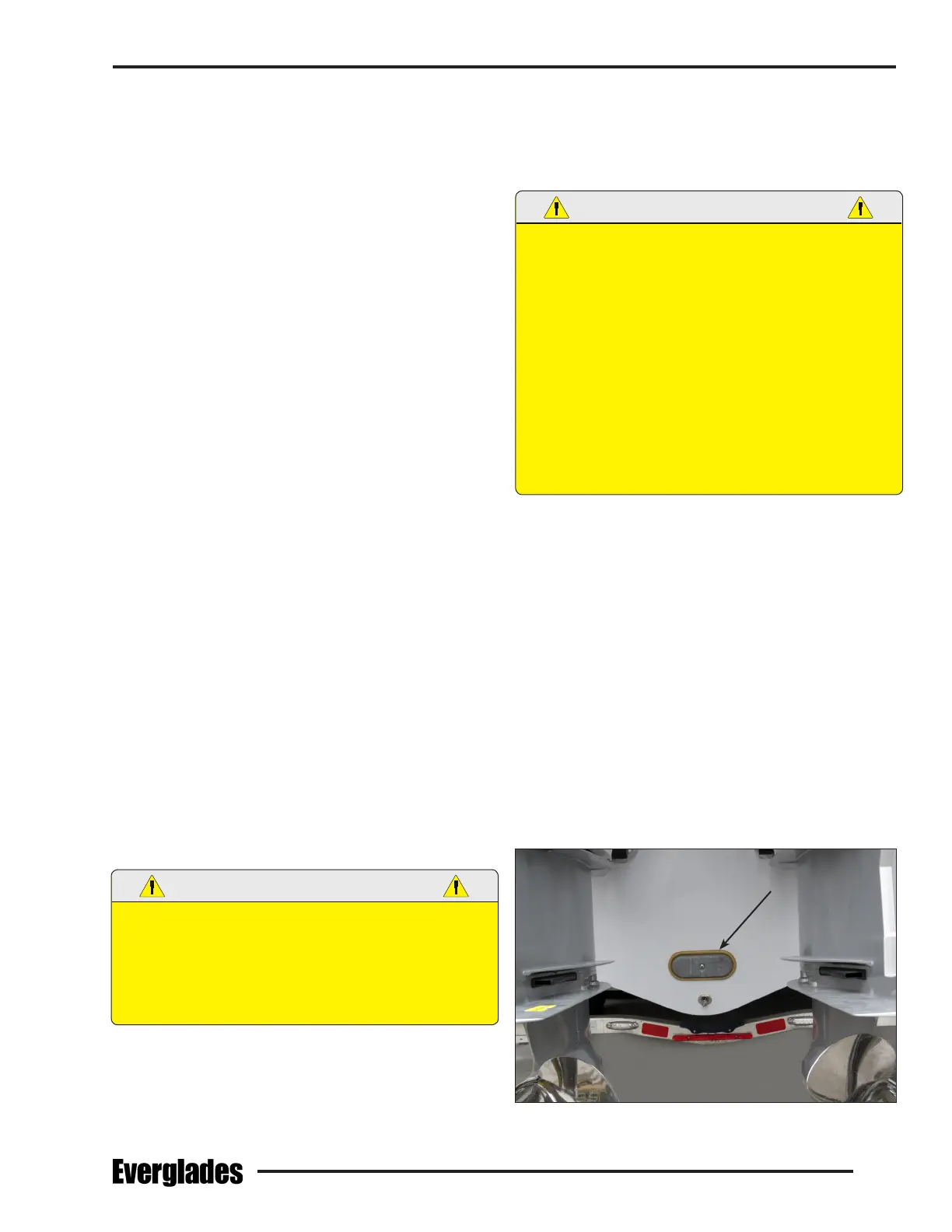
Anodes
Sacricial anodes are installed on the outboard mo-
tors, engine clamp brackets and could be installed
on the trim controllers. Your boat is equipped with
a large anode on the transom that is connected to
the bonding system. The transom anode provides
additional protection against galvanic corrosion for
the engines, thru-hull ttings and other underwater
hardware that is bonded.
Chapter 13:
Transom Sacricial Anode



 To Next Page