47
Propulsion System
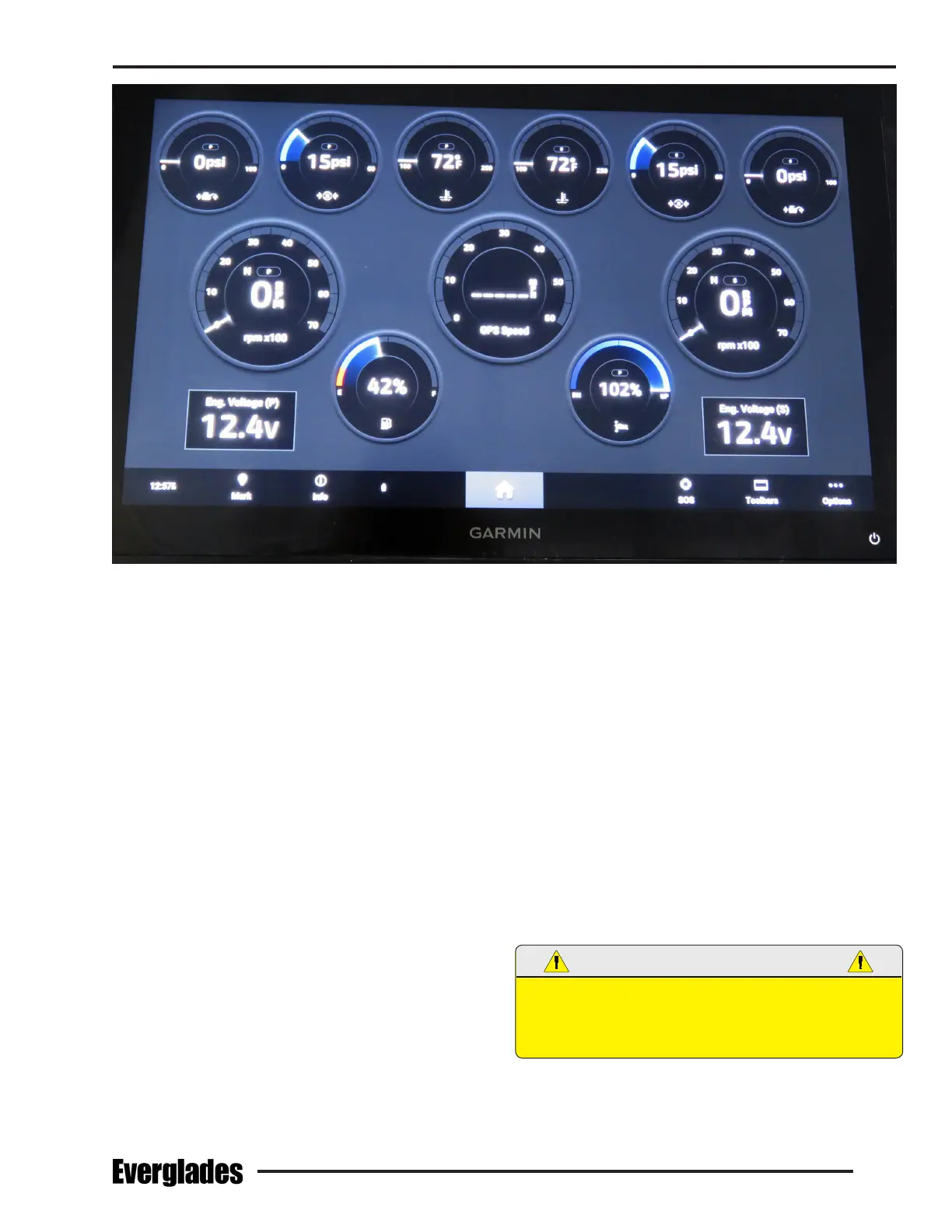
Fuel Gauge
The fuel gauge indicates the amount of fuel in the
fuel tanks. The fuel gauge is built into the engine
monitoring Display. The fuel indicator on some
displays will begin to blink if the fuel in the tank
drops too low. Some systems can monitor up to
4 fuel or water tanks.
Voltmeters
The voltmeters display the voltage for the battery
and the charging system for each engine. The
normal voltage is 12 to 12.5 volts with the engines
o and 13 to 14.5 volts with the engines running.
Hour Meters
The hour meters keep a record of the operating
time for each engine.
Engine Tilt/Trim Gauges
The tilt/trim gauges monitor the position of each
outboard engine. The upper range of the gauge
indicates the tilt, which is used for trailering and
shallow water operation. The lower range indi-
cates the trim position. This is the range used to
adjust the hull angle while operating your boat on
plane. Refer to the engine owner’s manuals for
more information on the operation of the outboard
power tilt and trim.
Engine Alarms
All outboards are equipped with an audible alarm
system mounted in the helm area that monitors
selected critical engine systems. The alarm will
sound if one of these systems begins to fail. Refer
to the engine owner’s manual for information on
the alarms installed with your engines.
IF THE ENGINE ALARM SOUNDS, IMMEDIATELY SHUT
OFF THE ENGINE UNTIL THE PROBLEM IS FOUND AND
CORRECTED.
Typical Garmin Engine Monitoring Display



 To Next Page