10
fantech
Interior ducting installation
To maximize airflow through the ductwork system, all ducts should be kept short and have as few bends or elbows as possible.
45º elbows are preferable to 90º.
All duct joints must be fastened with screws or duct sealant and wrapped with aluminum foil duct tape to prevent leakage.
Galvanized ducting from the HRV to the living areas in the house is recommended whenever possible, although flexible ducting
can be used in moderation when necessary.
insulated duct should be connected between the HRV and the supply/exhaust ductwork system.
The main supply and return line to/from the HRV must have the same diameter as the duct connection or larger.
Branch lines to the individual rooms may be as small as 100 mm (4’’).
Installing ducting to HRV
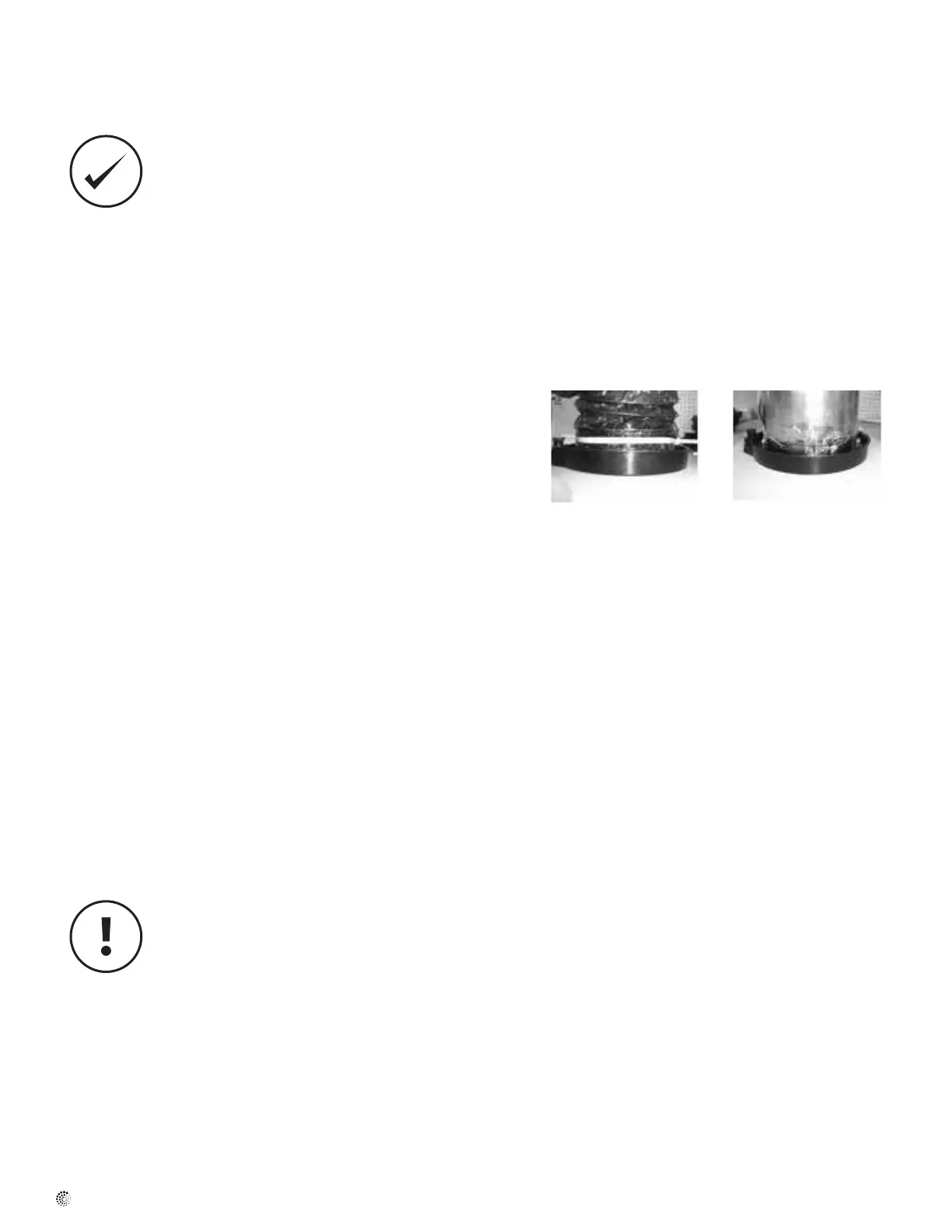
For flexible duct installation, slide flexible ducting onto duct connection. Then install a
cable tie over flexible duct to prevent leakage between the ducting and the duct
connection.
In the case of solid ducting, slide duct over duct connection, screw in place and sea
l.
Supply air grilles location
In homes without a forced air furnace, fresh air should be supplied to all habitable rooms, including bedrooms and living areas. It should be supplied
from high wall or ceiling locations. Grilles that diffuse the air comfortably are recommended. In homes with a forced air furnace, you may want to connect
the HRV to the furnace ductwork (see information below).
Exhaust air grilles location
The stale air exhaust system is used to draw air from the points in the house where the worst air quality problems occur. It is recommended that return
air ducts be installed in the bathroom, kitchen, and laundry room. Additional return air ducts from strategic locations may be installed. The furnace
return duct may also be used to exhaust from. In this method, the exhaust air is not ducted back from bathrooms, kitchens, etc to the HRV with
“dedicated lines”.
Ducting fifth port units(R)
This duct port is for both the defrost and recirculation modes. A motorized damper installed in the port closes during defrost or recirculation,
temporarily blocking the incoming fresh air-stream, allowing the warm air from the house to circulate through the HRV. You may wish to duct this port
to a common room with clean air (living room or dining room), so when the recirculation mode is activated, household odors from the kitchen, bathroom
or basement won’t be introduced into the living spaces of the home environment.
As per building codes and installation requirements for combustion appliances:
Air return ducts, or openings for air return, should not be placed in enclosed spaces containing combustion
appliances that are subject to spillage.



 To Next Page