EasyManua.ls Logo

Farfisa TK95 - User Manual

Default Icon
52 pages
Print Icon
To Next Page IconTo Next Page
Loading...
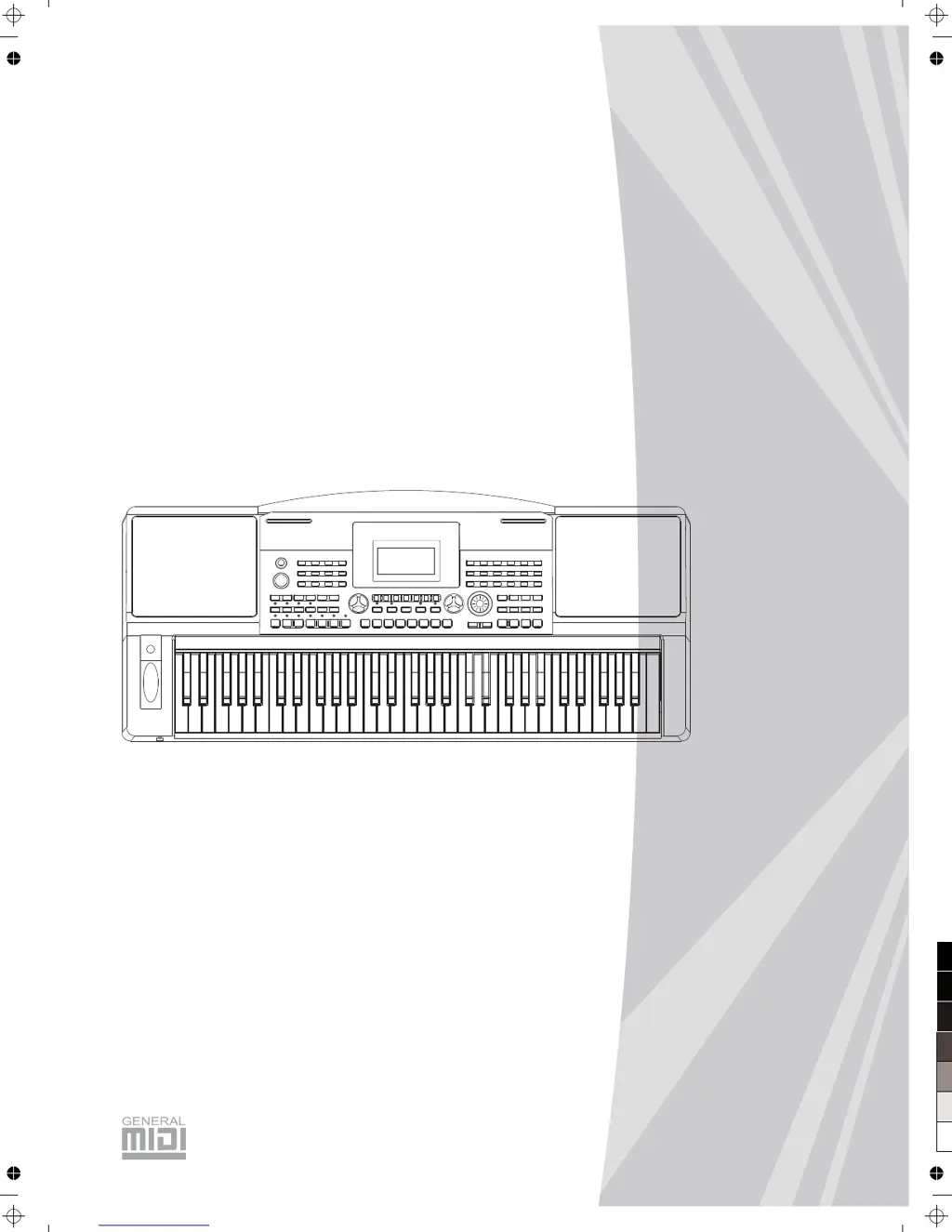
ELECTRONIC
KEYBOARD
Owner's Manual
0
5
25
75
95
100
aw_A800_Manual_G06_111206
2011󾾠󾾠12󾾠󾾠6󾾠󾾠 9:01:02

Table of Contents

Questions and Answers

Summary

INFORMATION FOR YOUR SAFETY!

THE FCC REGULATION WARNING (for USA)

FCC warning about digital device interference and compliance.

PRECAUTIONS

PLEASE READ CAREFULLY BEFORE PROCEEDING

Instruction to read the manual carefully before use.

Power Supply

Guidelines for connecting and using the power adapter.

Connections

Instructions for connecting the instrument to other devices.

Location

Advice on suitable and unsuitable places to position the instrument.

Interference with other electrical devices

How to avoid radio and TV reception interference.

Cleaning

Instructions on how to properly clean the instrument.

Handling

Precautions for safely handling the instrument.

Panel & Display Description

Front Panel

Description of the controls and indicators on the front panel of the keyboard.

Rear Panel

Description of the ports and connectors on the rear panel of the keyboard.

Display

Explanation of the various elements shown on the LCD display.

Setup

Power Supply

Steps to connect and turn on the instrument's power supply.

Setting a Music Stand

Instructions for attaching the music stand to the instrument.

Connecting a Footswitch

Guide for connecting a footswitch for sustain control.

Connecting a Volume Pedal

Instructions for connecting a volume pedal to control sound volume.

Connections

Connecting a pair of Headphones

How to connect headphones for private practice.

Connecting an Audio Equipment

Connecting external audio devices via AUX OUT.

Connecting an MP3;CD Player

Connecting audio sources like MP3/CD players via AUX IN.

Connecting a Computer

Connecting the keyboard to a computer via USB for MIDI.

Connecting the MIDI IN;OUT to Computer

Connecting MIDI ports to a computer via a MIDI/USB converter.

Connecting to other device

Connecting the instrument to other MIDI devices for sound module or controller functions.

Playing the Demos

Playing Voices

Playing Voices

How to select and play the instrument's 583 built-in voices.

Playing two Voices Simultaneously-DUAL

How to layer two voices for a richer sound.

Playing Different Voices with Both Hands-LOWER

Using different voices for the left and right hands.

Touch

Adjusting the touch response sensitivity for expressive playing.

Sustain

How to use the sustain effect to lengthen notes.

Pitch Bend Wheel

Using the pitch bend wheel to alter note pitch.

Modulation

Applying a vibrato effect to notes.

Transpose

Shifting the keyboard's pitch up or down.

Octave

Adjusting the octave setting for voices.

Piano

Quickly accessing a piano sound with a single button press.

Metronome

Turning the built-in metronome on or off.

Freesolo

Function for fast, seamless voice switching and special skills.

Auto Accompaniment

Playing Auto Accompaniment (rhythm track only)

How to start and play with rhythm tracks.

Playing Auto Accompaniment (all tracks)

Using all accompaniment tracks for a full backing band.

Accompaniment Sections

Details on Intro, Main, Fill-in, and Ending sections.

Playing Different Accompaniment Sections

How to switch between different accompaniment sections.

Fade In;Out

Creating smooth fade-ins and fade-outs for styles.

Accompaniment Volume

Adjusting the volume of the auto accompaniment.

Chord Fingering

Explains how to finger chords for auto accompaniment.

Harmony

Turning on the Harmony effect

How to activate and deactivate the harmony effect.

Applying the Harmony effect

Using harmony notes with melodies and chords.

IFX

Performance Assistant

Whats the performance assistant?

Introduction to the performance assistant feature.

Enter the Performance Assistant

Steps to enter the performance assistant mode.

Guitar Mode

How to use the keyboard like a guitar with specific skills.

Playing in the Guitar Mode

Detailed instructions for playing and performing in Guitar Mode.

Piano Mode

How to use the keyboard for piano performance with specific skills.

Exit the Performance Assistant

How to exit the performance assistant mode.

Synth

Enter the synth

How to access the synthesizer function.

Create user voice

Steps for creating custom voices using built-in samples.

DSP Effect

Mixer

Pedal Function

Volume Pedal

Using the volume pedal to control the instrument's volume.

Foot Switch

Assigning functions to the foot switch pedal.

Other Functions

Tune

Adjusting the keyboard's overall pitch by cents.

Beat

Setting the beat value for styles and songs.

Split Point

Setting the point that divides the keyboard into two sections.

Pedal Assign

Setting the function for sustain, soft, or other pedals.

Fade In

Adjusting the time for smooth fade-ins when starting a style.

Fade Out

Adjusting the time for smooth fade-outs when stopping a style.

Harmony

Reverb Level

Chorus Level

MIDI In

MIDI Out

Register Memory

Registering the Panel Setting

Saving current panel settings to memory banks.

Recalling the Registered Panel Settings

Loading previously saved panel settings.

Selecting a Registration Bank

Choosing a bank to load or save settings from.

Freezing the Accompaniment Parameter

Keeping accompaniment parameters unchanged when using memory.

Song Recording

Start Recording

Steps to begin recording a new song or overdubbing.

Stop Recording

How to stop the recording process.

Playback Recording

How to play back recorded songs or select from stored songs.

Delete User Song

How to erase recorded user songs.

Song

Listening to the Songs

How to select and play the built-in and user songs.

Song Control

Controls for playing songs, including FF, REW, and PAUSE.

Lesson Mode

Practicing songs with time value and note correction training.

Lesson 1 - Practice timing

Practice timing by following the rhythm of the song.

Lesson 2 - Practice note accuracy

Practice accuracy by playing the correct notes at the right time.

Lesson 3 - Performance

Practice for performance, scored on time value and note accuracy.

Chord Dictionary

DICT 1 (Chord Learning Mode)

Learn chord types and their keyboard positions.

DICT 2 (Chord Examining Mode)

Test your knowledge by playing random chords correctly.

Connecting a USB Device

USB Device Operation

General operations for connecting and managing USB storage devices.

Play

How to play MIDI files from a USB device.

Load Song

Loading MIDI songs from a USB device into the keyboard.

Load Style

Loading style files from a USB device.

Load Memory

Loading registration memory settings from a USB device.

Save

Saving songs, styles, memory, and voices to a USB device.

Delete

Deleting user songs, styles, memory, and voices from USB.

Format

Formatting the USB storage device.

Keyboard and ASCII Character Relative Table

MIDI

Whats MIDI?

Explanation of MIDI technology and its capabilities.

Midi Terminals

Description of MIDI IN, OUT, and THRU ports.

Downloading Data from the Computer

Transferring data between computer and keyboard via USB.

Troubleshooting

Specifications

Voice List

Voice List

Voice List

Voice List

Style List

Style List

Song List

Demo List

Chord List

MIDI Implementation Chart

Farfisa TK95 Specifications

General IconGeneral
ManufacturerFarfisa
ModelTK95
Sound EngineDigital
EffectsReverb, Chorus
MIDIYes
USBNo
Built-in SpeakersYes
Presets100

Related product manuals