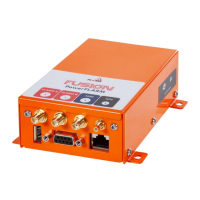
PowerFLARM Manual Version 1.0
Operation
General Advice on Operation
Use
PowerFLARM is designed for use in non-essential conditions
as a 'situation awareness only' device, only to support and
assist the pilot. It cannot always be relied upon to provide a
warning of collision threat. When using FLARM, under no
circumstances should the aircrew adopt any change in flight
tactics, or modify the actions of the user or aircraft
commander. Even though you have installed a FLARM unit,
you remain personally responsible for the safe conduct of
the flight, the safety of your passengers and other aircraft in
the vicinity. Users of FLARM do so entirely upon their own
responsibility and that of the aircraft commander. The
FLARM unit may only be operated by persons who are
thoroughly familiar with the user instructions.
Compatibility
FLARM warnings of the presence of other moving aircraft can
only be given if the latter is also equipped either with FLARM or
other compatible unit, or a compatible SSR-reply system
(Transponder Mode-C/S). FLARM does not communicate actively
with Mode A/C/S transponders, and is thus not detected by
ACAS/TCAS/PCAS or terrestrial air traffic control.
Radio Range and Reception
If a warning is to be issued, compatible equipment must be
located within range. This range is greatly dependent upon the
type and position of the communications antenna installation on
the aircraft, also the spatial relationship of the two aircraft to
each other.



 To Next Page