Introduction
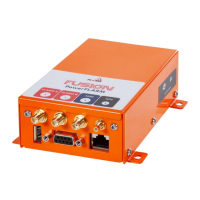
A PowerFLARM unit draws its position and movement
information from an internal GPS-receiver. The position
measured is rendered more accurate by an integral pressure
sensor. The unit calculates the predicted flight path and
transmits this information as a short, low-power digital signal
burst at one-second intervals together with a unique
identification code. At the same time, the unit receives similar
signals from FLARM units installed in other aircraft and within
radio range, or from aircraft equipped with ADS-B, Mode-C and
Mode-S transponders. The PowerFLARM unit compares the
signals received with its own projected flight path. An optional
future additional feature will be for PowerFLARM to compare its
own projected flight path with the positions of known fixed
obstacles (e.g. cables, aerials, cable railways, avalanche
detonation sites) held in the unit's data base.
If PowerFLARM determines one or more threats of a dangerous
conflict with another aircraft or obstacle, it warns the user of the
most dangerous threat as per the internal calculation. Acoustic
warnings are issued via a warning bleeper and headset audio
output, also an optical warning via an LCD display. These signals
indicate the height of the threat, the direction from which it has
been detected, and the height difference. During turns, a different
calculation algorithm is applied from that used in approximately
straight flight. The GPS- and collision threat data received are
also fed to a serial data port output for use by other units such as
an external display and PDA. Suitable equipment is available
from a number of suppliers.



 To Next Page