Waterjet system
•
High-pressure water can remain in the system for an
extended time after shutting down the water source.
Always bleed-down system pressure before servicing
any part of the system.
•
Do not touch weep holes with your bare hands or try
to stop water by plugging the holes.
•
Remember that the waterjet stream is a knife. Do not
introduce anything into its path that you do not in
-
tend to cut.
•
Wear a face shield when required by operating
instructions.
•
Do not remove protective shields from high-pressure
tubing. If shields are removed for servicing, they
must be replaced before starting the system.
•
Torque all fittings to the manufacturer’s torque
specifications.
•
Stepping or leaning on high-pressure tubing can
break connections, causing leakage.
•
Use only high-pressure fittings, valves, and tubing
certified for 94,000 psi (6483 bar) when making
alterations or additions to the high-pressure water
system.
•
Do not alter or eliminate stress relief tubing coils.
•
Follow the tubing manufacturer’s recommendations
for high-pressure tube bending radii.
•
Do not exceed specified operating pressures for
high-pressure water system components.
•
Do not over-torque fittings or bend swivels
excessively.
•
Follow the manufacturer’s recommendations for
servicing the equipment, and use only original
manufacturer replacement parts.
•
Follow the manufacturer’s system startup procedure
to ensure safe operation.
•
Use care when lifting equipment covers during
operation.
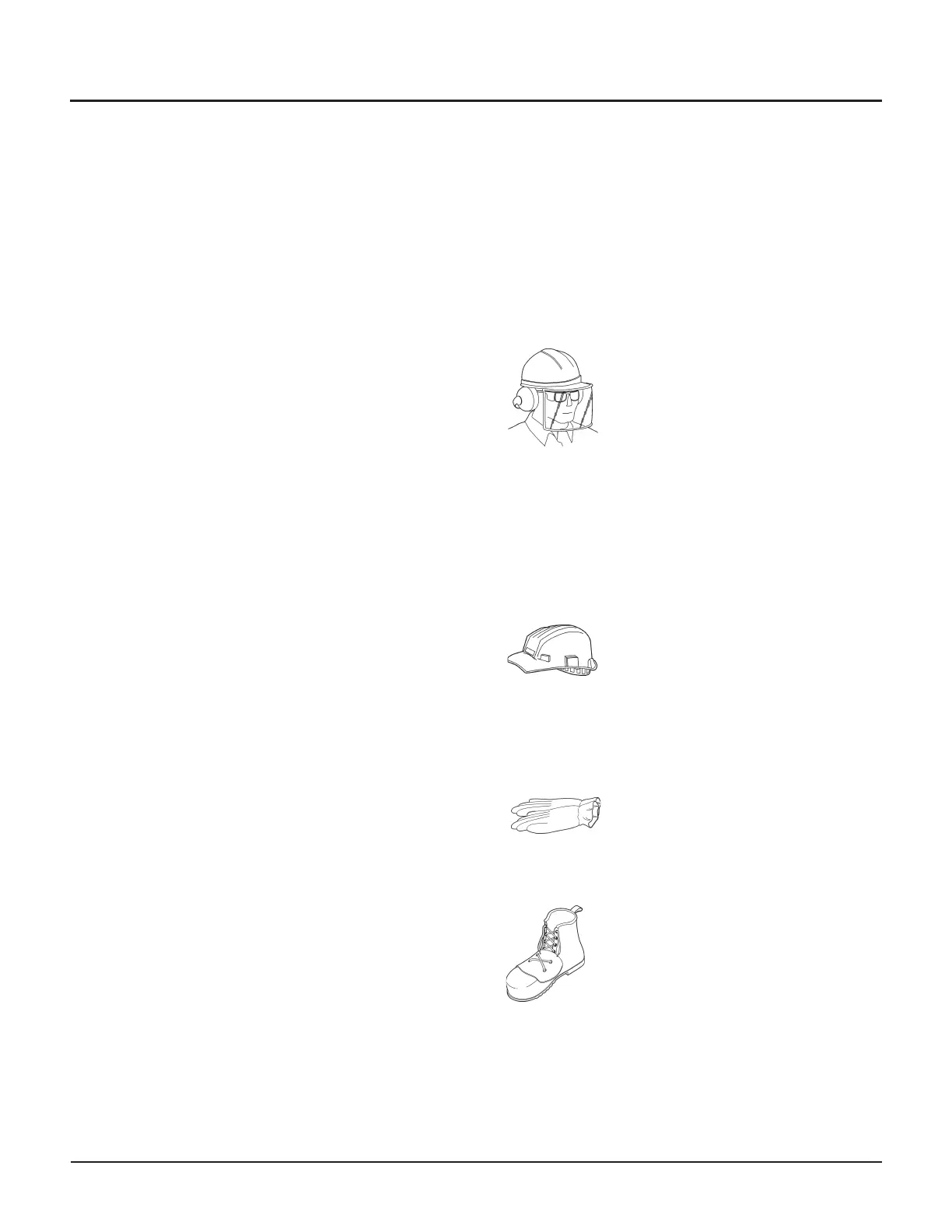
Protective clothing
Personnel operating hand-held, high-pressure water cut
-
ting or cleaning equipment and those working nearby
should wear the protective clothing and safety devices
described in this chapter.
Flow recommends that work-site safety personnel ap
-
prove all safety equipment and clothing for everyone
working around waterjet equipment.
Eye protection
•
At a minimum, operators must
wear safety glasses with side shields
and a visor (or goggles and a visor)
to guard against spray and flying
debris.
•
All eye protection shall meet appro
-
priate ANSI requirements for that
type of eye protection.
•
Some states and countries have
their own eye protection rules that
must be followed.
Head protection
•
Helmets must be worn at all times
by all personnel within the work
area.
•
Helmet material must withstand
mechanical shock to 10 G in 8 ms
without fracturing.
Hand protection
•
The operator must wear gloves at all
times. Leather gloves are preferred.
Foot protection
•
Safety footwear with steel toe-caps
0.02 in. (5 mm) thick (minimum)
must be worn. The toe cap must
cover at least 30% of the footwear
length.
•
For some applications, footwear
must be equipped with metatarsal
guards to provide instep protection.
© Flow International Corporation M-376 | 9
CHAPTER 2
Safety



 To Next Page