12-1
Chapter 12
Flicker
Introduction
Flicker quantifies the luminance fluctuation of lamps caused by supply voltage variations.
The algorithm behind the measurement meets EN61000-4-15 and is based on a
perceptual model of the human eye / brain sensory system. The Analyzer converts
duration and magnitude of voltage variations into an ‘annoyance factor’ caused by the
resulting flicker of a 60 W lamp. A high flicker reading means that most people would
find the luminance changes irritating. The voltage variation can be relatively small. The
measurement is optimized to lamps powered by 120 V / 60 Hz or 230 V / 60 Hz. Flicker
is characterized per phase by the parameters shown in a Meter screen. The related Trend
screen shows the changes in all measuring values in the Meter screen.
Note
After you have switched to Flicker, a settling time of about 10 seconds will
pass before the measurement is started. During this time the U (Unstable)
symbol shows in the screen header. Moreover the timer counts down from –
10 seconds. Flicker measurement has no unstable period when used with a
timed start.
Meter screen
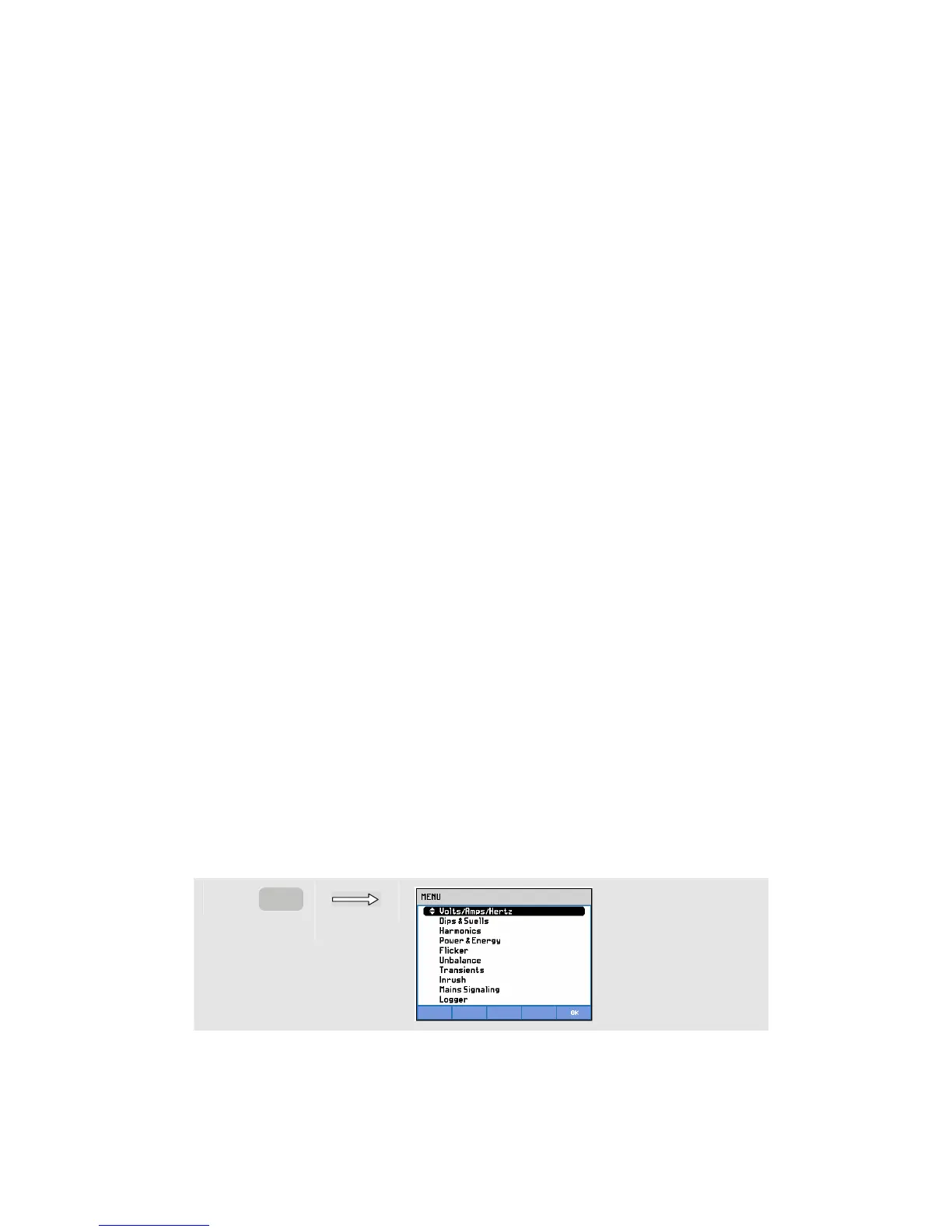
To access the Flicker Meter screen:
c
MENU


 To Next Page