3FR-54RTR User Manual
Section 1 - Product Overview
Introduction
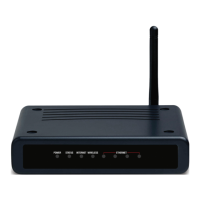
Fry’s introduces another breakthrough in wireless connectivity. The Fry’s Wireless G FR-54RTR Router which is
capable of transferring data with a maximum wireless signal rate of up to 54Mbps* in the 2.4GHz frequency — the
same wireless frequency as 802.11b. The Fry’s FR-54RTR Wireless Router also offers four Ethernet ports to support
multiple computers.
The advanced wireless technology built into the FR-54RTR Wireless Router offers data transfer speeds with a maximum
wireless signal rate of up to 54Mbps* through its wireless channels allowing streaming videos and other high bandwidth
applications, such as online gaming events, to operate without the hassle of Ethernet cables. The ability to use high
bandwidth applications also makes streaming real-time programs more enjoyable and more efcient.
With the FR-54RTR Wireless Router’s built-in advanced rewall, threats of hackers penetrating your network are
minimized. Some rewall features include functions that allow or disallow certain ports to be open for certain applications.
Features like content ltering, MAC ltering, URL blocking, and domain blocking are useful tools to prevent other
unwanted intruders from connecting to your network or browsing restricted sites.
The easy-to-use conguration wizard takes only minutes to setup and guides users step-by-step through conguring
the FR-54RTR. With all the versatile features and an user-friendly utility, the FR-54RTR Wireless Router provides an
enhanced networking experience.
* Maximum wireless signal rate derived from IEEE Standard 802.11g specications. Actual data throughput will vary. Network conditions and
environmental factors, including volume of network trafc, building materials and construction, and network overhead, lower actual data throughput
rate. Environmental conditions will adversely affect wireless signal range.


 To Next Page