Need help?
Do you have a question about the Garmin GI 275 and is the answer not in the manual?
Defines capitalized terms used in the agreement, including 'Device', 'Documentation', 'Licensed Software', and 'Permitted Purpose'.
Details the limited, royalty-free, non-exclusive license grant for Licensed Software and Documentation.
Outlines prohibited uses, including sublicensing, renting, disclosing, or reverse engineering the software.
Defines the agreement term and conditions for termination by Garmin.
Disclaims warranties and limits Garmin's liability for software use and damages.
Covers non-exclusive rights, assignment, feedback, governing law, legal compliance, and interpretation.
Lists changes made in revision 11, including software updates and corrections.
Lists common acronyms and their definitions used throughout the manual.
Defines Warning (injury/death possible), Caution (equipment damage possible), and Note (additional information).
Defines the scope and applicability of the GI 275 Part 23 AML STC.
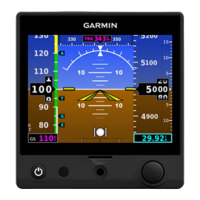
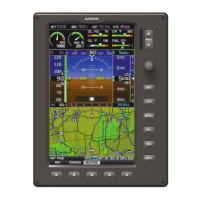
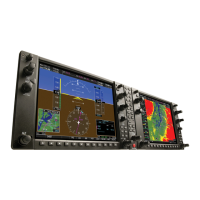
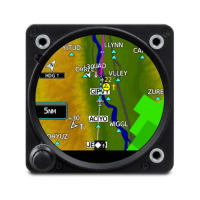
Describes the GI 275 as a multi-function electronic instrument display.
Lists the categories of equipment installed by this STC.
Shows example installation block diagrams for the GI 275 system.
Describes the GI 275 Base unit with its connector and primary functions.
Details the GI 275 ADAHRS unit's functionality and connectors.
Describes the GI 275 ADAHRS+AP unit's functionality, including autopilot control.
Explains the GI 275 configured as a Primary ADI, showing attitude, altitude, airspeed, and heading.
Explains the GI 275 HSI's capabilities, including course and deviation display.
Describes the GI 275 functioning as an MFD with configurable pages.
Provides notes on HSI and Enhanced HSI pages configuration when used as standalone CDI.
Details installation location, backup battery requirements, and display backup switch needs.
Details EIS display capabilities for engines, caution/warning lights, and page configuration.
Lists the categories of equipment installed by this STC.
States GEA 24/110 is required for EIS installation and discusses sensor selection.
Details the backup battery's function and requirements.
Lists limitations on connected equipment and number of GI 275 displays installed.
Discusses panel modifications, wire routing, and pressure vessel penetration.
Covers airspeed tape requirements, field-of-view, and standby information combinations.
Details installation location, backup battery requirements, and display backup switch needs.
Lists limitations on EIS display, gauge replacement, and supported aircraft types.
Details class restrictions for GMU 11 and GMU 44B.
Specifies GPS source requirements for GI 275 ADAHRS and ADAHRS+AP units.
Covers connections for analog attitude output and flight director input.
Explains VFR GPS usage, limitations, and IFR credit.
Details transponder control functionality with GTX 345.
Specifies dedicated USB connection requirements for each GI 275 unit.
Lists approved installations and interfaces for Class IV aircraft.
Addresses third attitude instrument requirements and electrical load considerations.
States GI 275 functions meet design assurance for primary flight displays.
Lists GI 275 components and installation kits supplied by Garmin.
Lists commercially available parts and accessories required for installation.
Lists tools required for building the wire harness.
Details power distribution requirements for GI 275 LRUs and essential buses.
Outlines requirements for standby instruments and display backup switches.
Covers EIS installation requirements, limitations, and sensor considerations.
Specifies GPS source requirements for GI 275 ADAHRS and ADAHRS+AP units.
Discusses lighting control for the GI 275 display using lighting bus or photocell.
Explains HSDB architecture and connection possibilities for common LRU combinations.
Details interfacing with GPS, NAV, Radar Altimeter, Traffic, Data Link, Stormscope, Audio Panel, Transponder, and Autopilots.
Provides a checklist to ensure aircraft meets GI 275 installation requirements.
Details requirements for ELA to ensure aircraft electrical system adequacy.
Provides instructions for preparing shielded cables for connection.
Details routing of lines and fittings for pitot-static system connections.
Specifies electrical bonding requirements for installed items and resistance verification.
Discusses replacing 3-inch diameter instruments and positioning displays.
Details inserting the battery and ensuring proper alignment.
Explains when EIS annunciation is required and placement of annunciators.
Provides installation procedure for separate Mil-Spec annunciators.
Warns to remove panel coating around fastener holes before installing the GSB 15 unit.
Details preparing shielded cables and terminating them to the LRU backshell assembly.
Lists configuration module assemblies and installation procedures.
Details assembly of the GSB 15 connector.
Lists display sensors and their bonding requirements for metallic and non-metallic aircraft.
Discusses GMU 11/44B installation survey and separation guidelines.
Lists required materials for the magnetic interference test.
Outlines steps for preparing the aircraft and GMU for the location survey.
Provides mounting and orientation guidance for the GMU 11.
Describes fabrication requirements for a custom mounting shelf for the GMU 11.
Outlines requirements for mounting GMU 11 in non-metallic wingtips.
Describes Method A for overbraid termination.
Explains electrical bond preparation for aluminum-to-aluminum interfaces.
Describes fabricating a custom bracket as an alternative to the universal mount.
Recommends GTP 59 probe installation in Lightning Zone 3 for composite aircraft.
Details installation of the backup GPS antenna.
States requirement to retain all engine indications as defined in POH/AFM.
Describes GEA 24 installation location and mounting requirements.
Details GEA 110 mounting location and wiring requirements.
Explains installation of the carburetor temperature probe.
Guides on installing the oil temperature sensor using engine manufacturer's guidance.
Explains installation requirements for manifold, oil, and fuel pressure sensors.
Details fuel flow transducer installation configurations and hose/fitting requirements.
Details requirements for shield bracket and wire overbraid if gauge fluctuates.
Explains RPM sensor installation methods and P-Lead connection.
Mentions cross-referencing sensor part numbers and installation approval.
Explains interfacing the GTP 59 OAT probe for EIS sensor configuration.
Outlines procedures for updating weight and balance records and equipment lists.
Details accessing Configuration mode by holding the inner knob upon initial power-up.
Explains how to update software for GI 275 and interfaced LRUs via USB.
Describes assigning a unique Unit ID to each installed GI 275 prior to configuration.
Details configuring interfaces for GPS, NAV, Radar Altimeter, Traffic, etc.
Configures airframe settings, lighting, page configurations, sensors, and audio alerts.
Provides data for configuration of a GI 275 EIS, including engine parameters.
Provides troubleshooting flow charts for system failures and alert messages.
Offers troubleshooting steps for configuration or software load issues.
Describes GI 275 connectors and pin functions.
Details GEA 24 connectors, part numbers, and kits.
Lists GEA 110 connectors, part numbers, and kits.
Provides GMU 44B connector information.
Lists GMU 11 connector information.
Notes GTP 59 has no connector, uses shielded cable.
Lists GSB 15 connector information.
Shows power, lighting, configuration module, HSDB, and USB connections for GI 275.
Details attitude and air data interconnect diagrams.
Illustrates GPS connections to GI 275 and other GPS sources.
Shows analog navigation receiver connections to GI 275.
Shows analog navigation connections and notes on their usage.
Details GEA 24 power interconnect.
Illustrates GEA 24 sensor interconnect wiring.
Details GEA 110 sensor interconnect wiring.
Shows audio interconnect between GI 275 and audio panel.
Details autopilot/flight director interconnect for Bendix systems.
Details autopilot/flight director interconnect for Century systems.
Details autopilot/flight director interconnect for Cessna systems.
Details autopilot/flight director interconnect for Collins systems.
Details autopilot/flight director interconnect for Honeywell systems.
Details autopilot/flight director interconnect for S-TEC systems.
Details autopilot/flight director interconnect for Sperry systems.
Illustrates GSB 15 interconnect and notes.
Shows radar altimeter interconnect for GI 275.
Details serial altitude output interconnect.
Illustrates Stormscope interconnect.
Details traffic advisory system interconnect options.
Lists compatible electronic standby indicators and their requirements.
Lists compatible Air Data Computers.
Lists compatible Attitude and Heading Reference Systems.
Lists compatible GPS position sources.
Lists compatible VHF navigation receivers.
Lists compatible analog navigation receivers.
Lists compatible radar altimeter transceivers.
Lists compatible autopilots for GI 275.
Lists compatible external flight directors.
Lists compatible engine sensors for EIS.
Lists compatible fuel flow sensors and their configurations.
Lists compatible fuel quantity sensors and their configurations.
Provides installation limitations, fuel pressure check, and lightning zoning for various aircraft models.
Explains advanced configuration for airspeed tape matching any indicator.
Guides on navigating to the Airspeed Configuration page.
Lists information needed for arc range configuration.
Explains configuration of Vne/Vmo/Mmo and overspeed settings.
Lists known bugs.
Lists markings to be obtained for each installation.
Compares ASI configuration with existing ASI and tape definitions.
Configures gauges for the Main EIS page.
Provides supplemental EIS gauges and information.
Displays CHT, EGT, and TIT information.
Displays fuel quantity and fuel flow data.
Shows supplementary flight summary information.
Explains how alerts are generated and displayed for gauge values.
Explains requirements for maintaining shield continuity when extending sensor wiring.
Describes zoning for wings, fuselage, and empennage based on lightning severity.
Provides sample lightning zoning diagrams.
 General
| Type | Electronic Flight Instrument |
|---|---|
| Display Type | LCD |
| Power Input | 14 or 28 VDC |
| Operating Temperature Range | -20°C to +55°C |
| Brightness Control | Automatic and Manual |
| Certification | TSO-C113 |
| Interfaces | ARINC 429, RS-232 |
| Mounting | Panel Mount |

 To Next Page