20
1/02
E
NGINE
C
OOLING
Engine Coolant
Check engine coolant level daily. If leakage is observed,
check more frequently.
To check engine coolant level:
1. Unit should be in a level area. Engine must be off and
brakes locked. Raise hood.
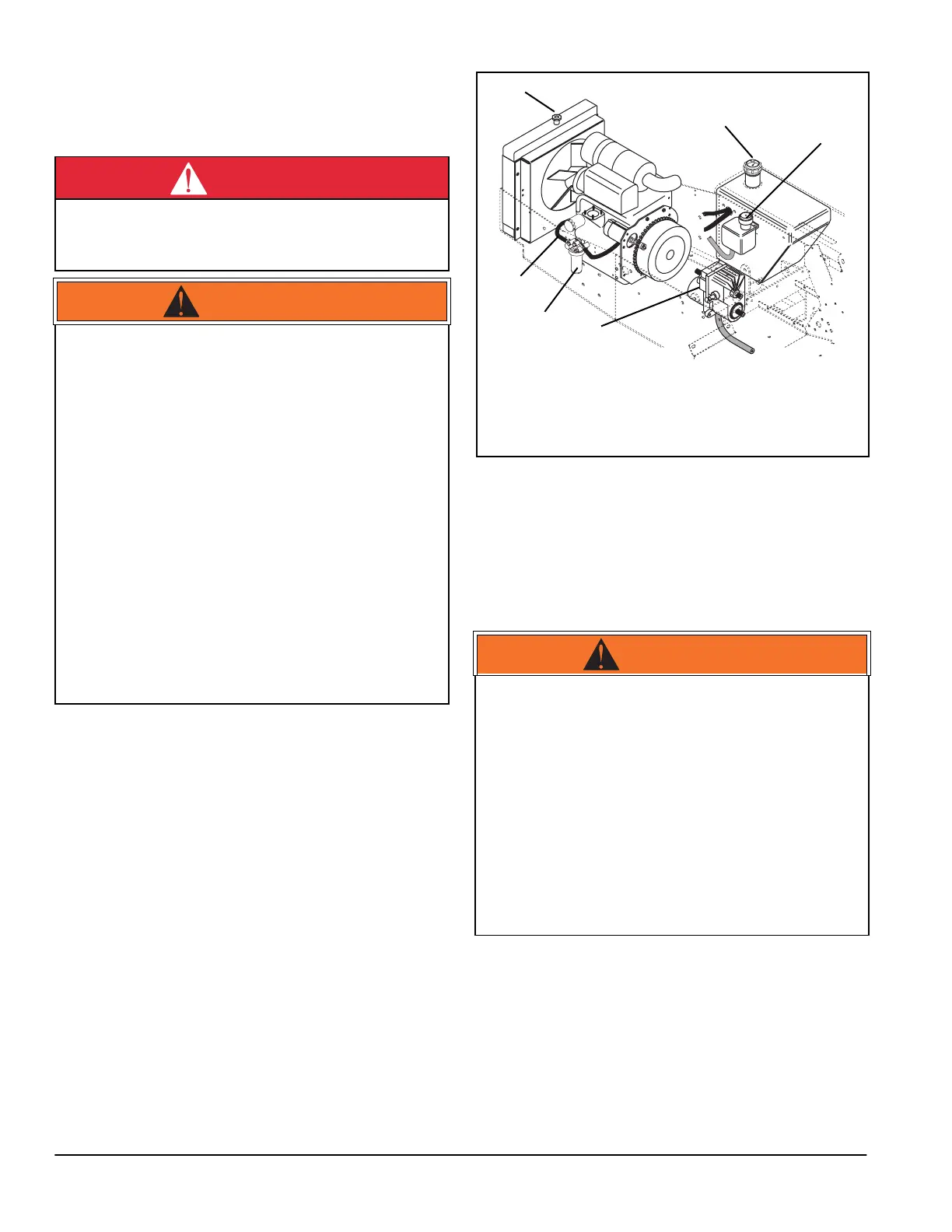
2. Remove coolant fill cap. Coolant level is correct when
tank is approximately half full (Figure 12).
3. If level is low, add a coolant solution of 50% water
and 50% antifreeze. Refer to the engine manual for
the correct type of antifreeze.
IMPORTANT:
To prevent severe damage to engine,
maintain proper coolant level.
Air Intake Screen
Check the air intake screen on the hood and under the
frame each day. Remove any grass, dirt, or debris that
may have accumulated on it. THE AIR INTAKE SCREEN
MUST BE KEPT CLEAN.
Engine Cooling System
Check cooling system for signs of the collection of grass
and debris in engine radiator/oil cooler fins daily or more
often when operated in dirty conditions. Clean with air
and water.
A
IR
C
LEANER
E
LEMENT
Clean air cleaner element at least every 50 hours. See
your engine manual for instructions.
Replace the air cleaner element when clogged or every
300 hours. See your engine manual for instructions.
T
RANSMISSION
Be sure to stop the engine and put the hydraulic lift lever
in the "Float" position before doing any work on hydraulic
parts.
Checking the Transmission Oil
Check transmission oil level every 50 hours. Repair unit
when leakage is observed, do not operate.
IMPORTANT:
To prevent severe damage to transmission,
always maintain proper oil level.
Prevent dirt and foreign material from entering system
when checking, adding or changing oil. If leakage is
DANGER
COOLANT TEMPERATURE MUST BE BELOW
100 °
F on temperature gauge or serious burns may result.
ALWAYS wait for engine to cool before service.
WARNING
Never remove radiator cap while engine is running hot.
If you must remove radiator cap follow these steps to
avoid personal injury that can be caused by escaping
steam or engine coolant.
Before removing cap, turn engine off and let it cool.
Even when engine is cool, be careful when removing
radiator cap.
When engine is cool wrap a thick cloth around cap and
turn it slowly counterclockwise to the first stop.
Step back while pressure releases.
When you are sure that all pressure has been
released, use the cloth to press the cap down, turn it
and remove it.
Stand away from radiator opening. Hot steam may
blow out or hot engine coolant may even splash out.
Failure to follow these warning instructions could result
in serious personal injury from hot engine coolant or
steam blow out and/or damage to engine cooling
system or engine.
WARNING
HYDRAULIC FLUID UNDER PRESSURE
can
penetrate skin and cause sever burns that can result in
death or serious injury.
ALWAYS keep body and hands away from pin holes or
nozzles which eject hydraulic fluid under pressure.
ALWAYS use paper or cardboard and not hands to
search for leaks.
KNOW that all hydraulic fluid connections are tight and
all hydraulic hoses and lines are in good condition
BEFORE applying pressure to system.
Foreign fluid injected into skin must be surgically
removed within a few hours by a doctor familiar with
this form of injury or gangrene may result.
Figure 7
EF
1
4
3
2
OF0911
5
6
1. Radiator Cap
2. Fuel Tank Cap
3. Engine Oil Filter
4. Hydraulic Oil Filter
5. Engine Fuel Filter
6. Coolant Fill Cap


 To Next Page