EasyManua.ls Logo

Grizzly G9729 - User Manual

Grizzly G9729
80 pages
Print Icon
To Next Page IconTo Next Page
Loading...
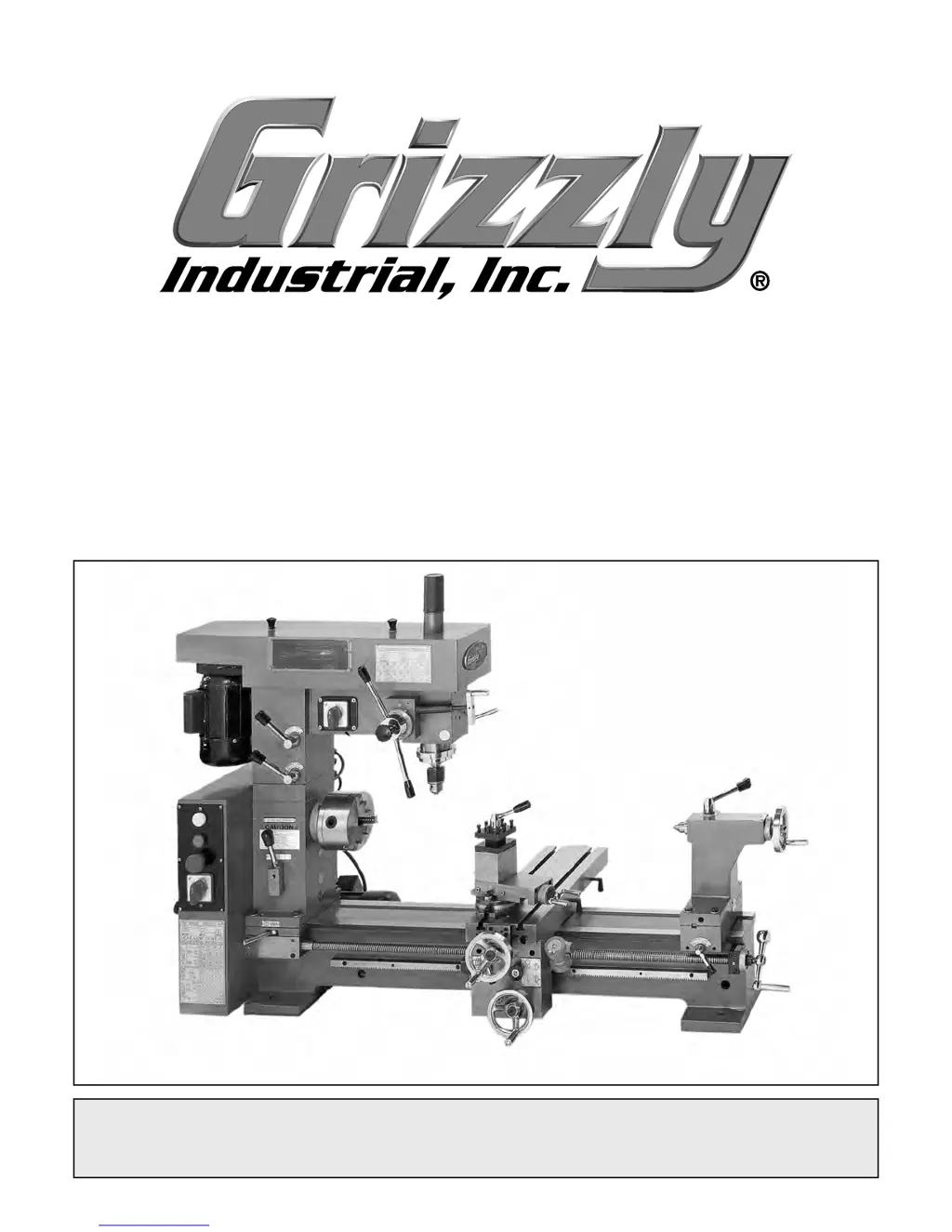
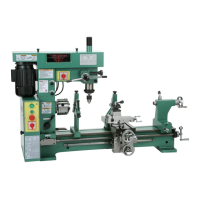
COMBINATION LATHE / MILL
MODEL G9729
INsTruCTION MANuAL
Copyright © MAy, 2005 By grizzly industriAl, inC. revised septeMBer, 2013 (st)
WArNING: NO pOrTION Of THIs MANuAL MAy BE rEprODuCED IN ANy sHApE
Or fOrM WITHOuT THE WrITTEN ApprOvAL Of GrIzzLy INDusTrIAL, INC.
#pC3395 printed in ChinA

Table of Contents

Questions and Answers

  • B
    Brian KingAug 14, 2025
    How to troubleshoot Grizzly Lathe motor that will not start?
    • G
      gwalkerAug 14, 2025
      If the Grizzly Lathe motor won't start, first check the power line for proper voltage. Then, inspect all lead connections on the motor for loose or open connections. Finally, the start capacitor might be faulty and need replacement.
  • K
    Kaitlyn MoralesAug 17, 2025
    Why does my Grizzly Lathe motor overheat?
    • R
      Robert FosterAug 17, 2025
      If your Grizzly Lathe motor overheats, it could be overloaded, so reduce the load. Another cause might be restricted air circulation; clean the motor to allow normal airflow.
  • K
    Kimberly SmithAug 20, 2025
    What to do if workpiece vibrates on Grizzly Lathe?
    • A
      Amanda KnightAug 20, 2025
      If the workpiece vibrates or chatters during Grizzly Lathe operation, ensure the table locks and spindle lock are tight. Also, verify the workpiece is securely clamped to the table or in the mill vice. Lastly, the RPM and feed rate might be too high; use appropriate settings for the job.
  • A
    Anthony ScottAug 25, 2025
    Why are my tools breaking on the Grizzly Lathe?
    • L
      Lisa MillerAug 25, 2025
      If you're breaking tools or cutters on your Grizzly Lathe, the RPM or feed rate may be too fast; use tables to set correct values. The cutter could also be getting too hot, so use cutting fluid or oil. Finally, you might be taking too big of a cut; lessen the depth and allow chips to clear.
  • J
    Joseph PhillipsAug 27, 2025
    What to do if Grizzly Lathe motor loses power?
    • C
      Christopher ElliottAug 27, 2025
      If the Grizzly Lathe motor fails to develop full power, the power line might be overloaded with other devices; reduce the load. Also, undersized wires or overly long circuits could be the cause; increase wire sizes or reduce the circuit length.
  • E
    Elizabeth HillAug 31, 2025
    How to improve surface finish on Grizzly Lathe?
    • J
      Jacqueline FowlerAug 31, 2025
      A bad surface finish on your Grizzly Lathe can be caused by the wrong RPM or feed rate; adjust accordingly. Another cause is a dull or poorly selected cutter; sharpen the cutter or choose a better one. Also, make sure the cutter rotation is correct for the cutting tool.
  • J
    Joseph OrtizSep 3, 2025
    Why is my Grizzly Lathe making a loud noise?
    • S
      Stephanie DodsonSep 3, 2025
      If there's a loud, repetitive noise coming from your Grizzly Lathe, inspect the pulley set screws or keys; replace or tighten them if necessary. The motor fan might be hitting the cover; adjust the cover, tighten the fan, or shim the cover. Defective V-belts could also be the problem; replace them if needed.
  • V
    Vanessa MooreSep 6, 2025
    Why is the Grizzly Lathe table hard to move?
    • M
      Megan AllenSep 7, 2025
      If the table on your Grizzly Lathe is hard to move, first check that the table locks are fully released. Then, clean away any chips that have accumulated on the bedways. Lubricate the bedways and handles. Ensure the longitudinal stops aren't interfering, and loosen the gib screws if the gibs are too tight.
  • S
    snyderloriSep 10, 2025
    What to do if Grizzly Lathe blows fuses when starting?
    • R
      ryan60Sep 10, 2025
      If the Grizzly Lathe motor won't start and fuses or circuit breakers are blowing, there might be a short circuit in the line cord or plug. Repair or replace the cord or plug, paying attention to damaged insulation and shorted wires.

Summary

Machine Data Sheet

Identification

Section 1: Safety

Safety Instructions for Machinery

General safety guidelines for operating machinery, including warnings and precautions.

Additional Safety Instructions for Lathe;Mills

Specific safety precautions for using lathe and mill functions.

Section 2: Circuit Requirements

110 V Operation

Electrical requirements and considerations for operating the machine on 110V power.

Section 3: Set Up

Set Up Safety

Safety precautions to follow during the machine setup process.

Moving & Placing Base Unit

Safe procedures for moving and placing the heavy base unit of the machine.

Test Run

Steps for performing a test run of the lathe and mill motors.

Section 4: Lathe Operations

Operation Safety

Safety precautions specific to lathe operations.

Control Panel

Explanation of the control panel components and their functions.

Lathe Chuck Removal

Step-by-step guide for safely removing the lathe chuck.

Tool Post

Information on the 4-way turret tool post and securing tool bits.

Tailstock Controls

Description of the controls for the tailstock, including handwheel and lock lever.

Tailstock

Procedure for aligning the tailstock to ensure accurate machining.

Carriage Controls

Overview of the lathe's carriage controls, including compound and cross slides.

Lathe Speeds

How to change belt positions to select different spindle speeds.

Start Up and Spindle Break-in Procedures

Essential procedures for initial machine startup and spindle break-in.

Feed Lever

Explanation of the feed lever for engaging and disengaging power feed.

Feed Selection

How to use the feed rate selection lever to adjust feed rates.

Inch Threading

Guide for setting up and cutting inch threads using the gear chart.

Cutting Threads

Procedures for setting up and performing thread cutting operations.

Metric Threading

Guide for setting up and cutting metric threads using the gear chart.

Section 5: Mill Operations

Mill Speeds

How to change belt positions to select different spindle speeds for milling.

Section 7: Maintenance

Lubrication

Detailed lubrication points and recommended oils for machine components.

Section 8: Service

Troubleshooting

Electrical Diagram

Electrical Components

Grizzly G9729 Specifications

General IconGeneral
Swing Over Bed12 in
Distance Between Centers36 in
Spindle Bore1.5 in
Spindle Nose TaperMT5
Tailstock Spindle TaperMT3

Related product manuals