13
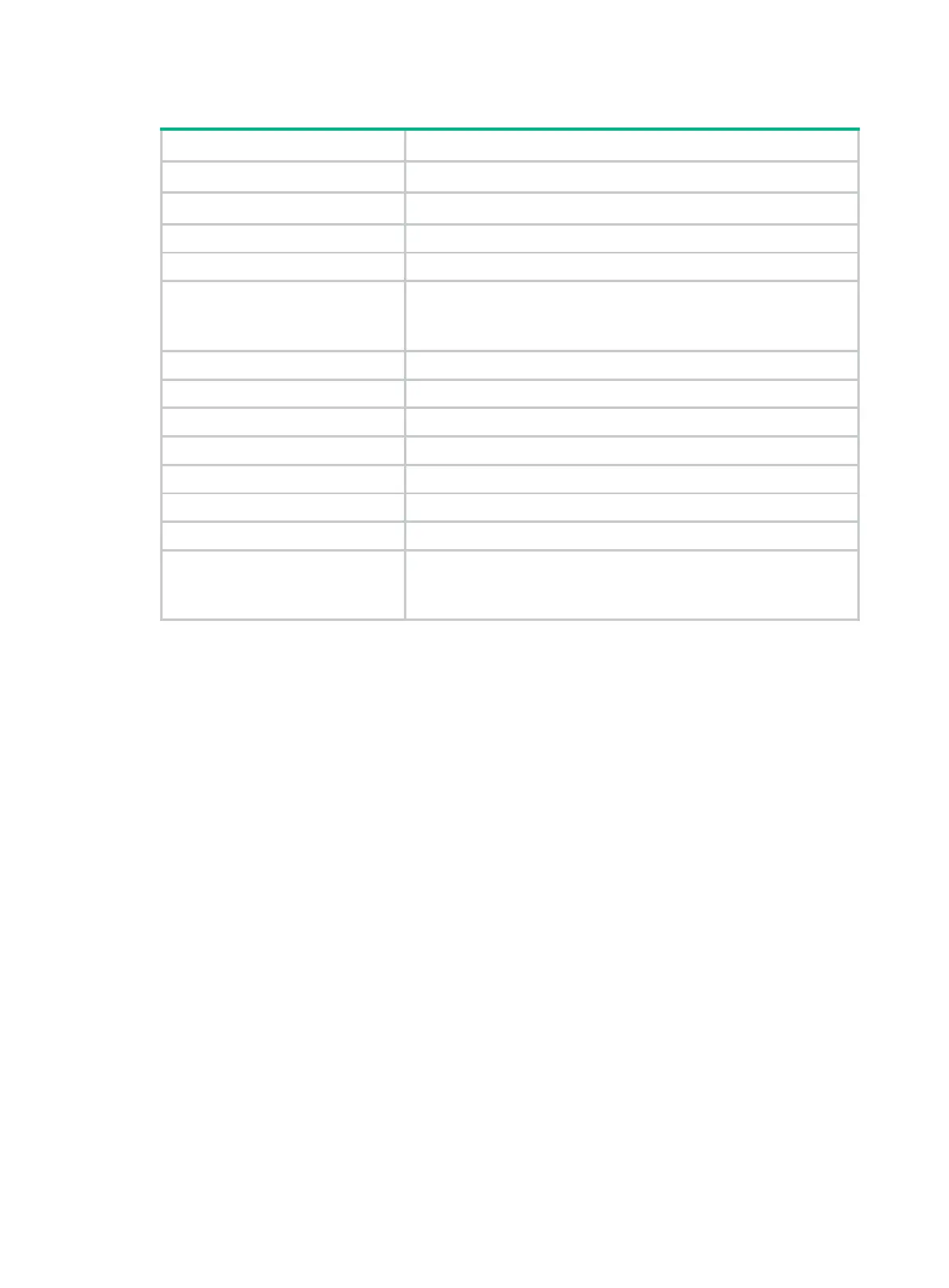
Table 3 Command output
VM VM name.
CPU count Number of vCPUs on the VM.
Memory size Memory size of the VM, in KB.
Disks Disk information of the VM.
Disk
Disk or CD-ROM drive name. The following values are available:
• hda, hdb, hdc, and hdd.
• vda, vdb, vdc, and vdd.
path Disk file path of the VM.
capacity Disk capacity of the VM, in GB.
Interfaces NIC information of the VM.
Type NIC type of the VM.
Mode NIC mode of the VM.
MAC MAC address of the NIC.
VNC port VNC port number of the VM.
AutoStart
Status of the auto-start feature:
• Disabled.
• Enabled.
display vmcpupin
Use display vmcpupin to display the bindings between vCPUs and physical CPUs for a VM.
Syntax
display vmcpupin vm [ vm-name ]
Views
Any view
Predefined user roles
network-admin
Parameters
vm-name: Specifies a VM by its name. The vm-name argument is a case-sensitive string of 1 to 30
characters. If you do not specify a VM, this command displays the bindings between vCPUs and
physical CPUs for all VMs.
Examples
# Display the bindings between vCPUs and physical CPUs for all VMs.
<Sysname> display vmcpupin
VM: centos7
VCPU: CPU Affinity
----------------------------------
0: 2-7
VM: winserver2012


 To Next Page