26
2: Installation
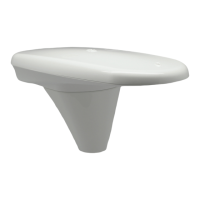
Installing the Antenna
The following sections provide antenna installation details and
discusses the internal signal splitter.
Antenna Placement to Optimize Reception
Local noise generated by your vehicle, vessel, or surroundings may
affect your beacon system performance. To minimize this impact, you
should locate the antenna outside the path of a radar beam, away from
any transmitting antennas, and away from any other source of
interference such as motors, solenoids, and other electronics.
Your receiver calculates a Signal to Noise Ratio (SNR), measured in dB
(Decibels) which indicates the receiver’s performance. The SNR is
height of the signal above the noise floor. The higher the SNR, the
better your receiver is receiving the signal. The optimum antenna
location will be a position where your average SNR is highest. You
should turn on all accessories that you intend to use during normal
operation when locating the best position for the antenna.
The MBX-4 receiver displays the SNR within the Beacon Status menu.
You may alternatively issue a NMEA query to the receiver through the
serial port to get this information. Normally you will require a PC
computer with a terminal program to do this, however, some GPS
systems will display the SNR, such as Garmin GPS receivers (you must
connect the GPS transmit signal to the receive of the beacon receiver).
Hemisphere GPS offers free PC computer controller software for
interfacing with Hemisphere GPS beacon receiver equipment, located
on the Hemisphere GPS web site at: www.hemispheregps.com,
however, this is not normally needed for operation of the MBX-4.



 To Next Page