DC2000 – Installation Manual 18
HHO Plus, Alternative Energies, Lta – Travessa das Serras 33, Vieira de Leiria, Portugal – Tel. 00351244697116 – Email: info@hhhoplusgas.com
Water levels in the tank
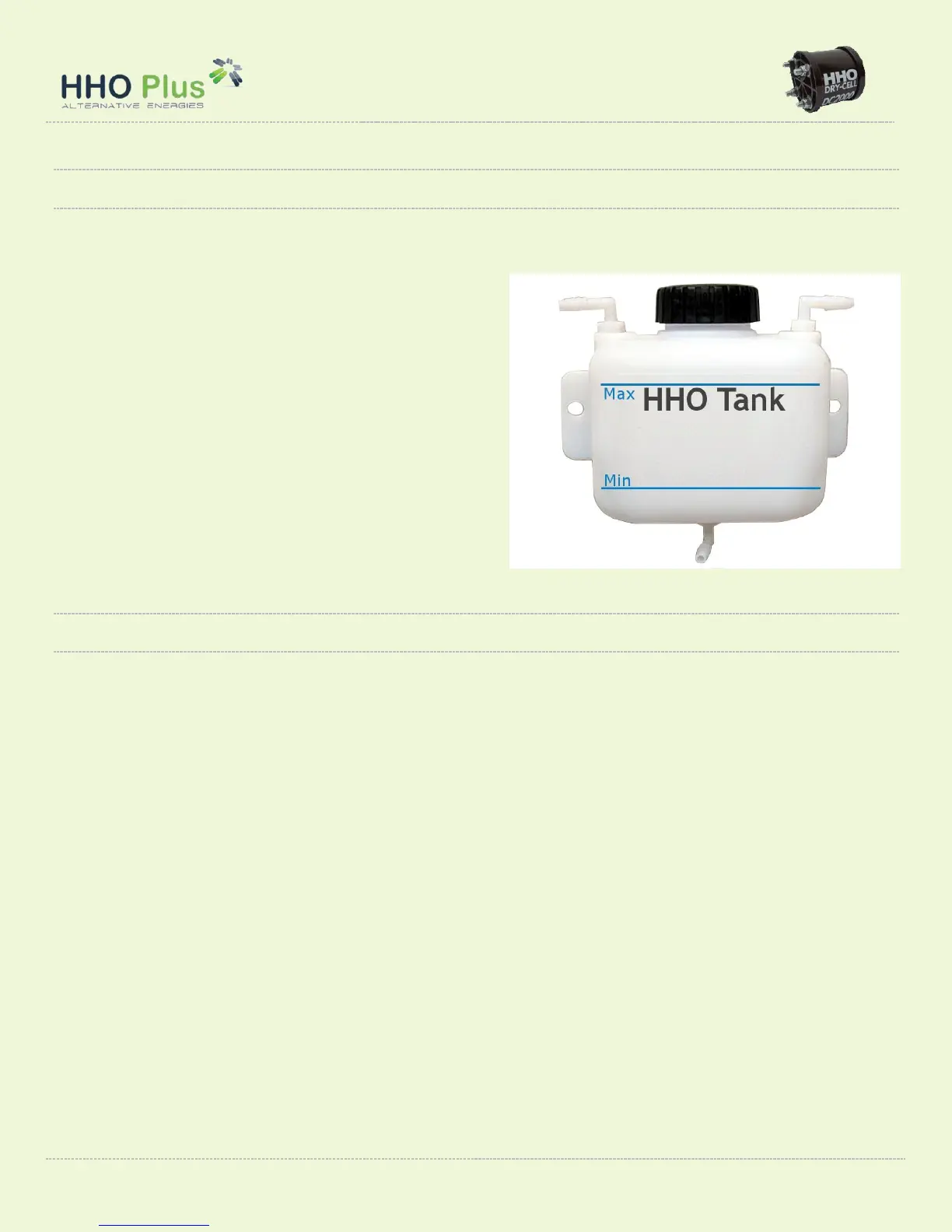
Once you have your mixture ready, pour it into the top of the water tank, up to the water level line shown in
the picture bellow. Try to only fill your unit about 70% full. This is imperative to allow the HHO produced to
enter the gap left in the Tank and avoid any risks of some
water getting into the engine.
The standard water tank is a 1,2 liters unit which will
provide you with approximately 800 kilometers of
driving. Be sure to make your maintenance plan with that
in mind and refill the tank when it is required. Try to refill
as often as it is possible for you in order to keep the
generator running cool.
In our store we have a product that can help you to
control better the water levels in the water tank and
reduce the problems with the management of the
system. It is called the water level control switch.
Amperage variation in the system
When operating the system the water molecule will be "brocken" into HHO gas to be used by the engine. The
water level in the tank will slowly go down but the electrolyte will continue in the system with an increase of
the concentration and, therefore, amperage being drawn into the generator. This means that when you start
using the system, with the tank full (Max level), you have 8,0A and after some time when the tank is at the
lower point (Min level) you will have 10,0A
If you put too much electrolyte, there are a combination of heating factors at work and can cause a situation
called Thermal Runaway, where an increase in ambient temperature combined with excess electrolyte mix
leads to overheating in the generator shortening the “life” of system.
When applying a direct current to the HHO generator, a high resistance will be present in the water
(electrolyte mixture). High resistance generates heat causing the water to heat up. As the temperature rises,
the resistance in the water goes down, allowing more current to pass through the fuel cell. By the end of the
day, the current will be higher than the value you started with at the beginning of the day. One way to control
this is using a PWM – Pulse Width Modulator


 To Next Page