17
An MA serves a VLAN. Packets sent by the MPs in an MA carry the relevant VLAN tag. An MP can
receive packets sent by other MPs in the same MA.
Maintenance point
An MP is configured on a port and belongs to an MA. MPs fall into two types: maintenance association
end points (MEPs) and maintenance association intermediate points (MIPs).
MEP
Each MEP is identified by an integer called a “MEP ID”. The MEPs of an MD define the range and
boundary of the MD. The MA and MD that a MEP belongs to define the VLAN attribute and level of the
packets sent by the MEP. MEPs are categorized as inward-facing MEPs and outward-facing MEPs.
The level of a MEP determines the levels of packets that the MEP can process. The packets transmitted
from a MEP carry the level of the MEP. A MEP forwards packets at a higher level and processes packet of
its own level or lower. The processing procedure is specific to packets in the same VLAN. Packets of
different VLANs are independent.
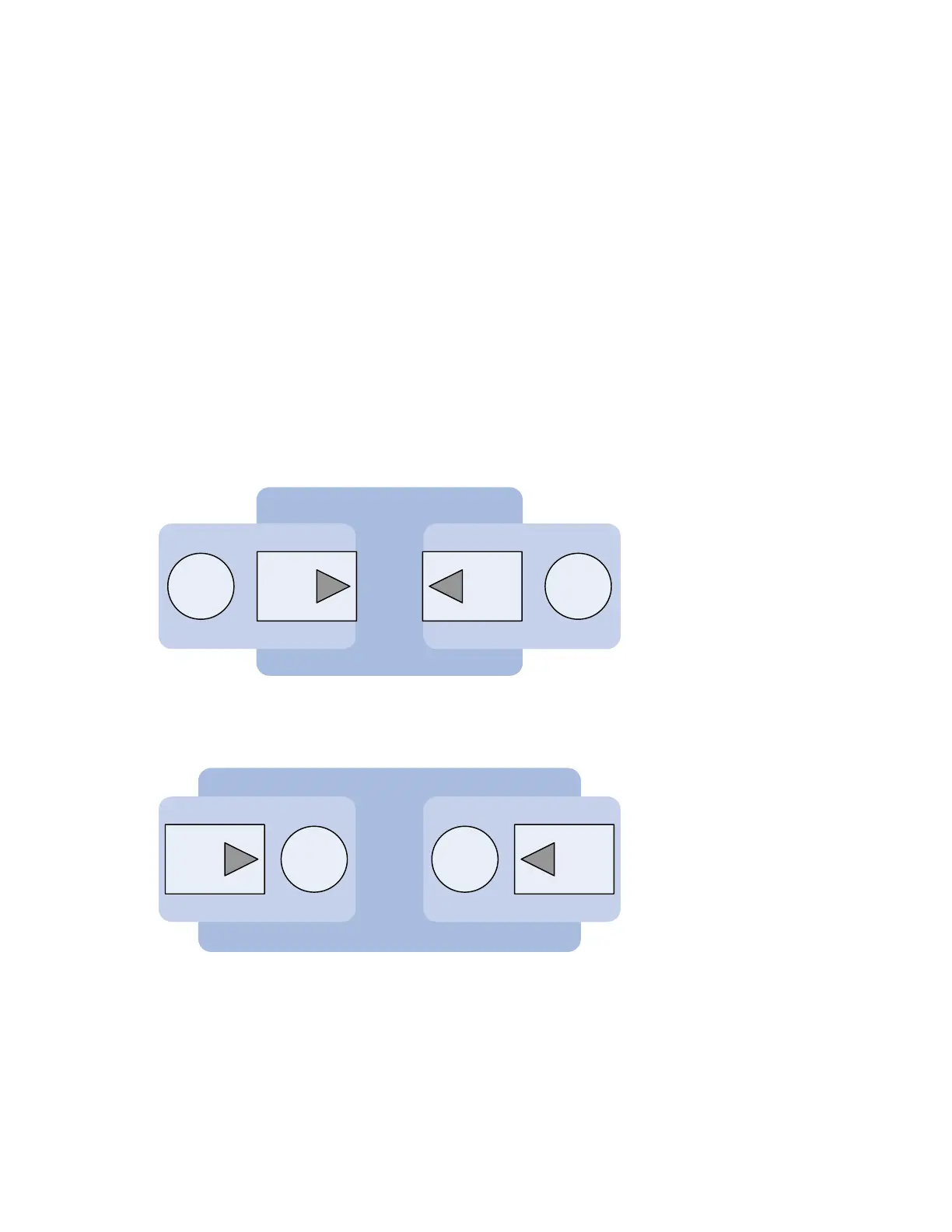
The direction of a MEP (outward-facing or inward-facing) determines the position of the MD relative to the
port.
Figure 4 Outward-facing MEP
Relay
Entity
Maintenance Association
Relay
Entity
Bridge Bridge
Bridge
Port
Bridge
Port
An outward-facing MEP sends packets to its host port.
Figure 5 Inward-facing MEP
Relay
Entity
Maintenance Association
Relay
Entity
Bridge
Bridge
Bridge
Port
Bridge
Port
An inward-facing MEP does not send packets to its host port. Rather, it sends packets to other ports on the
device.
MIP
A MIP is internal to an MD. It cannot send CFD packets actively. However, it can handle and respond to
CFD packets. The MA and MD to which a MIP belongs define the VLAN attribute and level of the packets
received.



 To Next Page